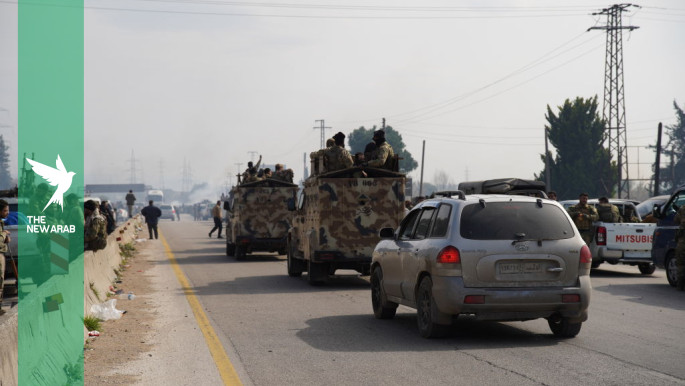
A sense of calm was restored in Syria’s coastal areas on Monday after authorities deployed security personnel to areas following a bout of deadly clashes.
Mohammed Othman, Latakia’s governor, confirmed to reporters on Monday that the situation had become “stable” and that “most protests ended without major incidents”.
He added that “wanted individuals linked to the remnants of the former regime and external agendas” ere trying to attack security personnel and influence protesters.
On Sunday, violent confrontations broke out in the cities of Tartous and Latakia, resulting in the killing of at least three people, while 60 others were injured.
According to local media, former supporters of the now-ousted Assad regime attacked security forces and civilians at the protest. Local media reports stated gunmen had opened fire at civilians and security personnel, further enflaming tensions.
The protest came following calls from Alawite sheikh Ghazal Ghazal, the head of the Supreme Alawite Islamic Council, who urged people to mobilise peacefully and demand a federal government system in Syria as well as denounce a recent mosque attack in Homs.
Thousands had gathered following the call from the spiritual leader, who lives outside the country, and said urged people to come together “to how the world that the Alawite community cannot be humiliated or marginalised”.
Syria’s interior ministry spokesperson, Nour al-Din al-Baba, has since also weighed in on the recent unrest, pointing his finger at the “remnants of the former regime”, and adding that the attacks on the demonstrators exposed “their true nature”.
On Sunday, Syria’s ministry of defence said that army units, tanks and armed vehicles had entered the coastal cities in response to the attacks by the “outlaw groups” targeting security forces and civilians.
SANA, the state news agency, also reported, citing officials, that the attacks were carried out by “remnants of the defunct regime”. The agency added that many people were injured from “stabbings, blows from stones, and gunfire targeting both security personnel and civilians”.
SDF postpones commander’s visit to Damascus
Meanwhile, the Syrian Democratic Forces (SDF) said that they would be postponing Mazloum Abdi’s visit to Damascus, which was set to take place on Monday.
A statement from the SDF said the postponement was “for technical reasons” and that “a new date will be set later, to be agreed on by all relevant parties”.
One journalist, Ahmed al-Masalmeh, told The New Arab’s sister site, Al-Araby Al-Jadeed, that the postponement of the visit was likely linked to the protests in the coastal region.
“The SDF may have had a hand in what is happening on the Syrian coast, and it wants to capitalise on the situation, perhaps hoping to gain leverage in its talks with Damascus by distracting the Syrian government with the coastal issue instead of focusing on the obligations of the agreement with the SDF,” he said.
All eyes have been on the relationship between the SDF and the Syrian government in recent weeks, as the end of the year marks the deadline set for implementing the agreement signed by both sides on the integration of the SDF into the Syrian army and state.
The Syrian government has accused the SDF of failing to implement the agreement, while the latter maintains that further negotiations are necessary. Both signs have shown different opinions on how the agreement should be carried out.