Welcome to your weekly commentary and overview of news from Slovakia. Just before the year’s end, a special issue. In our annual survey, some of my colleagues – journalists at the SME daily – offer their opinion of what was Slovakia’s event of the year, personality of the year, and a piece of good news from 2025. If you missed Last Week’s round-up of 2025, you can find it here.
Last Week in Slovakia will be back, providing your usual weekly commentary and news overview, on January 12.
Thank you for being my readers all through this past year. Your trust and continued interest is what keeps me going. All the best in 2026! ~ Michaela Terenzani
Event of the Year
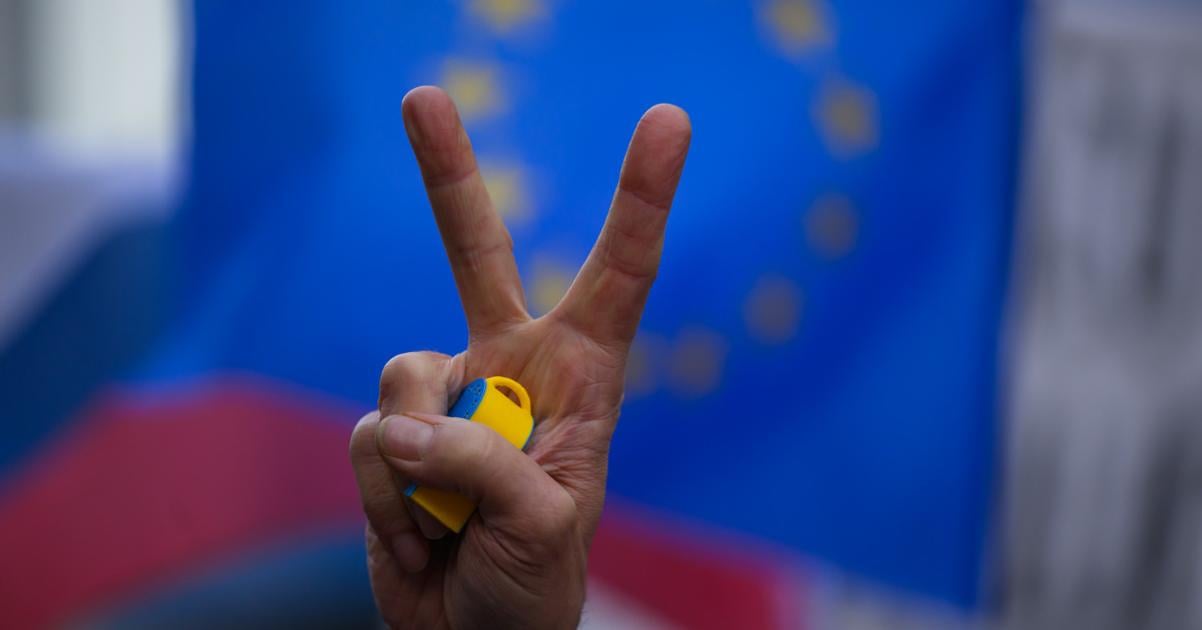
Roman Krpelan, Editor-in-Chief of SME: The protests. From January to December, dozens of large-scale protests took place across Slovakia. Citizens rallied against politicians leading the country away from the EU, the prime minister’s participation in celebrations in Moscow, and the rising cost of living. Demos also repeatedly focused on defending freedom and democracy, as well as opposing SIS intelligence agency chief Pavol Gašpar.
Beata Balogová, Chief Commentator at SME: Not a single event, but rather a series of them. The crossing of democracy’s “red lines” – moments when we believed Robert Fico’s coalition would go no further in its quest for retribution, yet did. This culminated in the abolition of the Whistleblowers’ Protection Office and a “shambolic” amendment to the Penal Code, which served as a bespoke amnesty for Tibor Gašpar.
Branislav Benčat, Editor-in-Chief of Index business and finance magazine: Fiscal consolidation. “Consolidation” was one of the defining terms of 2025 in Slovakia. While necessary efforts to rebalance the public finances have begun, their prospects remains mired in doubt. The Fico government cut very little from the state’s operations, instead shifting the heavy burden onto households and businesses. By sharply increasing VAT, introducing new taxes, and raising income tax, they drove up prices. Further measures approved for 2026 will hit the self-employed particularly hard.
Jakub Filo, Deputy Editor-in-Chief at SME: The brazen attempt by Fico’s gang to grant an effective amnesty to every key figure of the regime who had not yet secured their freedom – notably Dušan Kováčik and Tibor Gašpar. In this pursuit, coalition MPs are effectively handing the state over to the mafia, and not just within the Government Office.
Juraj Fellegi, Deputy Editor-in-Chief at SME: The dismantling of the rule of law by Robert Fico’s government. This is an ongoing phenomenon. The governance of Fico and his allies climaxed in 2025 with the express abolition of the Whistleblowers’ Protection Office and attempts to sideline cooperating witnesses from judicial proceedings. These actions are so hostile and hurried that the Constitutional Court has, for now, paused the office’s dissolution – on the same day it declared restrictions on NGOs unconstitutional.
Matúš Burčík, Investigative Reporter at SME: The court’s decision to keep mafia boss Mikuláš Černák in prison. It offered a glimmer of hope that justice in Slovakia has not yet given up.
Ondrej Podstupka, Deputy Editor-in-Chief at SME: The amendment to the constitution. The ease with which the Christian Democratic Movement (KDH) began collaborating with Smer, combined with how little they attempted to gain in return, was the most unpleasant political surprise of the year.
Renáta Filo, Science Reporter at SME: The train collision near Jablonov nad Turňou. This accident highlighted the poor state of Slovak railways and appears to have opened a Pandora’s box of rail disasters and technical failures.
Soňa Jánošová, Culture Reporter at SME: The abolition of the whistleblowers’ office and the manner in which it occurred. It shows that when there is a will, anything is possible – and that the will to do so is immense.
Peter Tkačenko, Commentator at SME: Slovakia’s observable drift away from the European orbit.
Good News of the Year
Roman Krpelan: The report of the Slovak Academy of Sciences (SAV). A rigorous scientific analysis of mRNA Covid-19 vaccines, commissioned by the government, proved they contain only negligible amounts of DNA molecules, well below approved limits. This scientific institution thus debunked disinformation spread by the government’s own proxy on the pandemic, Peter Kotlár MP, who had claimed vaccines could alter human DNA.
Beata Balogová: Robert Fico’s machine of political destruction is more like a poorly assembled Lego set that constantly falls apart because its components are made by amateurs. While they still cause damage that is difficult to repair, they have not yet learned to hijack democracy as effectively as Viktor Orbán in Hungary.
Branislav Benčat: The opening of the Višňové highway tunnel. The farce concluded after nearly three decades, with the first cars passing through Slovakia’s longest tunnel just before Christmas. Despite repeated construction failures, it is ultimately good news, saving drivers significant time and bringing us closer to completion of the much-desired highway linking Bratislava and Košice.
Jakub Filo: Tens of thousands of ordinary people, including officials, investigators, artists, prosecutors, judges, and many others, have not given up. They continue to resist Fico’s gang’s attempts to establish autocracy in Slovakia.
Juraj Fellegi: The enduring capacity of civil society to protest. More than two years of constant tension and crude attacks could lead many to resignation – a state of affairs sought by those attempting autocracy. However, the turnout of tens of thousands on November 17 shows that people are still willing to stand up for their freedom.
Soňa Jánošová: Civil society has not succumbed to lethargy. While it may appear that the energy of protests is waning, the reality is that society has learned to pace itself while remaining on high alert.
Peter Tkačenko: The awakening of the Constitutional Court.
Personality of the Year
Roman Krpelan: NGOs. They tirelessly point out state failures, organise protests, and withstand pressure from politicians attempting to curtail their operations.
Beata Balogová: The students who refused to sit passively and listen to Robert Fico’s Russian propaganda.
Jakub Filo: Public Defender of Rights Róbert Dobrovodský. He is an example of how a measured expert can use his office to protect human rights while arguing factually without playing politics. He stands in stark contrast to unelected figures like Lukas Machala – the chief official at the Culture Ministry – who are systematically dismantling the institutions entrusted to them.
Matúš Burčík: Jozef Kuciak, Jana Kuciaková and Zlatica Kušnírová. In January, the parents of Ján Kuciak and Martina Kušnírová will have to look on as yet another retrial of the alleged murderers of their children is conducted, eight years after the event.
Renáta Filo: The “chalk revolutionaries“.
Soňa Jánošová: Artists and everyone involved in the Otvorená kultúra platform. They have demonstrated professional collaboration, providing solutions in a challenging climate while preparing for the future. Their work reflects immense quality and determination.
QUOTE OF THE YEAR
“Master’s thesis – such hogwash!”
Coalition MP Pavol Ľupták – speaking in September, about reports that SIS intelligence agency director Pavol Gašpar has plagiarised his thesis – unwittingly summarises the government’s attitude to standards in Slovak higher education.
Interior Minister Matúš Šutaj Eštok this month became the latest in a succession of senior political figures to be credibly accused of having copied virtually all of his university thesis. No Slovak politician has ever resigned over the issue, and few of the issuing universities have ever condemned such incidents. Like his predecessors, Šutaj Eštok dismissed the reports as a smear, but did not deny them. He remains in office, as does Gašpar.