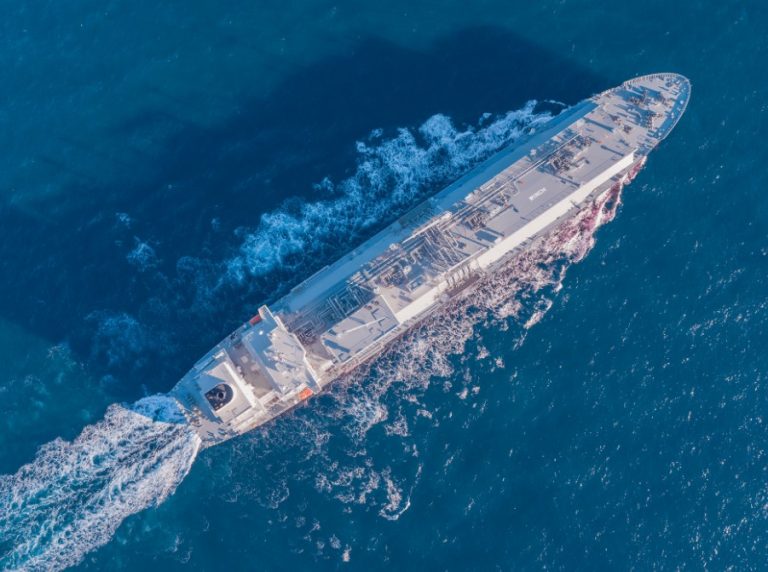
The Evangelos Marinakis-backed, US-listed shipping firm announced the order in a statement on Monday, saying the vessels will be delivered in 2028 and 2029.
One vessel scheduled for delivery in the third quarter of 2028 and two further deliveries in the first quarter of 2029.
According to CCEC, the en-bloc shipbuilding price of these vessels is $769.5 million, or $256.5 per vessel.
“The vessels have been designed to incorporate a number of upgrades in their specification and are expected to rank amongst the most efficient LNG/Cs in the global fleet in terms of fuel consumption and boil-off rates,” CCEC said.
21 LNG carriers
With its latest order for three additional LNG carriers, CCEC said it reaffirms its strategic position as the largest US-listed LNG shipping company with 12 vessels currently in the water and nine on order.
CCEC said the company’s newbuilding deliveries span from the third quarter of 2026 to the first quarter of 2029, which coincides with the anticipated expansion of LNG liquefaction capacity from 493 mtpa today to at least 649 mtpa by 2030.
In addition, CCEC has on order an additional 10 gas carriers, including four handy LCO2/multi-gas carriers and six dual-fuel medium gas carriers, with deliveries starting in the first quarter of 2026.
The CCEC fleet benefits from approximately $3 billion of contracted revenue and an average remaining charter duration of 6.9 years, underpinning the company’s ongoing fleet expansion strategy.
“This is an opportunistic transaction for CCEC, which closely aligns with our executed strategy and forward objectives,” Jerry Kalogiratos, CEO of CCEC, said.
“I believe that we have secured attractive pricing and payment terms for state-of-the-art, high specification vessels, whose deliveries we expect to coincide with increased demand for LNG shipping from a number of LNG projects that are expected to come online in this timeline,” he said.
“Notably, this transaction allows CCEC to selectively contract the most attractive specification LNG/Cs for charterers, to be delivered at the most undersupplied part of the forward curve,” Kalogiratos said.