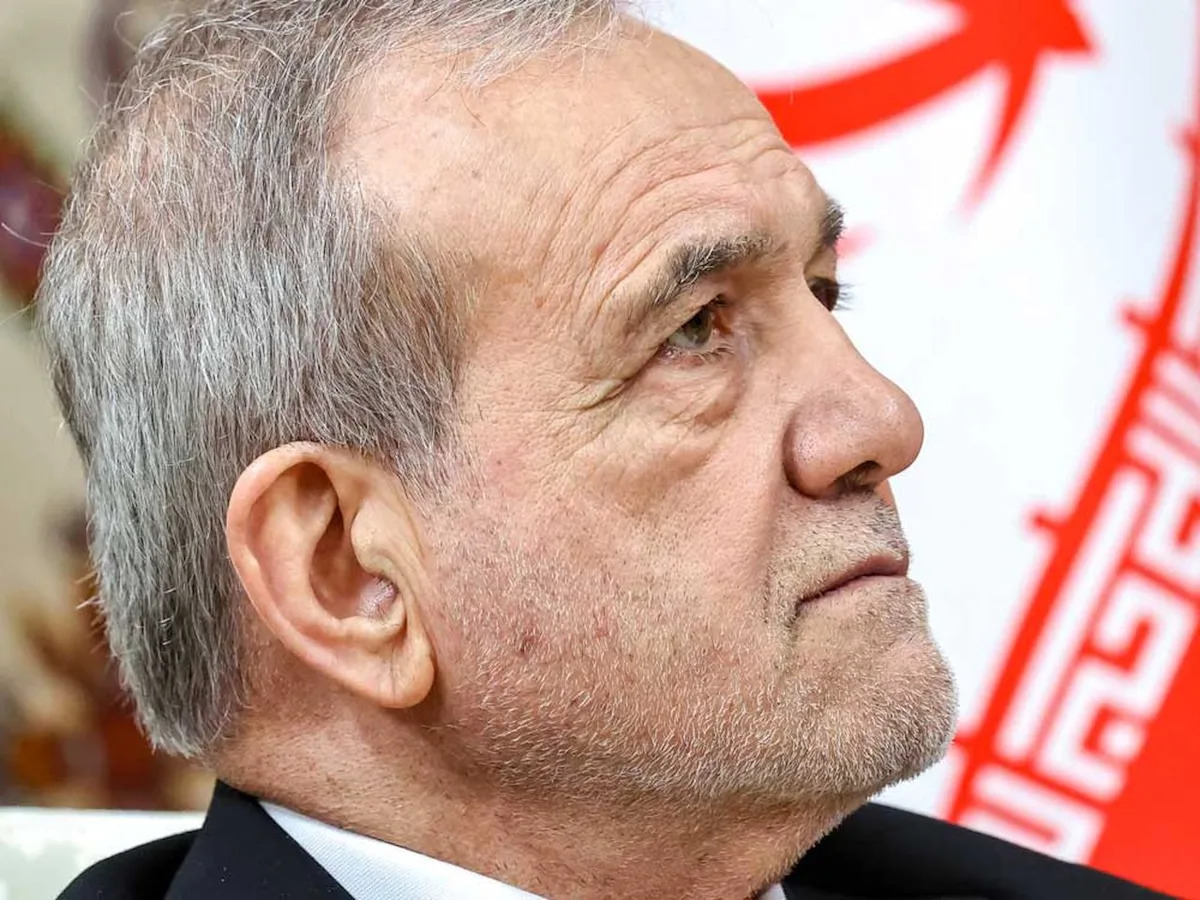
OTTAWA — Still reeling from Israeli retaliatory attacks over the summer, Iran claimed over the weekend to be in the midst of a “full-scale war” with Europe, the United States and Israel.
Those words came from the Iranian regime’s President Masoud Pezeshkian in an interview published online — a conflict he claims is greater than their 1980s war with Iraq.
“We are in an all-out war with the United States, Israel, and Europe; they do not want our country to remain stable,” he said in an interview published on the website of the regime’s supreme leader Ayatollah Ali Khamenei.
“In the war with Iraq, the situation was clear — they fired missiles and it was clear where we would strike back. But here, they are now besieging us in every respect, putting us under pressure and in tight corners, creating problems — economically, culturally, politically, and in terms of security.”
Iran’s despotic regime has conducted a proxy war against Israel and the west for decades — largely propping up terrorist regimes and organizations supporting the Palestinian cause — including Hamas, Lebanon-based Hezbollah and the Houthis.
Iran facing pressures at home
Pezeshkian’s comments came as Benjamin Netanyahu prepares to meet U.S. President Donald Trump Monday in Florida, where the Israeli prime minister is expected to seek a harder line against Iran — particularly new advancements in the regime’s ballistic missile program they say poses a direct threat to Israel’s security.
The comments also come as the Iranian regime faces mounting pressures at home, said Joe Varner, deputy director of the Conference of Defence Associations and senior fellow at the Macdonald-Laurier Institute.
“They’ve got critical water shortages throughout Tehran and other places, a large portion of the population lives in poverty, their homes are not stable, something like 80,000 buildings are on the verge of collapse,” he told the Toronto Sun.
“They’ve doubled the number of executions since the Twelve Day War, and there’s been protests in the Iranian capital and other areas, and reports out of last night on social media said they were canting for the return of the crown prince of Iran (Reza Pahlavi).”
Last year, the theocratic terror state unleashed ballistic missile attacks against Israel under the claims of “self-defence.”
In April, hundreds of missiles and drones were launched towards the Golan Heights and two airbases in southern Israel — resulting in minor damage and no deaths.
That was followed by a second attack in October 2024, which likewise caused little damage and one direct death, a Palestinian killed by missile debris.
This past June, Israeli attacks on Iranian nuclear facilities — aided by U.S. air strikes — sparked a twelve-day conflict, leaving several key Iranian military and nuclear officials dead.
Iran still a threat
Despite Israel’s attacks, Iran, Varner said, still remains a threat.
“They certainly have substantial missile forces left,” he said, adding Israel admitted their force estimates prior to the Twelve Day War weren’t accurate.
“They have started to move around and work around their bombed-out nuclear facilities, there’s still a question of a large amount of almost-weaponized nuclear material, and some question as to the state of Iran’s nuclear program.”
While obtaining fissile elements such as uranium and plutonium for nuclear weapons is somewhat trivial, enriching them to a point where they can be weaponized is always a challenge for fledgling nuclear states.
bpassifiume@postmedia.com
X: @bryanpassifiume