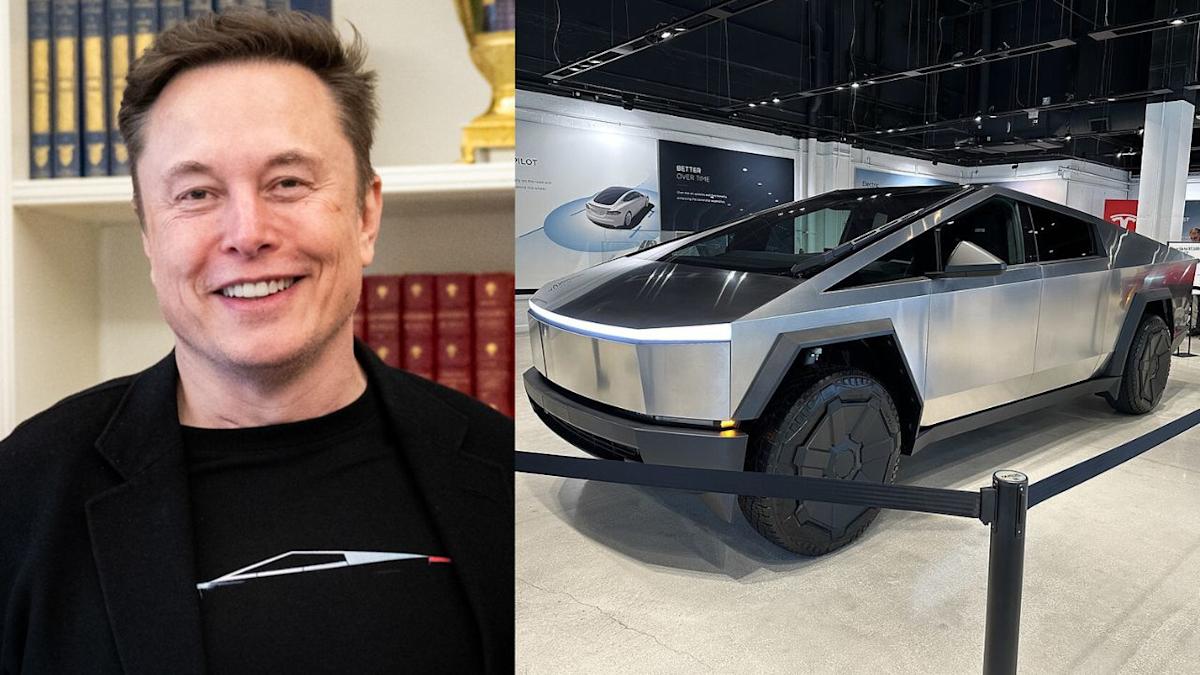
When Elon Musk took to X (formerly Twitter) to declare “Cybertruck is awesome,” Tesla naysayers refused to see any more than just another bout of Silicon Valley bravado. Behind the swagger, though, was a headline-grabbing accolade:
Tesla’s angular, stainless-steel beast has earned the Insurance Institute for Highway Safety’s (IIHS) coveted Top Safety Pick+ award, scoring a perfect “Good” rating across every major crash category. For an automobile with identity crisis that has been as polarizing as it is futuristic, this achievement is as much a vindication as a provocation.
Safety First, Style Second?
The IIHS award is a big one. Vehicles undergo rigorous crash tests (front overlap, side impact, roof strength, head restraints) and only those that excel across the board earn the “+” distinction. For Tesla, whose reputation has often leaned more toward innovation than traditional safety, the Cybertruck’s performance signals a maturation. It’s saying the car has matured from a symbolic sci-fi prop to a proper fortress on wheels.
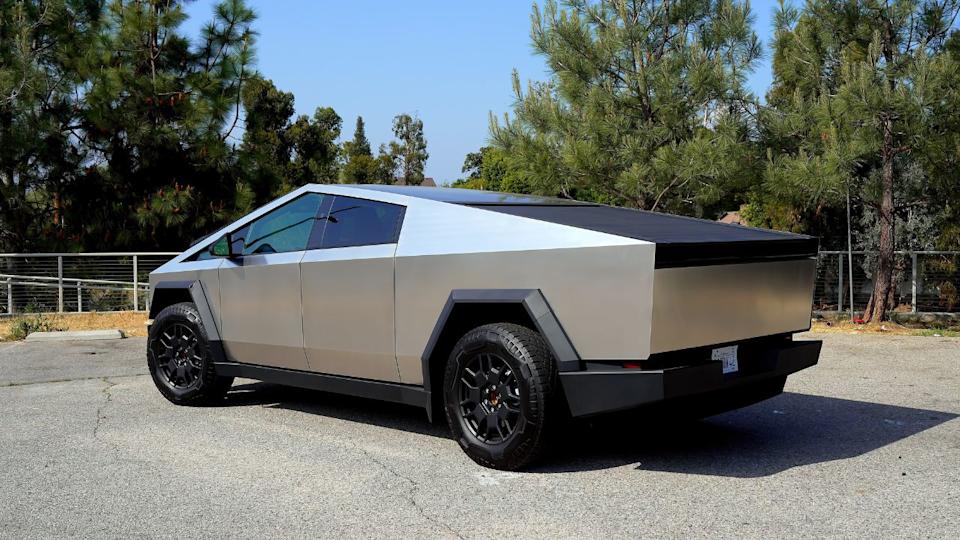
Image Credit: wedmoments.stock / Shutterstock.
Yet the irony is delicious: a truck that looks like it was designed with a ruler and a dare has proven itself in the most conventional metric of all—survivability. The Cybertruck’s sharp edges and brutalist aesthetic may divide designers, but in the crash lab, geometry is destiny. Its rigid exoskeleton and weight distribution appear to have worked in its favor.
Tesla’s safety narrative has always been complicated. The company pioneered advanced driver-assistance systems, but those same systems have drawn scrutiny from regulators over accidents and driver misuse. The Cybertruck’s award therefore arrives at a moment when Tesla needs a reputational boost. It sends the message that beyond the headlines about autopilot mishaps, the vehicles themselves can be structurally sound.
The Cybertruck’s success is also a challenge to certain circles in the auto industry. Traditional truck makers—Ford, GM, Ram—have long dominated the safety conversation with incremental improvements. Tesla has now muscled into their territory, not just with electric propulsion but with crash-test credibility. It challenges the entrenched idea that the future of trucks is about torque and towing with resilience when things go wrong.
A Clever Contradiction
Of course, Musk’s celebratory post was characteristically succinct: “Cybertruck is awesome.” It’s the kind of minimalist marketing that relies on his cult of personality. But beneath the brevity lies a strategy. By amplifying the award, Musk reframes the Cybertruck from a curiosity, mocked for its delayed rollout and unusual design, into a legitimate contender in the safety arena. It’s a pivot from spectacle to substance, though delivered with his usual flair.
This Cybertruck with 5-stars safety ratings is officially both a symbol of excess and a paragon of safety. It looks like it could star in a dystopian blockbuster, yet it’s also the one you’d want protecting you in a collision. Right? That contradiction is part of its charm. It forces us to rethink what “safe” looks like. Maybe safety doesn’t have to be wrapped in soft curves and family-friendly marketing. Maybe it can wear armor plating and still pass every test.
The award also has ripple effects. Regulators may view it as evidence that unconventional designs can meet or exceed safety standards. Consumers, meanwhile, might feel reassured that buying into Tesla’s radical vision doesn’t mean compromising on protection. And competitors will likely be spurred to innovate, lest they be outflanked by a truck that looks like it escaped from a video game.
The Final Act
So, is the Cybertruck “awesome”? In the narrow sense Musk intended—yes. It’s rare for a vehicle to simultaneously embody meme culture and engineering excellence. The IIHS award doesn’t erase Tesla’s controversies, nor does it guarantee smooth roads ahead. But it does cement the Cybertruck as more than a novelty. It’s a paradox on wheels: absurd yet admirable, divisive yet defensible.
In the end, the Cybertruck’s triumph is less about Musk and more about the quiet authority of crash-test dummies. They don’t care about aesthetics or hype. They measure impact, resilience, survival. And in their judgment, the Cybertruck passed with flying colors. That’s good enough for “awesome.” And consequential.