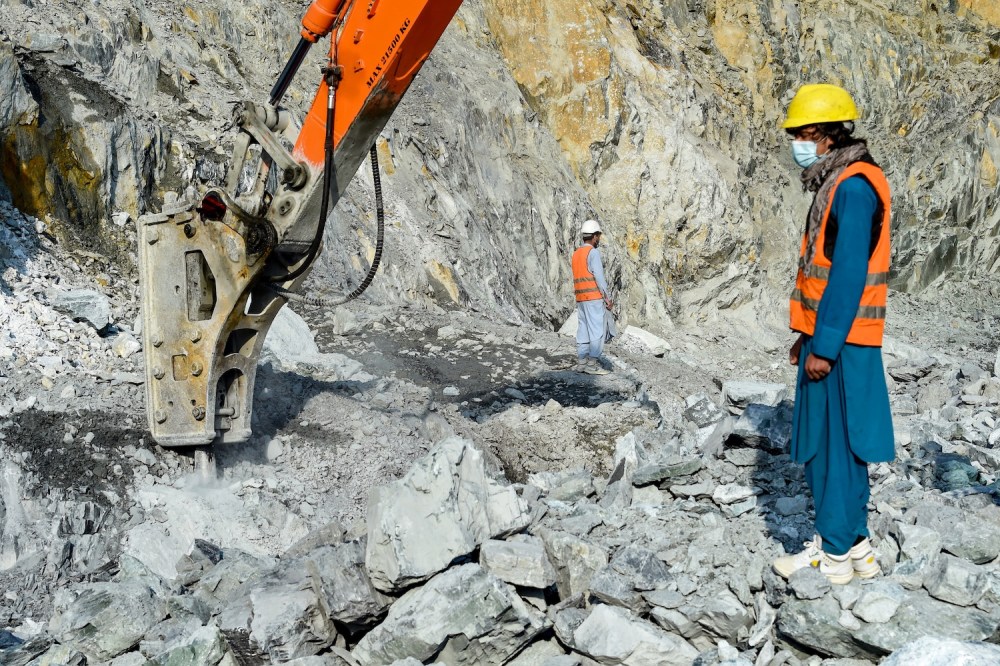
This year might be remembered as the one in which critical minerals took center stage. Of the 50 or so raw materials that comprise the building blocks of the U.S. defense and energy sectors, U.S. President Donald Trump has yet to come across one that he doesn’t like. In fact, as Foreign Policy’s Christina Lu observed, critical minerals are the “through line” of Trump’s second term, and access to them has shaped his geographic fixations and alliances.
Part of what motivates Trump is that the supply chains for rare earths, a particularly sought-after subset of 17 metallic elements, are largely controlled by China. By mid-2025, with the two superpowers locked in a bitter trade war, Beijing showed its willingness to weaponize that control, unveiling a series of export restrictions largely targeting heavy rare earths. Though China eventually agreed to suspend their implementation until late 2026, the United States took the hint and has doubled down on its hunt for friendlier partners.
This year might be remembered as the one in which critical minerals took center stage. Of the 50 or so raw materials that comprise the building blocks of the U.S. defense and energy sectors, U.S. President Donald Trump has yet to come across one that he doesn’t like. In fact, as Foreign Policy’s Christina Lu observed, critical minerals are the “through line” of Trump’s second term, and access to them has shaped his geographic fixations and alliances.
Part of what motivates Trump is that the supply chains for rare earths, a particularly sought-after subset of 17 metallic elements, are largely controlled by China. By mid-2025, with the two superpowers locked in a bitter trade war, Beijing showed its willingness to weaponize that control, unveiling a series of export restrictions largely targeting heavy rare earths. Though China eventually agreed to suspend their implementation until late 2026, the United States took the hint and has doubled down on its hunt for friendlier partners.
Below are five of FP’s best reads on the resources that shaped geopolitics—and especially Trump’s foreign policy—this year.
1. Trump’s Chaotic Agenda Has a Critical Through Line
By Christina Lu, Feb. 26
Absorbing Canada into the United States. Taking over Greenland. Seizing the Panama Canal. Controlling Ukraine’s natural resources. In the whirlwind that was Trump’s first month back in the Oval Office, Lu identified access to critical minerals as the common element. (Sorry.)
However, experts warned that signing deals is just the first step in procuring these vital building blocks of the U.S. defense and energy sectors. “The reality is that mining is complex and difficult,” Morgan Bazilian, director of the Payne Institute at the Colorado School of Mines, tells Lu, describing the establishment of a supply chain as a “multi-decadal situation.”
2. How Rare Earths Became China’s Top Trade Weapon
By Christina Lu, July 1
Washington wasn’t always so vulnerable to Beijing’s chokehold, Lu writes. The United States was once the largest producer of rare earths, yet as it turned away amid environmental concerns, China poured immense capital and resources into the industry. And 2025 wasn’t the first year that China weaponized its rare earths in a geopolitical spat: Most notably, it halted exports to Japan in 2010. The United States, though, failed to heed the warning.
“As the United States turned away, China doubled down,” Lu reports. “Beijing has for decades poured immense capital and resources into research efforts and industry infrastructure, giving it such an entrenched hold over market supply today that it has been able to influence global prices—and make it difficult for anyone else to compete.”
3. Why Rare Earths Are About to Cost a Lot More
By Patrick Schröder, Oct. 27
When the United States and Australia signed a new $8.5 billion rare-earths agreement in October, Trump commented that “in about a year from now we’ll have so much critical mineral and rare earth that you won’t know what to do with them,” adding that “they’ll be worth $2.”
Patrick Schröder, a research fellow at Chatham House, unpacks that claim and explains why rather than becoming cheaper, rare earths are becoming more expensive as countries seek to diversify supply chains. “Beyond what is essentially the geopolitical premium that governments and industrial buyers are increasingly willing to pay, future rare-earth prices will need to factor in the cost of reliable, transparent, and environmentally responsible production,” he writes.
4. Tungsten Is the Next Flash Point in the Resource Race
By Christina Lu, Nov. 12
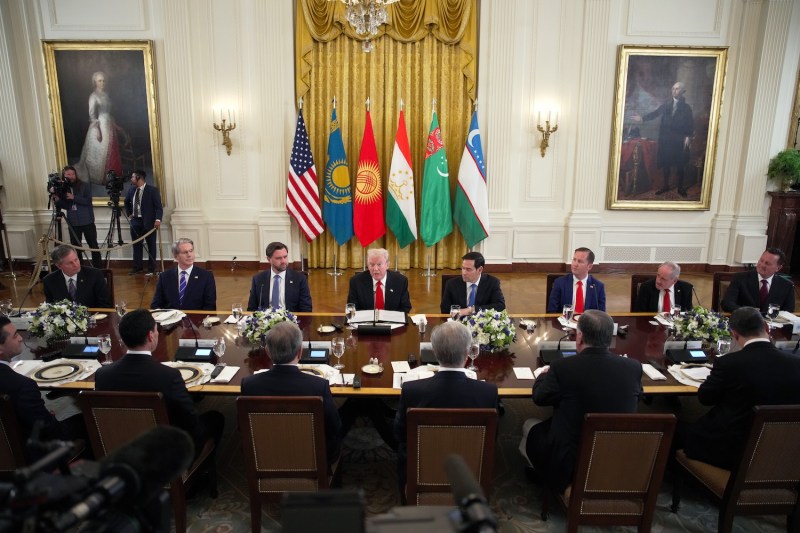
U.S. President Donald Trump, center, joined by lawmakers and members of his administration, delivers remarks during a dinner with leaders of Central Asian countries in the East Room of the White House in Washington on Nov. 6.
U.S. President Donald Trump, center, joined by lawmakers and members of his administration, delivers remarks during a dinner with leaders of Central Asian countries in the East Room of the White House in Washington on Nov. 6.Andrew Harnik / Getty Images
Alarmed by U.S. exposure to China’s rare-earths chokehold, the Trump administration in November accelerated efforts to identify and plug another mineral vulnerability: tungsten, a key component in everything from turbine blades to armor-piercing munitions. World powers have long clashed over tungsten, and today, China overwhelmingly commands global supply chains.
To counter this, the United States has turned to diplomacy with Central Asian leaders. But “Central Asia is not a straightforward area to do business,” one expert tells Lu. The tale of tungsten encompasses the difficulties with diversifying critical mineral supply chains writ large.
By Rishi Iyengar, Dec. 8
Even in an administration that has been full of surprises, Trump’s pivot to Pakistan stands out. In a deep dive, FP’s Rishi Iyengar explores how Pakistan “made the most of what it had” with Trump—namely, “silver-tongued leaders and critical mineral reserves”—to forge a closer relationship than most.
On critical minerals, the Pakistanis “put in the long yards strategically,” a source tells Iyengar, pointing to a gold and copper reserve for which the government sought a Western partnership as a prominent example of such outreach.