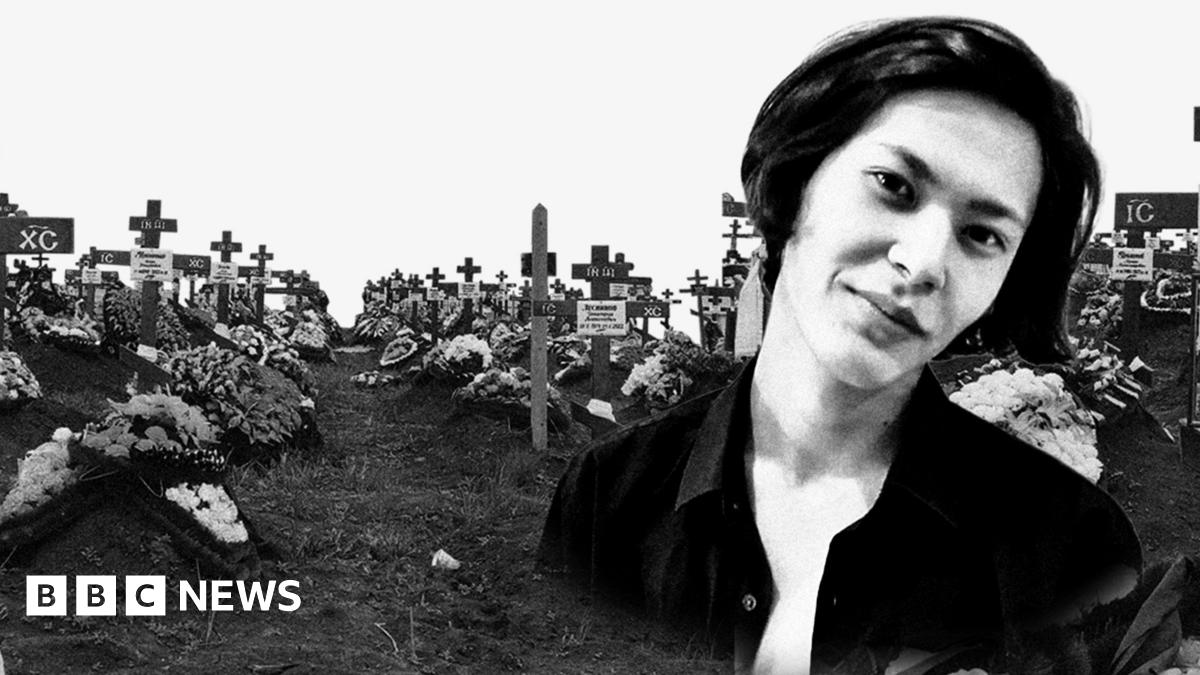
He had repeatedly condemned Russia’s invasion of Ukraine on social media from 2022. Then, in early 2024, Mukashev was detained near his home in Moscow and charged with large-scale drug dealing.
While his case was being tried he was offered a contract with the defence ministry, according to his friends and family.
They saw the heavy charges levelled against him as a typical ploy to get people to sign up. A 2024 law allows the accused a way out of a criminal conviction if they join up – an attractive option in a country with an acquittal rate of less than 1%.
Mukashev refused the offer, and the court sentenced him to 10 years in a high-security penal colony.
In prison in November 2024, he changed his mind. Friends said he was encouraged by Trump’s promises to end the war quickly and decided he needed to sign up as soon as possible to secure his release before a peace deal was reached.
“He saw this as a chance to be released instead of being imprisoned for 10 years of strict regime,” reads a statement from his support group.
There was no explanation of how he reconciled taking part in the war with his reluctance to kill.
On June 11 2025, Mukashev died fighting as part of an assault squad in the Kharkiv region of north-eastern Ukraine.
Like him, the majority of Russians killed at the front in 2025 had nothing to do with the military at the start of the full-scale war, BBC figures show.
But since the bloody battle for the city of Avdiivka in October 2023, there has been a steady increase in casualties among so-called “volunteers” – those who have voluntarily signed a contract since the start of the invasion.
They now appear to form the majority of Russia’s new recruits, as opposed to professional soldiers who joined the army before the invasion or those mobilised for military service afterwards.
A year ago 15% of Russian military deaths were volunteers, but in 2025 it was one in three.