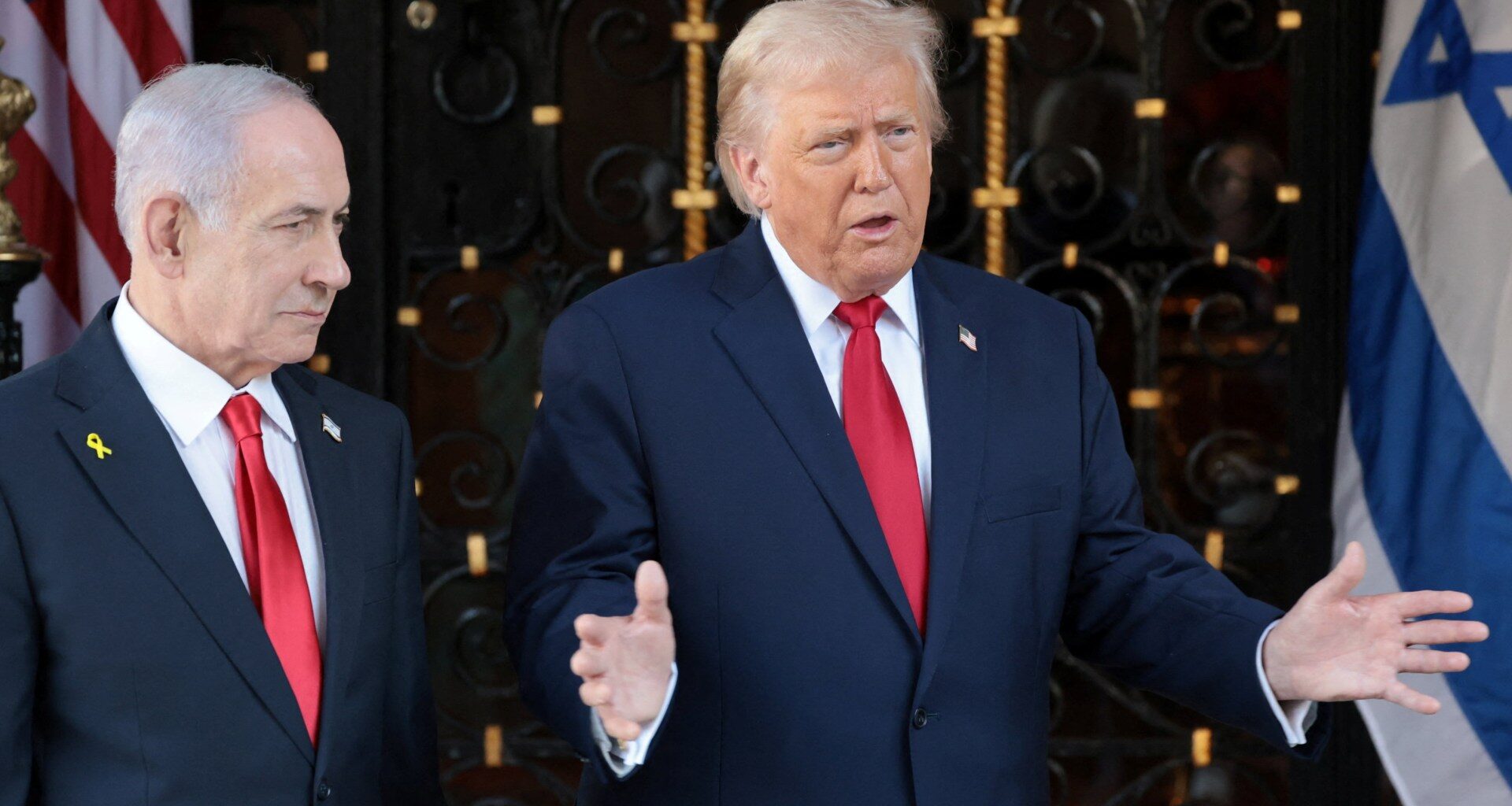
United States President Donald Trump has warned Hamas of “horrible” consequences if it fails to disarm, while also pledging swift action against Iran if it tries to rebuild its nuclear programme.
Trump issued the threats on Monday, after talks with Israeli Prime Minister Benjamin Netanyahu at his Mar-a-Lago resort in Florida.
Recommended Stories list of 3 itemsend of list
The US president said his talks with the Israeli leader focused on advancing the ceasefire deal he brokered for Israel’s genocidal war on Gaza, as well as addressing Israeli concerns over Iran, and over Hezbollah in Lebanon.
Trump said that Israel has been doing its part in the Gaza ceasefire, despite launching near-daily strikes that have killed at least 400 people there since the truce, and warned Hamas to live up to its side of the agreement.
“We talked about Hamas and we talked about disarmament, and they’re going to be given a very short period of time to disarm, and we’ll see how that works out,” he said.
“If they don’t disarm, as they agreed to do – they agreed to it – and then there’ll be hell to pay for them. And we don’t want that.”
There was no immediate comment from Hamas.
The first phase of the ceasefire, which went into effect on October 10, calls for the exchange of Israeli captives held by Hamas for Palestinian detainees and prisoners held by Israel, as well as an increase in aid and a partial Israeli withdrawal in Gaza.
Hamas is yet to return the body of one Israeli captive, while Israel, in addition to continued deadly attacks, has restricted the entry of aid and delayed the opening of the Rafah crossing between Gaza and Egypt.
But Trump heaped the blame solely on Hamas for the delay in moving towards the more difficult steps envisaged in the second phase of the truce. The armed group has said it will not lay down its weapons as long as Israeli occupation of Palestinian territory continues.
Strikes on Iran
Trump went on to suggest that Iran may be working to restore its nuclear programme after the US air strikes in June damaged three Iranian nuclear facilities.
“Now I hear that Iran is trying to build up again, and if they are, we’re going to have to knock them down,” Trump told reporters. “We’ll knock them down. We’ll knock the hell out of them. But, hopefully, that’s not happening.”
If Iran was trying to build up its nuclear programme again, “we’re going to have no choice but very quickly to eradicate that buildup”, he said. The consequences of such a move could be “more powerful than the last time”.
“We know exactly where they’re going, what they’re doing, and I hope they’re not doing it, because we don’t want to waste fuel on a B-2,” Trump added, referring to the bomber used in the earlier strike. “It’s a 37-hour trip both ways. I don’t want to waste a lot of fuel.”
The US president declined to offer evidence to support his allegations against Iran. But he added that the US and Israel have been “extremely victorious” against their enemies, and that if the US “didn’t beat Iran, you wouldn’t have had peace in the Middle East”.
When asked whether the US would back an Israeli attack on Iran’s missile programme, Trump said, “If they will continue with the missiles, yes. The nuclear? Fast. OK? One will be: Yes, absolutely. The other is: We’ll do it immediately.”
There was no immediate comment from Iran.
Tehran has denied seeking to build a nuclear weapon and ruled out negotiating over its missile programme, which is at the core of its defence strategy.
During the conflict in June, sometimes referred to as the 12-day war, Iran fired hundreds of missiles in response to Israeli attacks that killed the country’s top generals, several nuclear scientists and hundreds of civilians.
US Senator Lindsey Graham, an Iran hawk who is close to Trump, visited Israel this month and repeated the Netanyahu government’s talking points about the dangers of Iran’s long-range missiles. He warned that Iran is producing them “in very high numbers”.
“We cannot allow Iran to produce ballistic missiles because they could overwhelm the Iron Dome,” he told The Jerusalem Post, referring to Israel’s air defence system. “It’s a major threat.”
‘Much harsher’ response
On Monday, Trump said Iran should “make a deal” with the US.
“If they want to make a deal, that’s much smarter,” Trump said. “You know, they could have made a deal the last time, before we went through a big attack on them, and they decided not to make the deal. They wish they made that deal.”
While Washington has brokered three ceasefires involving its longtime ally – between Israel and Hamas, Israel and Iran, and Israel and Lebanon – Netanyahu is wary of Israel’s foes rebuilding their forces after they were considerably weakened in multiple wars.
Overall, Trump’s comments suggest he remains firmly in Netanyahu’s camp, even as some aides have privately questioned the Israeli leader’s commitment to the Gaza ceasefire. Trump’s comments also suggest that he is willing to risk additional hostilities related to Gaza and Iran, even as the US president has taken credit for resolving Israel’s wars in both places.
The sabre-rattling on Monday also came weeks after the Trump administration released a National Security Strategy that called for the US to shift its foreign policy resources away from the Middle East and instead focus on the Western Hemisphere.
But advocates of the strategy warn that another episode of attacking Iran may escalate into a longer, broader war.
In June, Iran responded to the US strikes with a missile attack against a US airbase in Qatar, which did not result in any US casualties. Trump announced a ceasefire to end the war shortly after the Iranian response.
Trita Parsi, the executive vice president at the Quincy Institute, a US think tank that promotes diplomacy, told Al Jazeera last week that the Iranian response would be “much harsher” if the country is attacked again.
“The Iranians understand that, unless they strike back hard and dispel the view that Iran is a country that you can bomb every six months, unless they do that, Iran will become a country that Israel will bomb every six months,” Parsi said.