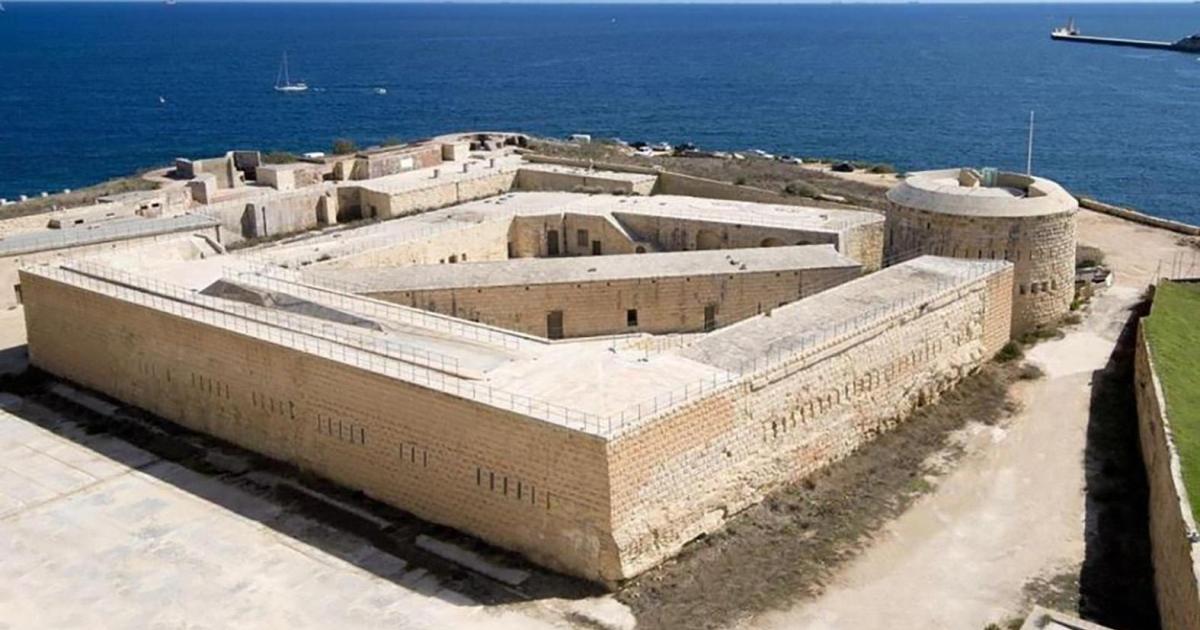
Fort Tigné should be managed by a purposely set-up heritage trust, according to Malta’s UNESCO ambassador.
The future of the 18th-century fort at Tigné Point, in Sliema, has been in the spotlight since a Times of Malta report in December revealed plans by developer Joseph Portelli to purchase it from MIDI ‒ which acquired it from the government in 1999 ‒ and turn it into a “high-end, low-density hotel”.
The news prompted strong reactions by NGOs. Din l-Art Ħelwa said it would match the €2.5 million sale price for the fort.
Prime Minister Robert Abela said he was completely against the sale and Opposition leader Alex Borg also voiced his opposition to the plans.
Writing in the Times of Malta, Joe Vella Gauci, Malta’s ambassador and permanent delegate to UNESCO, said the latest chapter in Fort Tigné’s history had been “a long time coming ‒ a story of questionable decisions being followed by yet more questionable ones”.
“But, really and truly, we are now at the crossroads where whoever is in the driving seat needs to choose a left or right. And the choices are quite fundamentally different, disparate,” Vella Gauci said.
The UNESCO ambassador noted that the fort – together with Malta’s other fortifications in Valletta, Cottonera, Mdina and Victoria – was in the process of being nominated for a World Heritage listing.
Vella Gauci said that while he would not enter into the merits of whether the country needs more hotels, he observed that Malta only had one Fort Tigné. “How many Fort Tignés do we afford to lose before we realise we ought to put a stop to all this,” he asked.
He welcomed the government’s and opposition’s recent position on the fort and called for a trust to be set up to manage it.
This trust, he added, would enforce strict conservation rules, guarantee public access, limit commercial activity and ensure full transparency.
“We have to stop equating our national heritage to real estate portions and prices. Our national heritage should instil not price tags but values of historical integrity and collective memory.”