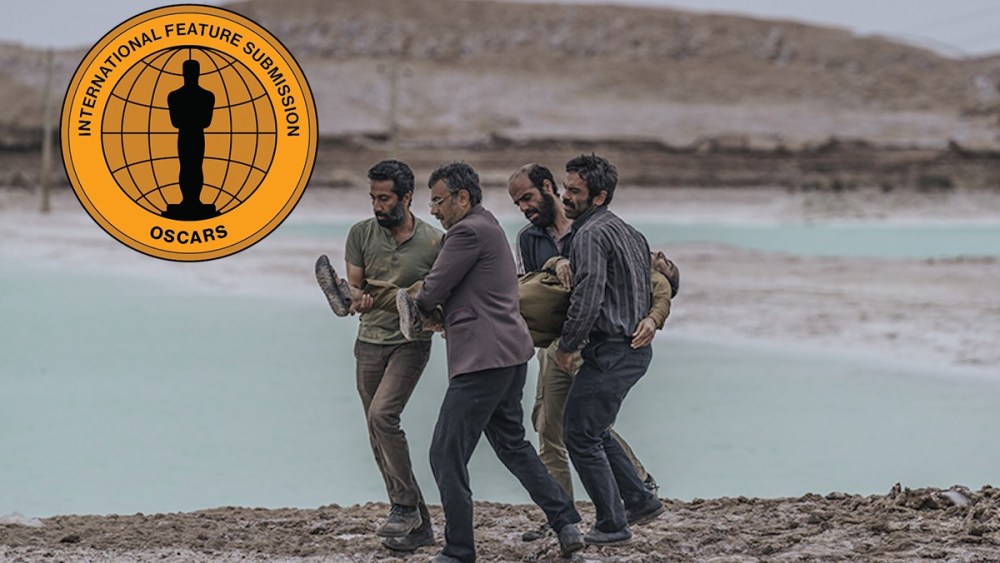
This year, there are two films vying for the best international feature film Oscar which are set in Iran, following a group of people, mostly strangers to each other, traveling in a van with a person that they may have to bury in the desert.
One is Jafar Panahi’s Palme d’Or-winning “It Was Just an Accident,” which the Iranian regime would never consider submitting for the Academy’s consideration. Panahi is legally embattled at home for his outspoken criticisms of the government. The thriller is instead representing France. The other title with that shared premise is “Cause of Death: Unknown,” Iran’s official entry, by writer-director Ali Zarnegar, a filmmaking debut from a seasoned screenwriter which could have garnered him deserved international attention under a different set of circumstances, but did not make the category’s shortlist.
Though inevitably overshadowed, “Cause of Death: Unknown” is by no means a toothless state-sanctioned selection, which becomes more of a surprise as it reveals itself to be a politically laced narrative at every turn and in the backstory of each of the characters in the top-notch ensemble — albeit in a less overt manner than in Panahi’s more confrontational project.
With a stern demeanor, Ahmad (Banipal Shoomoon), a mustachioed man, tries to soothe a younger guy crying inside a car in the opening scene. Later, while riding in a taxi van across an arid landscape, Ahmad will disclose that he spent time in prison. Bits of piecemeal information about each of the passengers emerge, the deeper they become involved in a situation that could land them all behind bars.
The driver, Majid (Ali Mohammad Radmanesh), has romantic feelings for his copilot, Najveh (Zakieh Behbahani), a deaf woman in a relationship with a domestic abuser. Naser (Alireza Sani Far), a man whose father was a mortician, carries a suitcase that he will eventually barter for money. Sitting in the back are Peyman (Soheil Bavi) and Bahar (Neda Jebreili), a young couple seeking to leave the country illegally because his political activism has put him at risk of apprehension. Traveling with them is Esmaeil (Reza Amouzad), a down-on-his-luck, desperate man whose tattered clothes and shoes betray he’s in the clutches of near-abject poverty.
There’s one more passenger on board, a man asleep who falls from his seat when Majid abruptly brakes early in the trip. The unplanned stop marks a watershed in their collective journey. A large sum of money enters the picture, but so does a dead body they have to deal with. Zarnegar operates with a superbly calibrated screenplay. He must tread lightly when approaching controversial subjects in his homeland or face the fate of Panahi (recently sentenced to a year in prison and banned from leaving Iran). The exasperated traveler’s exchanges, often cautiously accusatory, play out as if they are all testing how potently they can imply that the others want to keep the cash for themselves. The taut scenes provide the actors with a playing field to shine individually in heated arguments, sobering moments of empathy and painfully honest talks about what comes after a life-altering event.
Their decision on how to proceed must be made before reaching a checkpoint. Both lying and telling the truth about what happened could land them in similar trouble. If they all can agree on something, it is their distrust of institutions. That they get accosted halfway through by police officers who treat them with suspicion despite not knowing what they hide proves their hesitation. In turn, the stacks of dollar bills offer a chance that none of them thought possible. Naser, for example, could pay for his wife’s medical treatments. Their respective sorrows could be, if not erased entirely, at least diminished. When the men discuss the exchange rate between the U.S. currency and the Iranian toman, the precariousness of their realities is presented in a materially concrete way.
Against the blank backgrounds in the middle of nowhere, cinematographer Davood Malek Hosseini can concentrate on the most notable elevations in sight: the sulking faces of these men and women who wish to uphold their honor, at least in front of the others, but who are tempted to act selfishly, facing a moral conundrum while in need. The causes of their affliction are not only known but hovering over them, and they all lead back to those in power and their handling of the country. The explicit mention of the death penalty as the source of one passenger’s misery, and their need for blood money — a possibility for everyday citizens — as well as Peyman’s youthful rage against the injustices forcing him to flee, feel definitely charged with defiance, even if measured.
In the end, the only witness to their choices is the sand that will hide their secret and one another’s consciences. In the tradition of Panahi, Asghar Farhadi, Mohammad Rasoulof and other Iranian filmmakers whose stories hinge on impossible tests of morality under unimaginable sociopolitical constraints, Zarnegar delivers a gut-punch of an ending that renders whatever modicum of hope they’d attained null. Their win can only come at the expense of someone else’s suffering. Though they all knew that from the onset of the ordeal, guilt settles in.