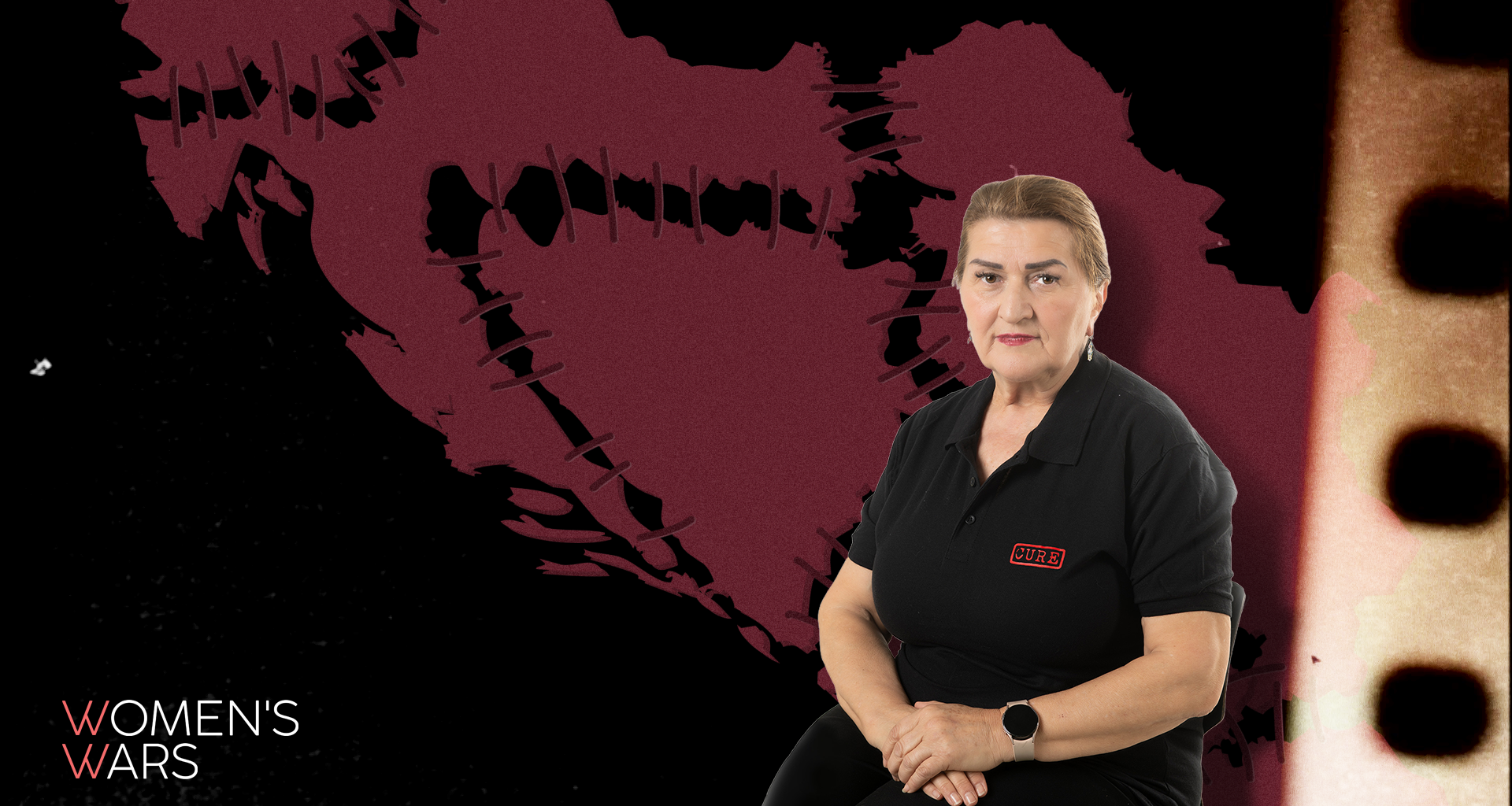
Milicevic describes herself as “an activist, feminist and peacemaker”, and her dedication to making a difference has continued for more than three decades since the Bosnian war.
Now living in Sarajevo again, she is the director and co-founder of the CURE Foundation, a human rights NGO that advocates for gender equality and organises actions, performances and protests against violence, discrimination and rights violations.
She talks about the importance of women’s roles in rebuilding the former Yugoslavia after World War II, in supporting victims during the wars that followed the break-up of the Yugoslav state, and the huge work done by women for reconciliation after the guns fell silent. She also says that the armed conflicts taught her important lessons.
“When the war [in Bosnia] started and when I started my life as an activist, I learned how important feminist politics are, about feminist justice, about sisterhood, and that we must open space for all others [of different ethnicities] despite our differences,” she says.
“It’s important – the sisterhood between all us women, not only in Bosnia and Herzegovina, but also in the region, where we have the same problems and the same relative experiences. It’s important to stay together in hard times,” she adds.
Three decades on, the women activists of the 1990s still have a connection, she continues. “We do not see each other every year, we do not send letters every month but we know when we need or want support. Especially when we have a hard period in our private life, we support each other.”
In terms of justice for the crimes committed during the wars, she is disappointed. Hundreds of cases have been brought to trial but many suspects have never been charged, despite the evidence against them: “After 30 years, this is not good.”
She explains that she sees in her daily work with the CURE Foundation how difficult it is for war survivors and family members who lost loved ones in places like Srebrenica or Prijedor and have never seen all the perpetrators prosecuted.
Some of the perpetrators may still live in the same area as the families of their victims, she says, forcing them to “every day see the men who are guilty for why they never found [the bodies of] their sons or husbands”.
Meanwhile, war criminals who have been jailed have subsequently served their sentences and returned home, where they are “welcomed as heroes”. Milicevic is adamant: “This is not justice.”
Funded by the European Union. Views and opinions expressed are however those of the author only and do not necessarily reflect those of the European Union. Neither the European Union nor the granting authority can be held responsible for them.