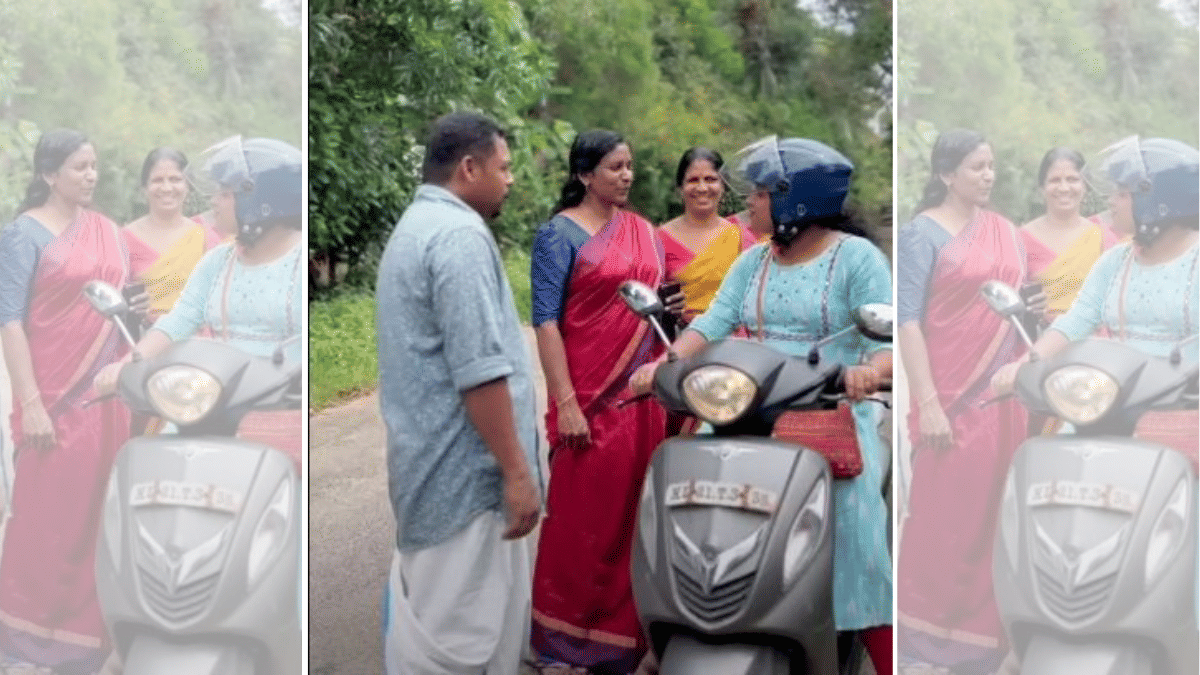
A full-time Kudumbashree volunteer since 2013, Mini said the CPI(M) first approached her in the 2020 local polls through her husband, an active party worker, when the Kochalammoodu ward in the same panchayat was reserved for women.
Happy with her performance as the ward member there in the last tenure, the party chose a more challenging ward for her this time.
Mini’s story isn’t unusual in Kerala. She is one of thousands of women who have entered local politics after being approached by political parties because of their active grassroots-level work through the Kudumbashree mission launched in 1998.
The trend began in the early 2000s, and over the years the mission has produced thousands of councillors across political parties.
According to official data, 7,210 of the total 23,612 councillors elected across village, block, district panchayats and corporations in the 2025 local body polls are Kudumbashree volunteers.
With 50 percent reservation for women in local bodies, women accounted for 40,040 of the total of 75,624 candidates, according to the State Election Commission.
Supriya Anilkumar, a Kudumbashree Community Development Society (CDS) chairperson from Wayanad, says the programme helps women enter politics as they are already familiar with survey and data collection work at the grassroots level, similar to the responsibilities of a ward member.
Supriya, who won from Wayanad’s Kuppadi panchayat, says that in Wayanad alone, at least 30 Kudumbashree workers have won in the elections. She adds that while the CPI(M) initially tended to approach Kudumbashree workers at the local level, the Congress and the Bharatiya Janata Party (BJP) have also begun doing so in recent elections.
From grassroots to politics
Launched during CPI(M) leader E.K. Nayanar’s tenure in 1998 as part of the People’s Plan Movement for decentralisation of powers, the Kudumbashree mission targeted women from rural and low-income families to promote savings and financial management.
It set up women’s neighbourhood groups, in which women aged 18 and above met weekly to promote thrift and credit initiatives that helped build savings and banking habits.
Within 10 years, the scheme expanded beyond thrift-based activity and participants launched entrepreneurial initiatives such as food-processing units and catering services. Many members have been trained and placed in jobs, including at the Kochi Water Metro, and as trained caregivers based on their qualifications.
During the pandemic, the mission even launched low-cost Janakeeya hotels, which were scaled up to premium cafés this year. Slowly, volunteers also found themselves working as an arm of the state government, conducting surveys and assisting departments, experience that served as a launching pad for their entry into politics.
Today, Kudumbashree members are elected councillors representing parties all the way from the CPI(M) to the Congress and the BJP.
“Kudumbashree has helped decently educated lower-middle class women, who have some political and social capital, to emerge,” said J. Devika, a gender and social historian and professor at the Thiruvananthapuram-based Centre for Development Studies (CDS).
“In the beginning, one big advantage of this initiative was that it helped women to manage the financial stress of the early 2000s, as it allowed loans without huge debts,” she told ThePrint.
Devika added that the panchayat administration was also easily accessible for these women, which helped some of them enter local politics.
“Some Kudumbashree ADS members were similar to panchayat ward members. It also led to political parties giving these women more importance at the local level, with the CPI(M) giving them easy membership to its committees, which was really difficult at that time.”
She added that the CPI(M), through its women’s wing, was quicker at mobilising Kudumbashree members early on, compared to the Congress.
Devika added that in the early 2010s, Kudumbashree also forayed into different ventures, including cafes, which became successful.
However, members are also extremely vulnerable to government policy and local political support.
“The government should stop giving all the responsibilities to Kudumbashree if it’s not directly related to the initiative’s objective. They should also be paid for all the services they have been asked to do. The Kudumbashree members shouldn’t be a reserve army of labour for everything,” Devika said.
Community work to politics
For many Kudumbashree workers, the transition from community work to politics was gradual.
Ambika Devi, 45, a Kudumbashree worker for 15 years who won from a SC general seat in the Pangode panchayat, said she emerged as the CPI(M)’s choice after the party initially struggled to find a candidate.
A CPI(M) supporter since her teenage years, Ambika said her work with the Kudumbashree programme and familiarity with community work, played a decisive role in the party’s choice.
CPI(M) leaders agree. R. Nasar, the CPI(M)’s Alappuzha district secretary, said the party began actively tapping Kudumbashree volunteers because of their popularity among women and villages.
He added that the CPI(M) began this trend as early as 2005, five years after Kudumbashree’s launch, and other parties followed due to its success.
“Grassroots level involvement is important to retain panchayat rule. And these women do that in their villages,” he told ThePrint, adding that the trend also helped increase women’s membership in the party.
According to the Kerala Local Self-Government Department (LSGD), 7,0058 Kudumbashree members won in the 2020 Kerala local body polls. A Manorama report said the number was 7,378 in 2015 and 848 in 2005.
Congress leader and Kerala Pradesh Congress Committee functionary C.C. Sreekumar said the Congress, too, began approaching Kudumbashree workers in the early 2000s, soon after the initiative was launched.
According to him, their presence in local bodies increased from hundreds to thousands after 2010.
He added that political parties prefer Community Development Society (CDS) and Area Development Society (ADS) chairpersons as candidates because of their leadership and community experience. Similar preferences are often extended to ASHA workers, he says.
“As women rise from being volunteers to leadership in the local community, they develop a relationship with political parties. So, parties prioritise them,” Sreekumar said.
From care jobs to premium cafes
While Mini found a career in politics because of the Kudumbashree programme, the initiative has helped others become financially independent.
Anand C from Kollam district, for instance, is happy she finally found a job in her favourite field after a wait of 25 years, thanks to training under the Kudumbashree mission’s K for Care project, a programme for homecare professionals.
Married at 20 in 1998, her husband’s family didn’t allow her to work for years. And when they finally changed their mind because of the family’s financial difficulties, she struggled to find a job.
But a free Kudumbashree training programme helped: she is currently employed as a caregiver for a 67-year-old with Parkinson’s disease and earns Rs 30,000 a month.
“We were facing many financial difficulties after my daughter’s wedding. Fortunately, I am earning. I am also able to do everything I studied,” said Anand, whose husband runs a small-scale restaurant serving meals in a rented building.
She isn’t alone. In Thiruvananthapuram city, Latha Sunil runs a premium café because of seed money provided by the Kudumbashree mission.
The 53-year-old had been doing odd jobs since her marriage, but was always passionate about cooking. The Rs 20 lakh seed money combined with the mission’s guidance on securing low-interest loans as well as registration and licensing procedures helped her launch her dream venture on 7 April.
“It was a big step. We are still figuring out how to go about each stage,” Latha said.
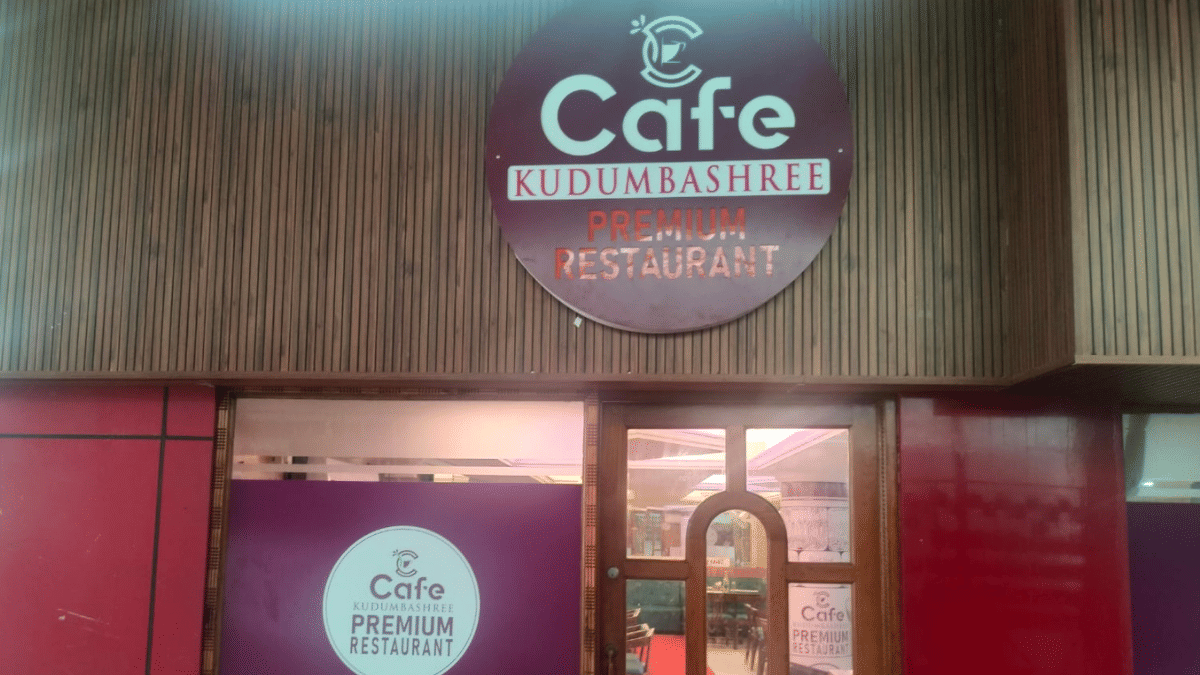 One of the premium cafés established using seed money provided by the Kudumbashree mission | By Special Arrangement
Eight months on, the premium café was buzzing on a Tuesday afternoon. Dishes such as ini sadya, chicken biryani, fish fry and crab roast flew off the tables as 11 women dressed in purple shirts went from table to table cleaning, serving, and explaining dishes.
At times, the conversations continued beyond food orders to casual chats about food and family.
“The cafe has already become a favourite spot for many, and we have repeat customers,” said 52-year-old Sheeba A. from Thiruvananthapuram district’s Valiyasala district who the Kudumbashree mission hired at the restaurant for Rs 500 a day.
Sheeba, who is also the secretary of her local Kudumbashree unit, Bapuji, supplements her income by retailing oil, garments and other items with fellow members.
“Because we are Kudumbashree workers, wholesale markets give us items at subsidised prices. We also allow customers to pay in instalments within three months, so sales are good,” said Sheeba.
She added that their work was monitored by the local CDS, which oversees Kudumbashree participants at the local-body level.
Latha said the CDS helped her and her partner, Sindhu Prithviraj, 55, with filling registration forms and applying for Mudra loans, a Central government scheme under the Pradhan Mantri MUDRA Yojana (PMMY) that provides micro-loans to non-corporate small enterprises.
She says they used the Rs 20-lakh aid to find and set up the space, while a Micro-Enterprise Consultant (MEC) appointed by the mission monitors their progress and visits the restaurant once a week.
Apart from Thiruvananthapuram, the restaurants now also have a presence in eight districts.
Jiji, from the Kudumbashree mission, said the idea of launching premium cafés stemmed from the success of the Kudumbashree-run Janakeeya hotels started in 2020 during the pandemic. The hotels provide affordable meals starting at Rs 20.
“They have autonomy. The only monitoring we do is to check if the structure is maintained and if meetings happen regularly,” she said.
According to Jiji, the mission has over 40 lakh participants across Kerala, of which 10 lakh are associated with different businesses. “We wanted changes after 25 years. The mission needed to show growth. So, we launched high-income projects like the premium café.”
The K for Care programme was introduced after public demand for trained home-care professionals. The premium café initiative was aimed at upscaling Kudumbashree’s food businesses through premium dining and local cuisine.
While Kudumbashree provides free training, seed capital and loan assistance, individuals have to handle extra costs and maintenance.
According to the 2025 Kerala Budget, Rs 270 crore is earmarked for Kudumbashree’s micro-enterprises, local economic development, microfinance and agriculture-linked activities.
The allocation has increased over the years. It stood at Rs 130 crore in 2016-17 when the Pinarayi Vijayan government took charge, up from Rs 84 crore in its 2012-13 Budget under the UDF-led Oommen Chandy government.
“We aim to increase members’ income from Rs 10,000 to Rs 30,000 and even up to a lakh or two. They already have the skillset, so why not make it competitive and branded?” said Jiji.