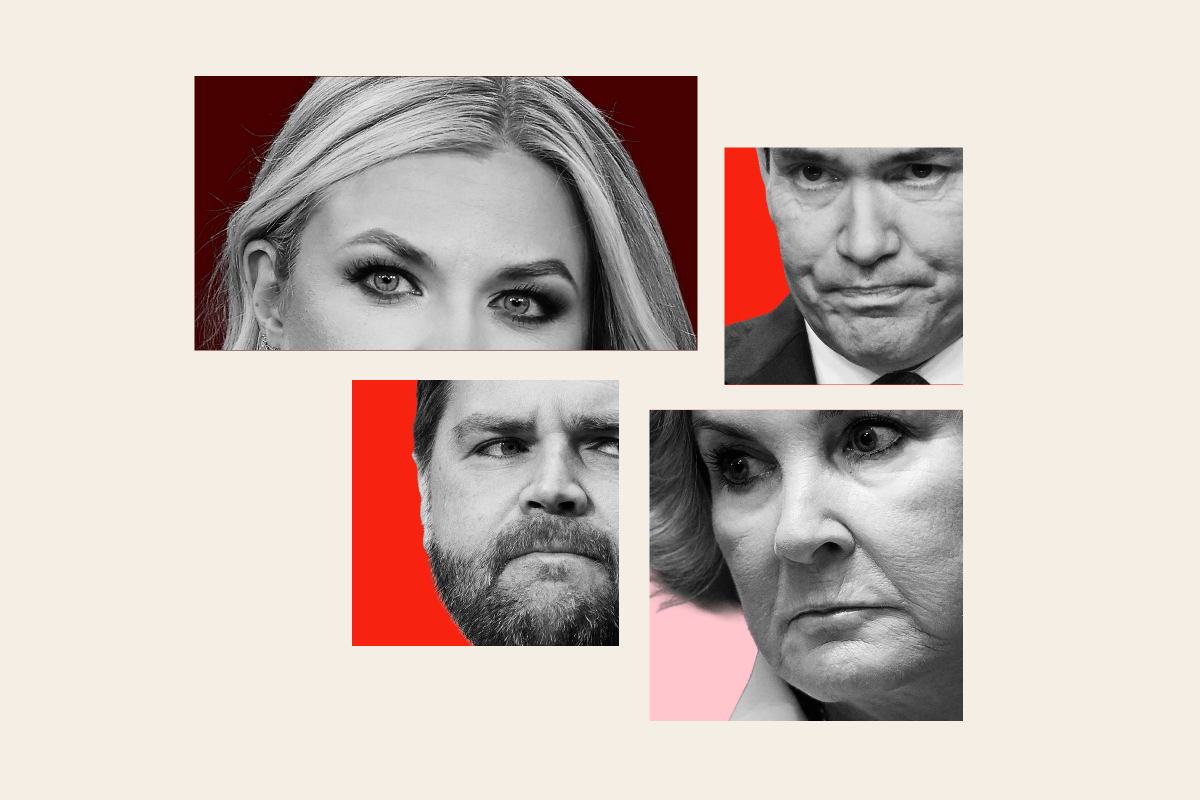
The battle for the soul of MAGA has already begun — and it’s taking shape around two men who have risen to the highest echelons of Donald Trump’s administration. Vice President JD Vance and Secretary of State Marco Rubio, once ideological opponents, have become the standouts figures in the Trump White House — and the likely frontrunners for what comes next.
But with Trump constitutionally barred from seeking a third term, the jockeying over his political inheritance has burst into the open.
At Turning Point USA’s AmericaFest in Phoenix, Erika Kirk, the widow of slain activist Charlie Kirk, delivered a thunderous endorsement of Vance’s potential candidacy, vowing to “get my husband’s friend JD Vance elected for 48 in the most resounding way possible.” Now CEO of TPUSA, Kirk declared the organization would “build the red wall” to ensure GOP victories in 2026 and beyond.
“We are going to make sure that President Trump has Congress for all four years,” she told the crowd.
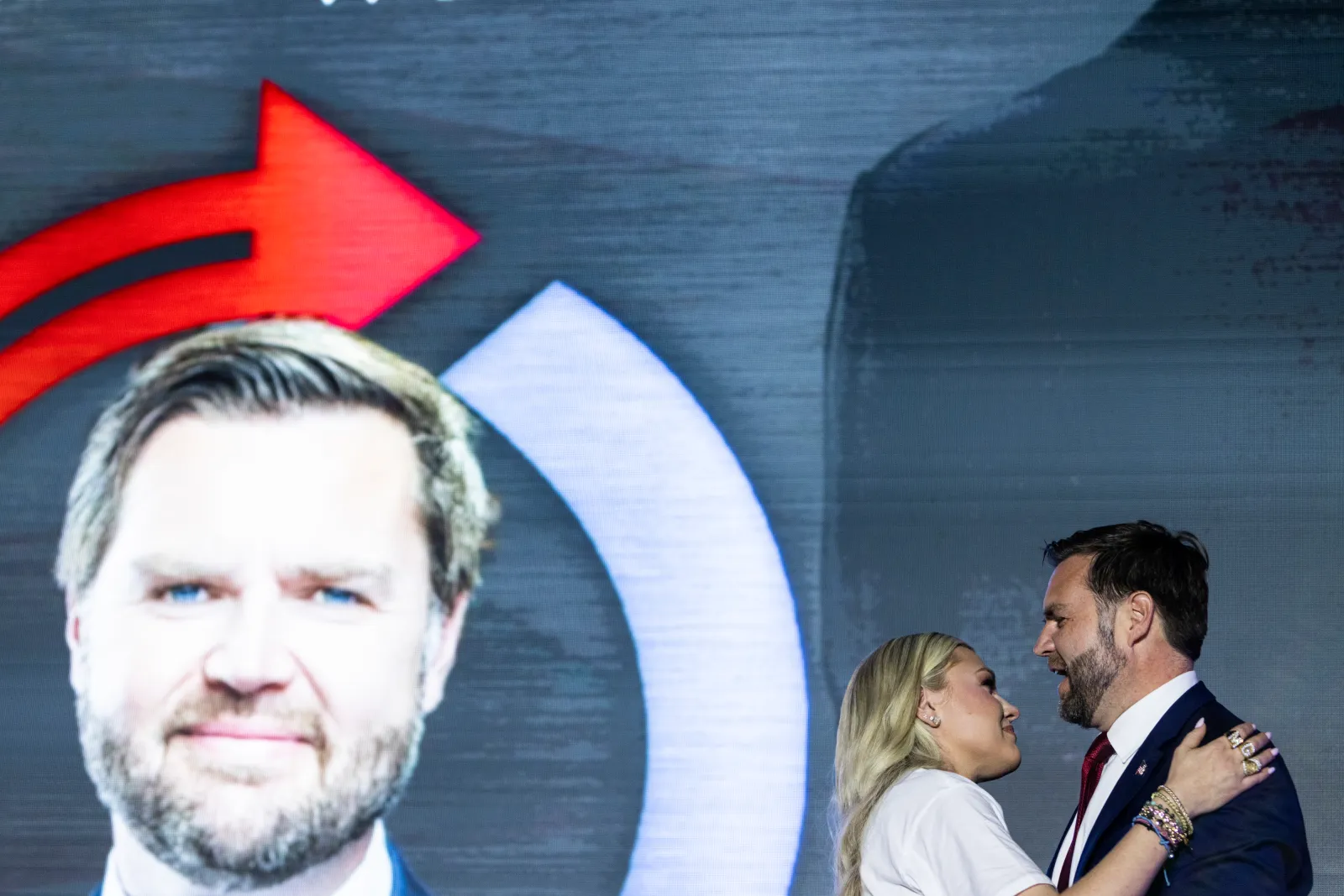
Her backing effectively enshrines Vance as the “heir apparent” for 2028. With TPUSA’s youth organizing machine and its plans to mobilize across all 99 Iowa counties, the group is preparing to clear the field. A straw poll conducted at the event showed Vance with 84 percent support — far ahead of Rubio and any other potential challenger.
Yet beneath the surface, insiders describe a “proxy war” that pits MAGA’s activist base — now led by figures like Kirk and Tucker Carlson — against the institutional wing represented by Rubio and Trump’s chief of staff, Susie Wiles.
Rubio has publicly ruled out a run if Vance enters the race. “If JD Vance runs for president, he’s going to be our nominee, and I’ll be one of the first people to support him,” he said in a Vanity Fair interview.
But Vance, in the same interview, couldn’t resist a jab at the perceived rivalry: “I’ll give you $100 for every person you make look really shitty compared to me — and $1,000 if it’s Marco.”
Ideological Evolution
The Trump White House is quieter this time — not less combative, but more controlled. As the first year of Trump’s second term wraps, the chaos that once defined the West Wing has been replaced by message discipline and internal order. Much of that shift is credited to Susie Wiles, whose steady hand has reshaped the tone of Trump 2.0.
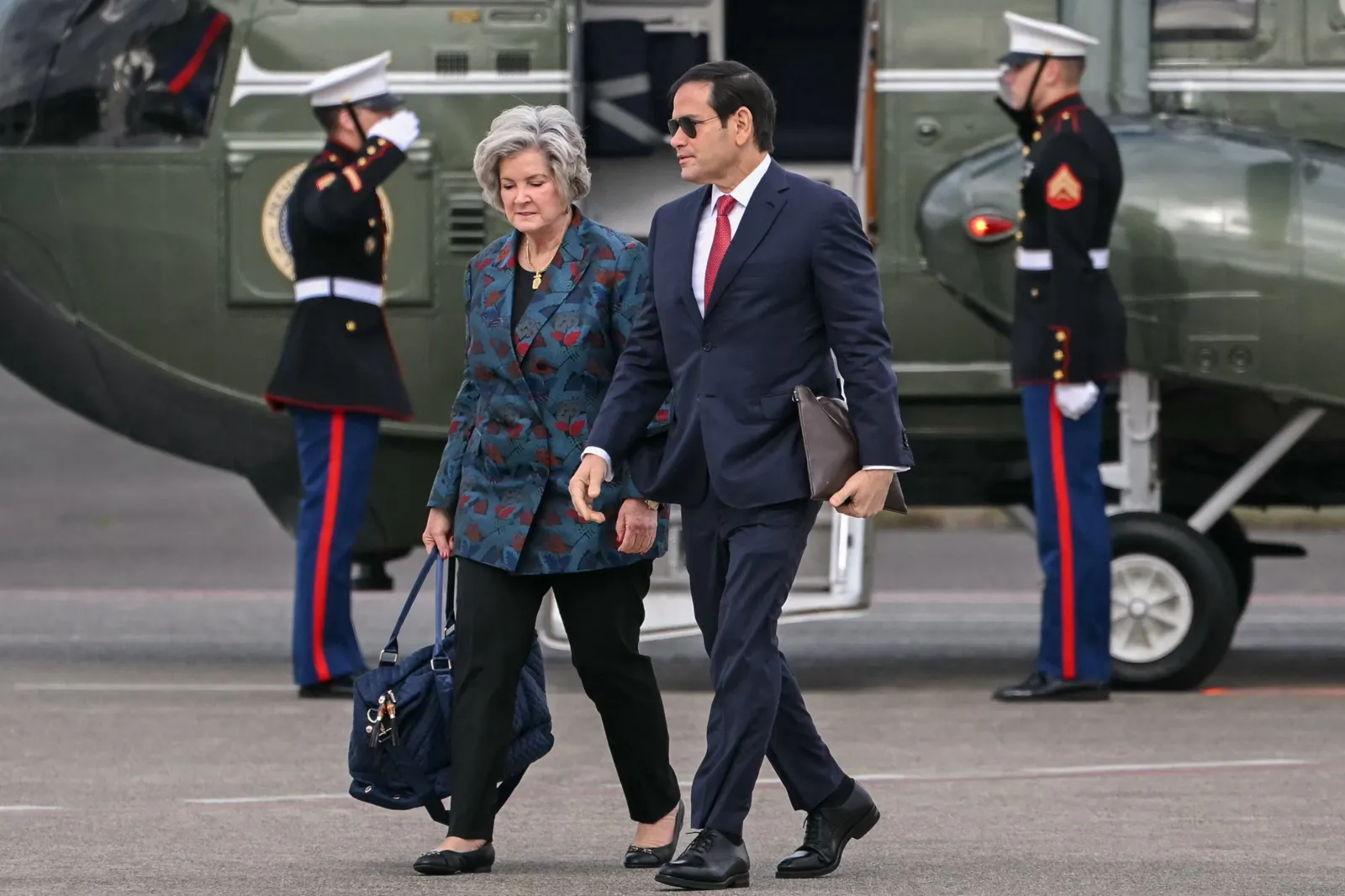
Wiles has firm views on the men vying to inherit the movement. She described to Vanity Fair Rubio’s embrace of Trumpism as thoughtful and principled. Her view of Vance was strikingly more cautious. “His conversion came when he was running for the Senate… a little bit more, sort of political,” she told the magazine, later describing him as “a conspiracy theorist for a decade.”
Still, Wiles has acknowledged Vance’s strengths and position as a potential heir apparent. “He’s doing a great job,” she said, adding that Trump considers him “very capable” and “probably favored” for the 2028 nomination. But a formal endorsement hasn’t come early. According to the Los Angeles Times, Trump has told Wiles he knows a third term “isn’t possible,” but he has yet to name a successor to his movement.
That silence has fed a sense of uncertainty about what comes next for MAGA. A Gallup poll released this month showed Vance with just 39 percent national approval. A separate CNN survey found only 22 percent of Republicans currently back him for 2028, while 64 percent said they had “no one specific in mind.”
Rubio, by contrast, is gaining ground. Gallup placed him as the most popular official after Fed Chair Jerome Powell, with support topping 40 percent — driven by strong numbers among independents. That’s a contrast with real implications for a party still figuring out how to win without Trump on the ballot.
To some Republicans, neither man fully defines the movement. “I don’t know if either are truly aligned with the MAGA movement,” said Alex Patton, a GOP consultant based in Florida. “Both have shown incredible ability to morph as needed to obtain, keep, and wield power. The only safe bet is continued dexterity for both.”
“MAGA’s a movement with Trump as its cornerstone. It isn’t an ideology,” veteran strategist Carter Wrenn added. “So I doubt there’s differences people inside MAGA will fight about. I’d say there is the potential for a fight over who will take the reins after Trump moves on.”
Allies in Public, Rivals in Waiting
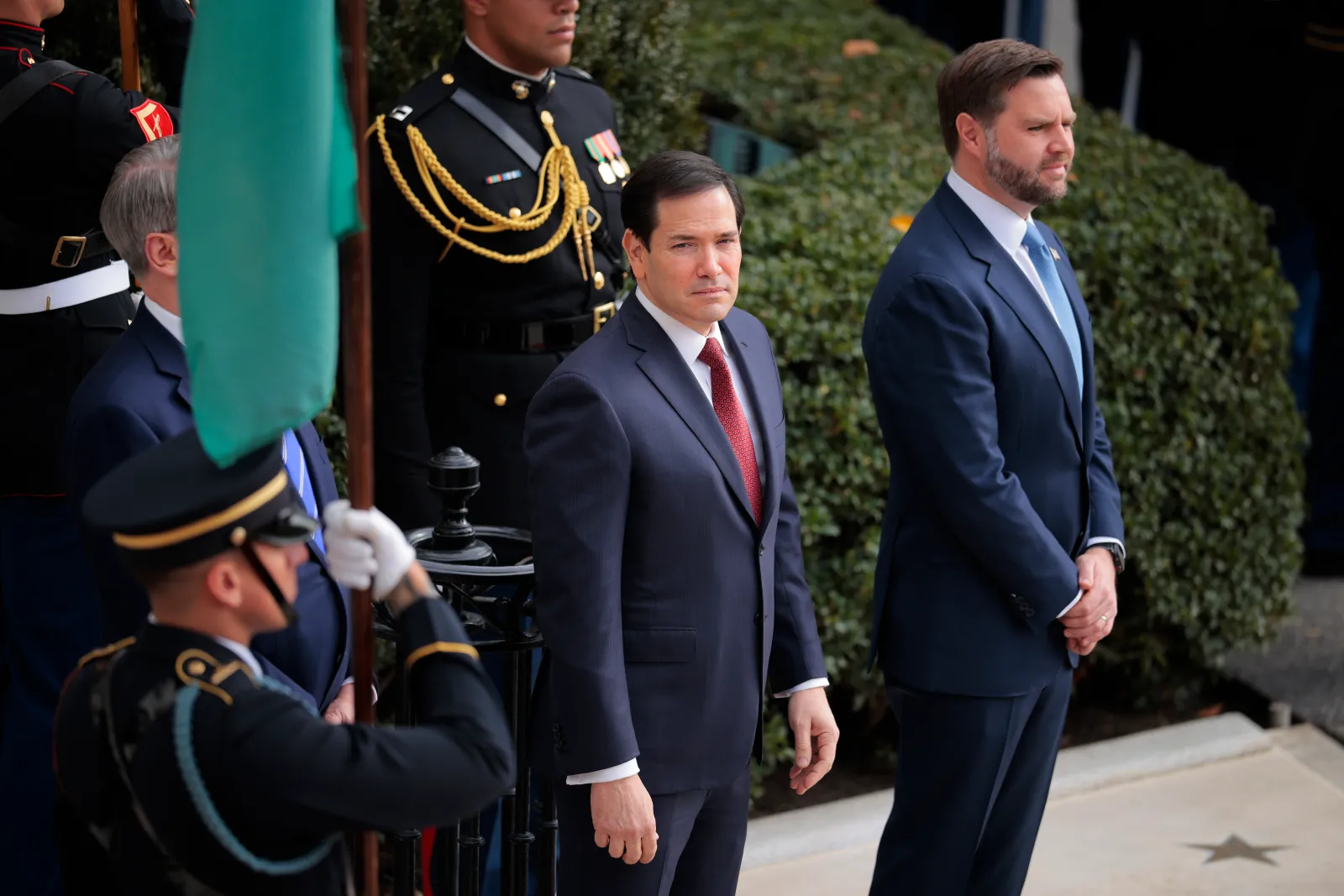
Inside the West Wing, Vance and Rubio operate like a unit. Their offices are just feet apart. They meet constantly. Along with Wiles, they drive key decisions on foreign policy and national security. “Marco is reliable, incredibly competent, and a true asset to the administration,” Vance said recently.
Their partnership is both real and politically useful. Vance projects strength on cable news and at campaign rallies. Rubio handles negotiations, policy briefings and international diplomacy. It works — for now.
But the alliance can’t outlast Trump’s presidency. The differences in style and strategy are already evident. Vance, once an outsider, now channels the movement with the zeal of a convert. Rubio, a former critic, has become its polished executor. Wiles frames Rubio’s evolution as principled — a subtle, pointed distinction she did not reserve for the vice president.
Outside the White House, the ground is far less stable. Erika Kirk’s AmericaFest endorsement fired up Vance’s base, but the event also laid bare the ideological rifts within MAGA. Ben Shapiro accused Carlson and Bannon of exploiting Kirk’s death with conspiracy theories. Carlson fired back, calling it “a proxy war” to stop Vance.
Vance attempted to cool the fire. “We have far more important work to do than canceling each other,” he told the crowd. But his silence on the growing extremism in MAGA circles — particularly antisemitic rhetoric online — has drawn quiet criticism from pro-Israel conservatives. Hardliners, meanwhile, think he’s sold out.
Rubio has avoided the culture-war fights. Instead, he’s carved out a role as the administration’s fixer — taking the lead on Israel, Latin America and the dismantling of USAID while also moonlighting as national security advisor to the president. While Vance leads the fight, Rubio manages the fallout. It’s a split that’s starting to register in the polls.
“MAGA always seems primed for any fight — internal or external, real or imagined,” said Patton. “The skilled politician will harness this need to fight and point it somewhere external.”
That fight is already underway. And the Republican strategist put it: “The GOP is entering a volatile phase of fragmentation. It’s a lame-duck, every-person-for-themselves bloodbath. And it won’t be quiet.”