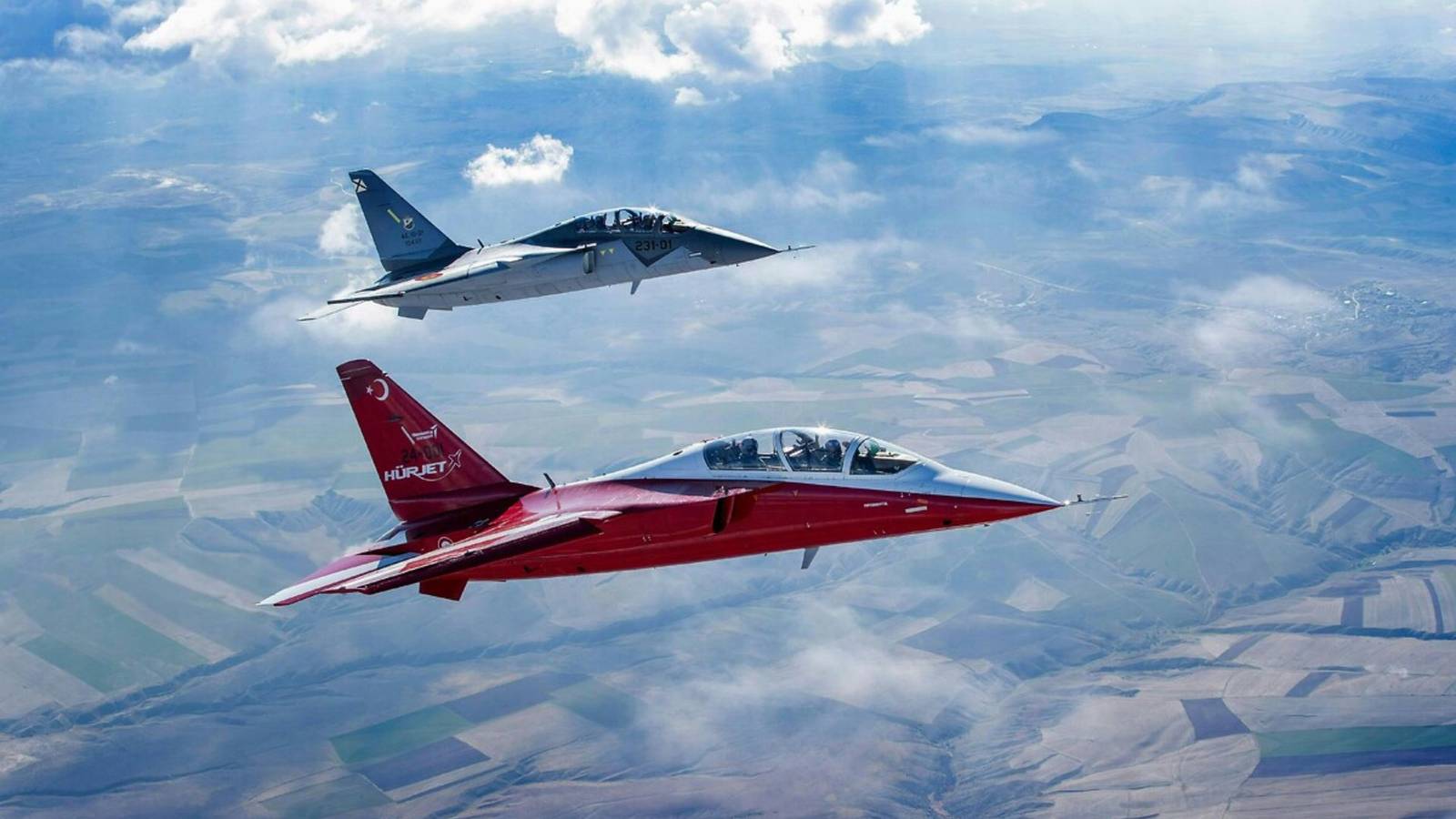
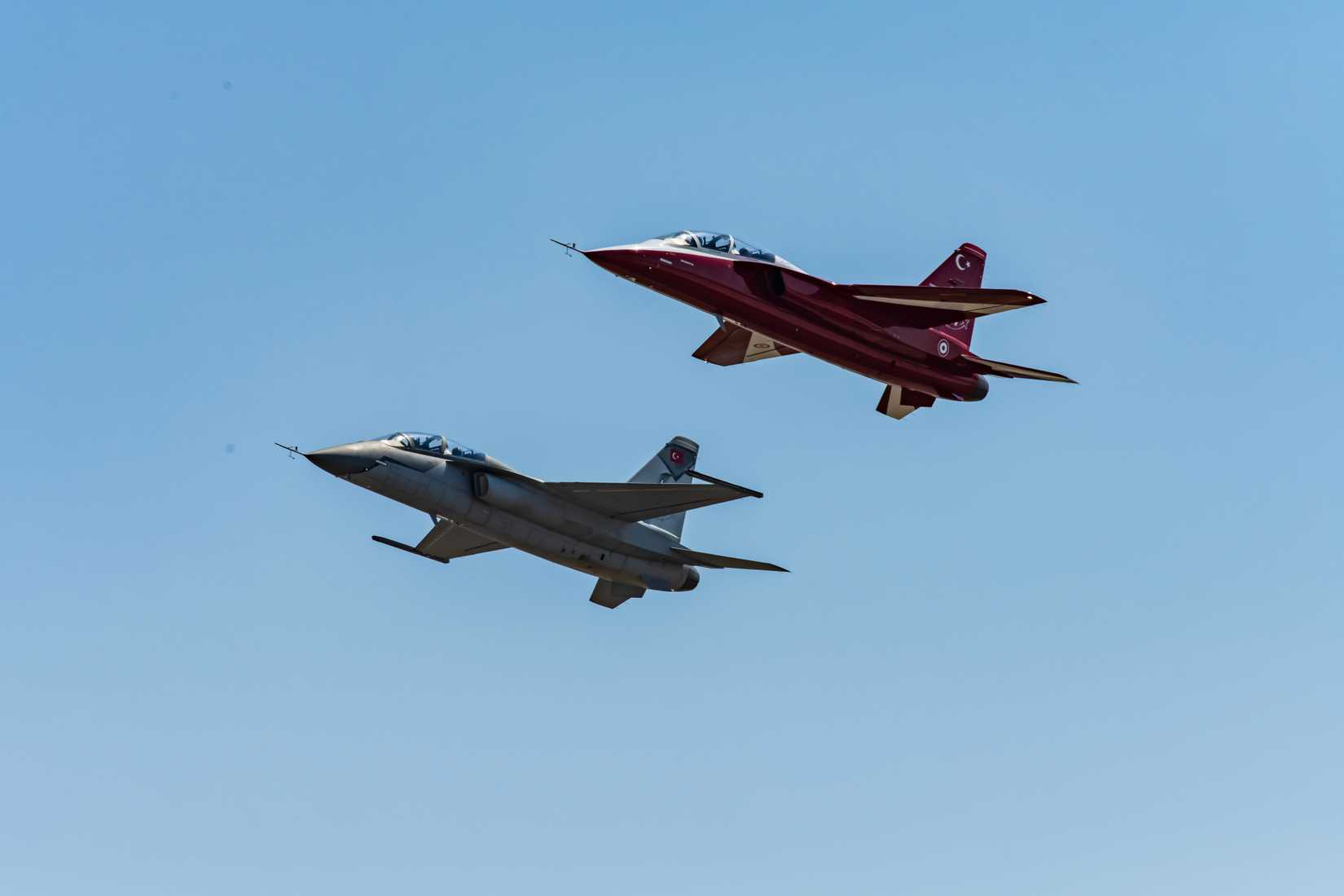
Spain’s Ministry of Defense has officially approved the Turkish-made HÜRJET as its new advanced jet trainer, marking a major update to the country’s Air and Space Force. The deal, led by Airbus Defense and Space, will include 30 aircraft and associated training systems, based at Talavera la Real Air Base. This move represents a strategic shift, as Spain is choosing a Turkish platform instead of traditional Western options like the Boeing T‑7 or Leonardo M‑346. The goal is to modernize pilot training while maintaining industrial sovereignty and local control over systems integration.
Rather than simply purchasing off-the-shelf aircraft, Spain will adapt the HÜRJET by integrating national avionics, simulators, and support infrastructure. Airbus will coordinate the program, ensuring the Spanish industries play a key role in production and training. This approach strengthens domestic aerospace capabilities and reflects a broader trend in Europe toward strategic diversification of defense suppliers. Observers note that the decision signals both industrial ambition and geopolitical calculation.
Modernizing Training With Sovereignty In Mind
Credit: Shutterstock
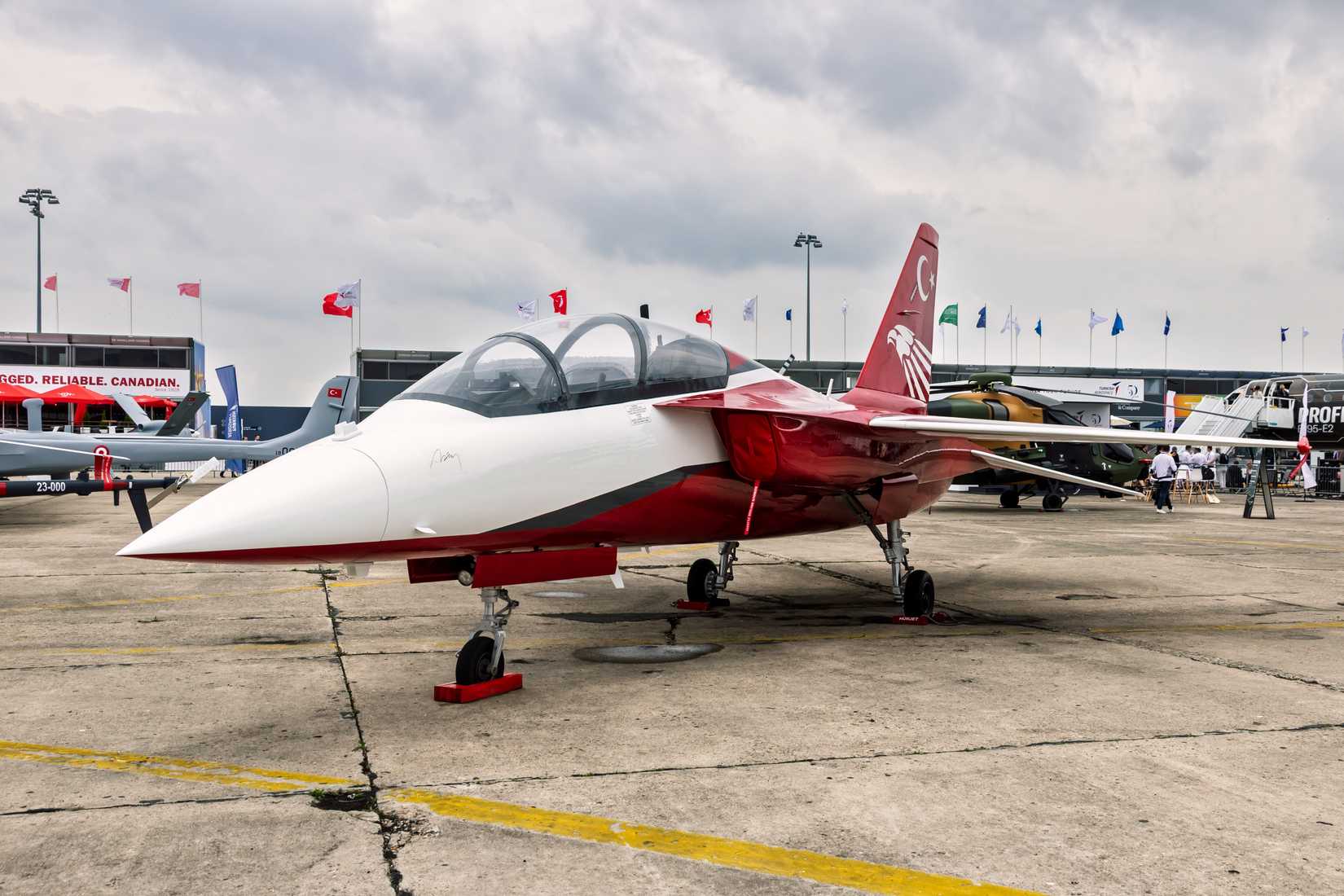
Under the new program, Airbus will lead integration of the HÜRJET platform, overseeing assembly, testing, and adaptation of Spanish systems. A dedicated Conversion Centre will be established in Spain to retrofit aircraft with local avionics and mission systems. The Talavera la Real Air Base will also receive upgraded training facilities, including full-motion simulators and maintenance infrastructure. This ensures that Spain retains operational and technical sovereignty over the training program.
By selecting HÜRJET, Spain diverges from traditional Western trainers, reflecting both cost considerations and strategic industrial planning. The program will create domestic aerospace jobs and foster collaboration between Spanish outfits and Airbus. Additionally, the partnership positions Spain to maintain a modernized training system without being fully dependent on other suppliers. Jean-Brice Dumont, Head of Air Power at Airbus Defence and Space said:
“This ambitious programme seeks to create a state-of-the-art combat training system in Spain that addresses the immediate needs of the Air and Space Force. It will also boost national industry participation, return on investment and capability development, ensuring Spanish sovereignty throughout the entire process.”
A Shift In Supplier Strategy
Credit: Turkish Aerospace
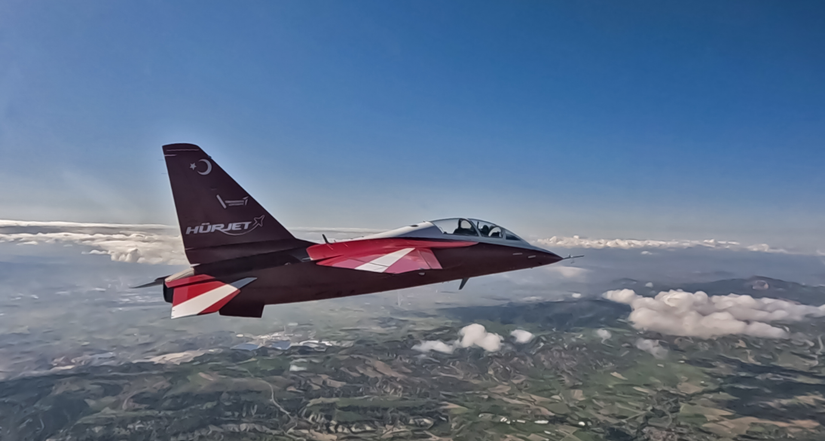
The choice of HÜRJET also represents a subtle geopolitical statement. While Turkey is not a traditional supplier for NATO Western members, Spain’s decision indicates growing confidence in Turkish aerospace capabilities when paired with Airbus oversight. It also reflects a desire to diversify supply chains, reducing reliance on a single supplier nation for critical military training infrastructure.
Historically, Spain has relied on aircraft such as the F‑5 and, more recently, considered options like the Leonardo M‑346 or  Boeing T‑7. The HÜRJET program introduces a modern, cost-efficient trainer that can support advanced fighter conversion. Integration with Airbus ensures NATO interoperability while providing flexibility to incorporate future systems upgrades, including potential next-generation European fighter technologies.
The program’s emphasis on local industrial participation aligns with European Union goals to strengthen domestic defense capabilities. Spanish SMEs will contribute to avionics, simulator software, and maintenance logistics, ensuring knowledge retention and technological sovereignty for decades to come.
Related
The World’s Largest Air Forces By Total Fighter Jet Numbers
Find out how the biggest fighter fleets stack up!
Program Costs And Deliveries
Credit: Shutterstock
The HÜRJET deal is expected to cost roughly $3 billion (€2.6 billion), covering aircraft, simulators, maintenance support, and infrastructure upgrades. Delivery is expected to begin from 2028, with operational status achieved as the new training system fully replaces the aging F‑5 fleet. Spain will initially procure 30 aircraft but retains the option to expand the fleet as training requirements evolve.
This move complements Spain’s broader modernization strategy, which includes upgrades to Eurofighter Typhoon squadrons and consideration of future fighter programs. By leading the HÜRJET integration through Airbus, Spain ensures the program can evolve with changing technological and operational needs. The approach also serves as a potential model for other European nations considering diversification of defense suppliers.
Overall, Spain’s decision reflects a careful balance between cost, capability, industrial participation, and geopolitical signaling. The combination of Turkish aircraft design and Airbus-led Spanish integration sets a precedent for future European defense procurement strategies.