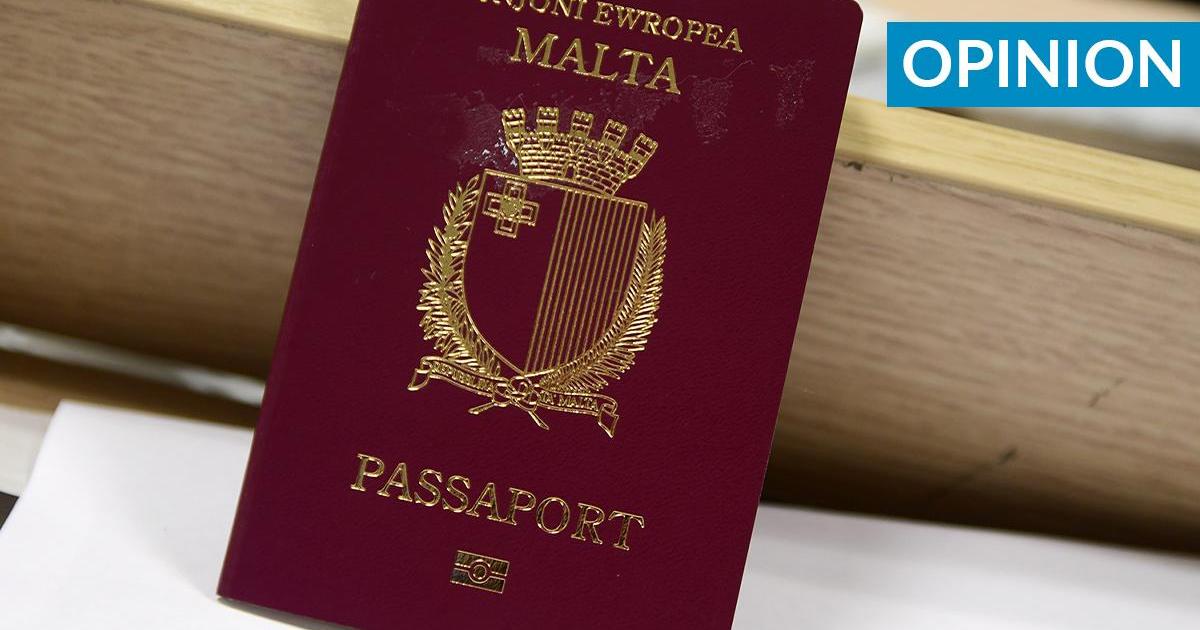
Malta’s passport is frequently described as the world’s best, or, at least, among the very best, whether in newspapers or online publications. It is the kind of claim many Maltese read with pride, and it reflects years of sustained work by the competent authorities and by the government to strengthen Malta’s standing internationally. But describing any passport as “the best” immediately raises two simple questions. Best by whose measure and best on what basis?
The answer is that passport rankings are only as meaningful as the criteria behind them. Some are built to measure travel power in the simplest sense, how easily you can board a flight and enter other countries with minimal formalities, focusing mainly on whether a visa is required in advance.
Others take a wider view and assess the overall value of citizenship for people who live, work, invest and move across borders, factoring in longer term issues such as relocation options, cross-border lifestyle planning, tax exposure and dual citizenship flexibility.
Once you recognise that these rankings are asking different questions, the apparent mismatch disappears. Malta can rank first in one index and a few places lower in another without any contradiction because the indices are measuring different aspects of the same reality.
One of the best-known references is the Henley Passport Index. In essence, it is a mobility league table. It ranks passports by how many destinations their holders can enter without applying for a visa in advance. Naturally, this is influenced by a country’s rules that can include visa free entry, visa on arrival, or comparable simplified arrangements.
In coming to its conclusions, Henley draws on IATA travel data, supplemented by additional research. Put simply, it answers an airport question. If I decide to travel this month, how many doors open with minimal friction? On Henley’s rankings, Malta consistently sits in the top global tier. If the exact position quoted in the media shifts slightly from time to time, the reason is straightforward. Visa rules change during the year, the dataset is updated and the table moves as governments adjust entry requirements.
The Nomad Passport Index, published by Nomad Capitalist, starts from a different premise. It asks not only where you can go but how useful a citizenship is as a life asset for people who move across borders, whether they are entrepreneurs, remote workers, investors or families living in more than one country over time.
EU citizenship connects to rights linked to free movement- Damian Spiteri
Nomad weighs several dimensions, including travel access, taxation, global perception, dual citizenship and personal freedom. Under that wider lens, Malta has been listed at the top of Nomad’s materials for 2026. In other words, Malta does not only score well for access. It also scores well for the overall ease and flexibility that citizenship can provide in a globalised world.
When you look at the factors Nomad says it measures, Malta’s strengths are not hard to see. A Maltese passport is also an EU passport, and even its familiar burgundy cover signals that wider European identity through a format recognised across the Union. That matters well beyond tourism.
EU citizenship connects to rights linked to free movement, making it easier to live, work and study across the European framework.
In practical terms, this is less about a two-week break and more about long-term options, from career mobility to residence choices and family decisions.
Nomad also rewards countries that allow and recognise dual citizenship. Malta is widely regarded as strong on this measure, which can lift its overall score even where other countries offer similar travel access.
This is particularly pertinent to globally mobile families where dual citizenship can shape family members’ long-term security, choice and opportunity.
Then there are the softer factors that still matter in practice. Nomad weighs global perception and personal freedom, considerations that can influence how smoothly travellers move through borders, how a passport is viewed internationally and how stable and ‘rights-based’ the issuing country is perceived to be.
Finally, there is the practical layer that underpins everything else: trust in the document itself. Malta introduced a new generation ePassport in 2019 with updated security features and anti-tamper design. Strong document security supports international confidence and, in turn, contributes to smoother mobility.
The conclusion is difficult to avoid. Malta’s passport is exceptionally strong and its performance across more than one yardstick says as much about how citizenship is evolving as it does about Malta itself.

Damian Spiteri is a lecturer in Social Policy and Social Work at the University of Malta.