Published on
December 31, 2025

San Sebastián, a vibrant city in the heart of Spain’s Basque Country, is home to one of the most unique and exhilarating festivals in Spain: La Tamborrada. Held annually on 19–20 January, this drum festival is an absolute spectacle. For 24 straight hours, the streets of San Sebastián come alive with the sound of drums, traditional costumes, and exuberant celebration. It’s a rhythmic explosion of culture, pride, and joy that fills the city and draws visitors from around the world. If you’re looking for a festival unlike any other, La Tamborrada should be at the top of your list.

In this article, we will explore everything you need to know about La Tamborrada, a festival that has been part of San Sebastián’s identity for over a century. We’ll dive into its rich history, the cultural significance, the traditions, and the reasons why La Tamborrada has become one of Spain’s most exciting and unforgettable events.
What Is La Tamborrada?
La Tamborrada is a drum festival that takes place in San Sebastián (also known as Donostia in Basque). This lively event is held in honour of the city’s patron saint, Saint Sebastian, and it is celebrated on 20 January, the feast day of Saint Sebastian. However, the festival kicks off on the evening of 19 January with the midnight ceremony that marks the official start of the celebrations.
The highlight of the festival is the drumming—La Tamborrada is essentially a drum marathon. Over the course of 24 hours, groups of people march through the city, playing drums and creating an electrifying rhythm that resonates throughout the streets. The festival is more than just a parade; it’s a living tradition that brings together local culture, community pride, and a shared love for music and festivities. It’s an event that’s deeply rooted in San Sebastián’s history and Basque identity, making it an essential part of the city’s cultural calendar.
The Origins and History of La Tamborrada
The origins of La Tamborrada date back to 1836, when the event was first celebrated during the city’s carnival. Originally, it was a way to mark the city’s military resistance and the perseverance of the people of San Sebastián during difficult times. The festival began as a simple tradition of people marching with drums to celebrate their cultural unity, and over the years, it has grown into one of Spain’s most important and widely-recognized festivals.
In the 19th century, San Sebastián was under siege during the Carlist Wars, and the city’s resilience was symbolized by the drumming. Over time, the festival evolved, and by the late 1800s, La Tamborrada had become a celebration of the city’s identity, not only as a symbol of resistance but also as a way to express pride in their Basque heritage. The incorporation of military uniforms and chef costumes into the festival reflects this deep connection with both the city’s history and its culinary fame.
Today, La Tamborrada is a celebration of both military and culinary traditions. The costumes and the music of the festival have become symbols of the city’s enduring spirit and cultural pride.
How Does La Tamborrada Begin?
The official opening of La Tamborrada happens at midnight on 19 January in Plaza de la Constitución, located in the heart of San Sebastián’s Old Town (Alde Zaharra). At this moment, the mayor raises the flag of San Sebastián, marking the start of the 24-hour drumming marathon. This symbolic action is followed by the first beats of the drum, and the city is instantly filled with the loud, rhythmic sound of drums, as tamborradas (drum groups) begin their march.
The parade of tamborradas doesn’t stop for a moment. These groups march through San Sebastián’s streets, playing their drums non-stop, creating an overwhelming sense of joy and excitement. As the midnight drumming begins, the festival transforms the city into a living, breathing drum. The procession moves through the streets, reaching plazas, neighbourhoods, and historic sites, keeping the energy high as the drums echo across the city.
The opening ceremony and the drumming start in Plaza de la Constitución, but the festivities soon spread across the entire city. As the festival progresses, it continues until midnight on 20 January, when the drumming concludes in the same square, marking the end of a full 24-hour celebration.
The Costumes: Soldiers and Chefs
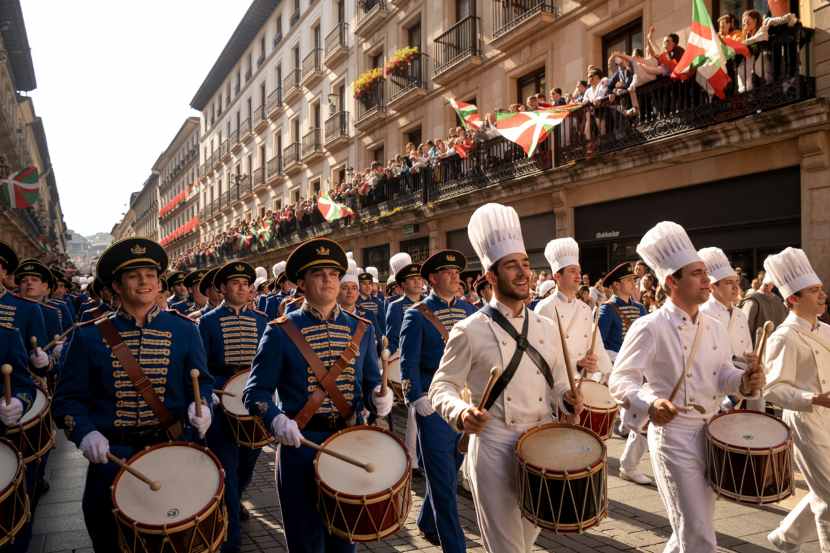
One of the most distinctive features of La Tamborrada is the costumes. Participants wear traditional outfits, with the two main groups being:
Soldiers: The soldiers wear military uniforms inspired by the early 19th century, specifically from the time of the Napoleonic Wars. These uniforms represent the historical military spirit of San Sebastián, which fought valiantly to protect the city. The soldier outfits are iconic, featuring jackets, trousers, and hats that hark back to a time of military resistance. The soldiers march through the city playing their drums, creating a vibrant and powerful symbol of San Sebastián’s military heritage.Chefs: A more lighthearted, yet equally important group is made up of chefs. These participants wear chef uniforms, complete with aprons, hats, and whisks. The chefs represent the city’s celebrated culinary tradition, and this part of the festival pays homage to the rich gastronomic culture of San Sebastián, known for its world-class restaurants and gastronomic societies. The chefs add a playful and festive touch to the parade, balancing the seriousness of the military uniforms with the warmth and hospitality of Basque cuisine.
Together, these two groups—soldiers and chefs—create a striking contrast, blending the city’s military history with its gastronomic fame. The sight of people marching through the streets in these costumes, playing their drums and celebrating with pride, is a testament to San Sebastián’s rich cultural history.
The Drumming: The Heart of La Tamborrada
The drums are the heartbeat of La Tamborrada. The rhythms are relentless and energizing, with each group of drummers (tamborradas) playing a continuous rhythm that keeps the energy high throughout the 24-hour celebration. The drumming is not just about sound—it’s about tradition, community, and unity. The rhythm connects everyone, whether they’re drumming, watching, or simply feeling the pulse of the celebration.
The drumming is deeply rooted in the history of the festival, and the “Marcha de San Sebastián”, composed by Raimundo Sarriegui in the 19th century, is the traditional piece that defines the beats of La Tamborrada. This iconic music is played repeatedly throughout the festival, filling the streets and creating an unforgettable atmosphere.
The Children’s Tamborrada: A Family Tradition
La Tamborrada isn’t just for adults. One of the most heartwarming parts of the festival is the Children’s Tamborrada, which takes place on the morning of 20 January. On this day, schoolchildren from across San Sebastián dress in their own miniature versions of the soldier and chef costumes and participate in their own drum parade. The children march through the streets, playing their drums and carrying on the tradition of La Tamborrada for future generations.
The Children’s Tamborrada is a joyous occasion, full of excitement and pride. It’s a moment when young people join the rhythm and energy of the festival, taking part in something that connects them with their city’s rich cultural heritage. Watching the children march with enthusiasm and play the drums is a touching reminder that the spirit of La Tamborrada will continue to thrive for generations to come.
A Celebration of Community and Identity
La Tamborrada is not just about drums and costumes; it’s about community. The festival brings together people of all ages, from children to seniors, to celebrate the unity of the city. It’s a time when locals, visitors, and tourists come together to experience the joy and pride of San Sebastián.
The festival is a powerful expression of Basque identity. It’s a celebration of the city’s rich historical heritage, its cultural traditions, and its enduring spirit. La Tamborrada is a reminder that even in the modern world, traditions and customs are alive and thriving. It’s an opportunity for everyone to participate in a celebration of culture, history, and unity.
Why You Should Experience La Tamborrada
La Tamborrada is one of the most unique festivals in Spain. Here’s why you should experience it:
24 hours of non-stop drumming: It’s a truly unforgettable celebration with music that fills the streets of San Sebastián for a full day.The costumes: Soldiers and chefs marching together create a vibrant visual spectacle that combines Basque history and gastronomic pride.Community spirit: La Tamborrada is about bringing people together, and it’s a celebration that everyone can enjoy, whether you’re marching in the parade or watching from the sidelines.Rich cultural heritage: This festival is a living testament to San Sebastián’s resilience, history, and identity.
If you’re in San Sebastián in January, La Tamborrada is an event you won’t want to miss. It’s loud, joyful, and filled with Basque pride—an unforgettable way to experience the heart of Basque culture.
La Tamborrada is more than just a drum festival—it’s a celebration of life, unity, and cultural pride. Whether you’re joining the procession as a participant or witnessing the energetic rhythms from the sidelines, this 24-hour festival will leave you with memories that will last a lifetime. La Tamborrada is a powerful reminder of the importance of community, tradition, and Basque identity—all set to the beating pulse of the drums. Experience it in San Sebastián, and you’ll understand why this festival is so close to the heart of the city.