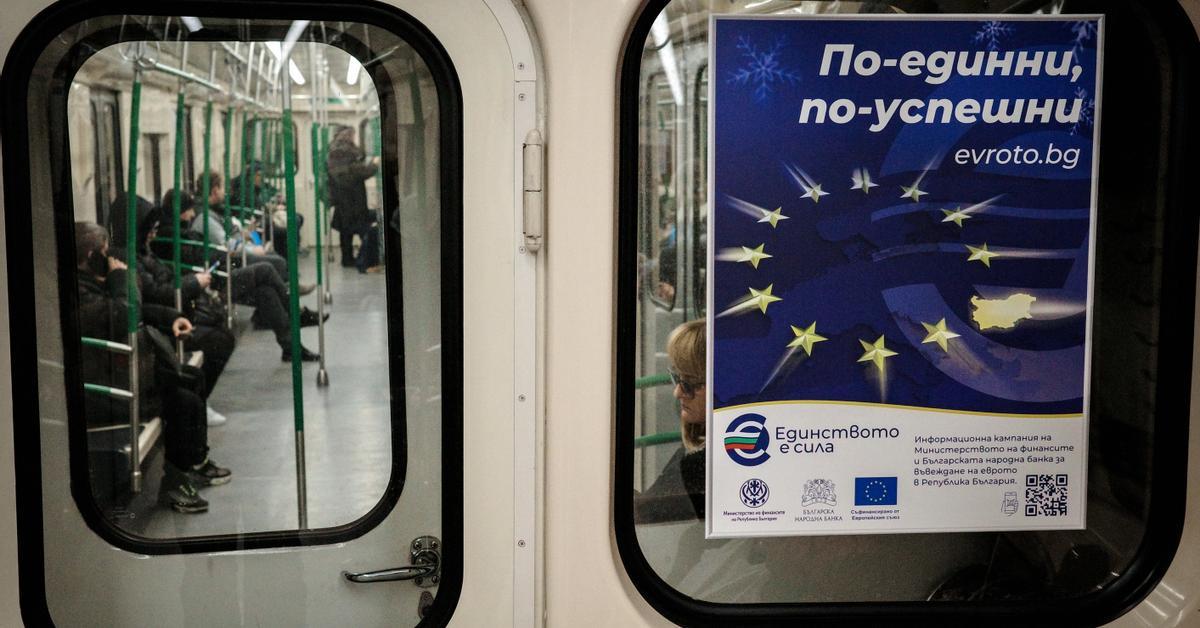
SofiaBulgaria, the poorest country in the European Union, will join the eurozone on January 1st. Nineteen years after joining the European Union, the Balkan nation of nearly 6.5 million people is thus completing its slow integration, after years of sacrifices to meet the requirements for adopting the single currency. These included sound public finances, moderate interest rates, and controlled inflation. The numbers added up, but Sofia will leave its currency, the lev, in a state of political crisis.
The country is awaiting new elections, the eighth in four years, if a government cannot be formed beforehand. The war in Ukraine, as well as the political situation in Europe and the world, directly affect a society polarized between pro-Europeans and pro-Russians, who oppose both the euro and the defense of Kyiv. Nationalist organizations such as Vazrazhdane and Velichie, supported by extra-parliamentary groups, have led protests demanding a referendum on adopting the euro and the country’s withdrawal from European institutions. Likewise, in recent weeks there have been mass protests against the corruption and mafia-like practices of former Prime Minister Boyko Borisov. which led to the government’s resignation on December 11The protesters, many from Generation Z, denounced government corruption, accusing it of impoverishing the population through tax hikes and other austerity measures. Bulgaria adopted the euro with an interim government, no budget, and amidst significant political instability.
The European Council approved Bulgaria’s entry into the eurozone last July and set the conversion rate at 1.95583 levi per euro. The European Central Bank admitted that prices could skyrocket “if traders unfairly take advantage of the transition” to raise them. Among Bulgarians, there is concern that the new currency will make them poorer, as happened with Spain’s entry into the euro 24 years ago. In Bulgaria, this transition will be more complicated due to the political situation, rampant corruption and speculation, and the global inflationary context. To compensate for inflation, Bulgarian wages increased, but when they are converted back, they will be the lowest in the EU.
Beyond currency exchange
The currency change is only the most visible part of the transformation. The country is now part of a monetary union that represents approximately 15% of the global economy. After Croatia, which joined the euro in 2023, Bulgaria will be the 21st member of the eurozone (which includes all EU members except Sweden, Denmark, Poland, the Czech Republic, Hungary, and Romania). Thus, it becomes part of the world’s economic powerhouses and will therefore be able to reap the benefits more directly, but it will also absorb the negative effects of crises that affect the monetary union.
In a country like Bulgaria, the transition to the euro, especially if accompanied by an upgrade in its debt rating, implies the possibility of increased demand for government bonds: another question is how this instrument will be used and whether politicians will be tempted to abuse it. It also allows Bulgaria to eliminate exchange rate risk, although the country already operated under a strict monetary regime with a fixed exchange rate of 1.95583 leva to the euro. Furthermore, Sofia will be relieved of the obligation to maintain a substantial foreign exchange reserve (around €40 billion) that guaranteed the stability of its currency. At the same time, it will receive a kind of guarantee against financial shocks, both internal and external. An improved credit and investment rating could lead to financing at lower interest rates, and the funds saved could be directed to key public sectors such as healthcare, education, and culture, which have historically been underfunded. With entry into the eurozone, monetary policy powers are transferred to the European Central Bank (ECB), where Bulgaria will have a seat on the Governing Council, although as a small and relatively poor country, its voice will not be decisive. The Bulgarian Finance Minister will participate in Eurogroup meetings, which will give Bulgaria greater political weight.
Fiscal discipline
But all this is neither magic nor free. Eurozone countries submit their budget plans to the European Commission and the ECB, which conduct evaluations and make recommendations. Bulgaria joined the eurozone without a budget for 2026, the negotiation of which has already sparked massive protests. With the memory of eurozone debt crises, especially the Greek precedent, one of the fears is that with the adoption of the euro, politicians will find their hands tied. Experts expect that eurozone membership will bring higher levels of foreign investment and accelerated economic growth. There will also be benefits, perhaps, for tourism and international trade: easier integration of Bulgarian companies into European markets. The EU will also reap benefits from Bulgarian integration: a stronger single market and euro. And above all, Bulgaria’s full integration into the EU will limit Russia’s strategic influence at a particularly delicate time for Europe.