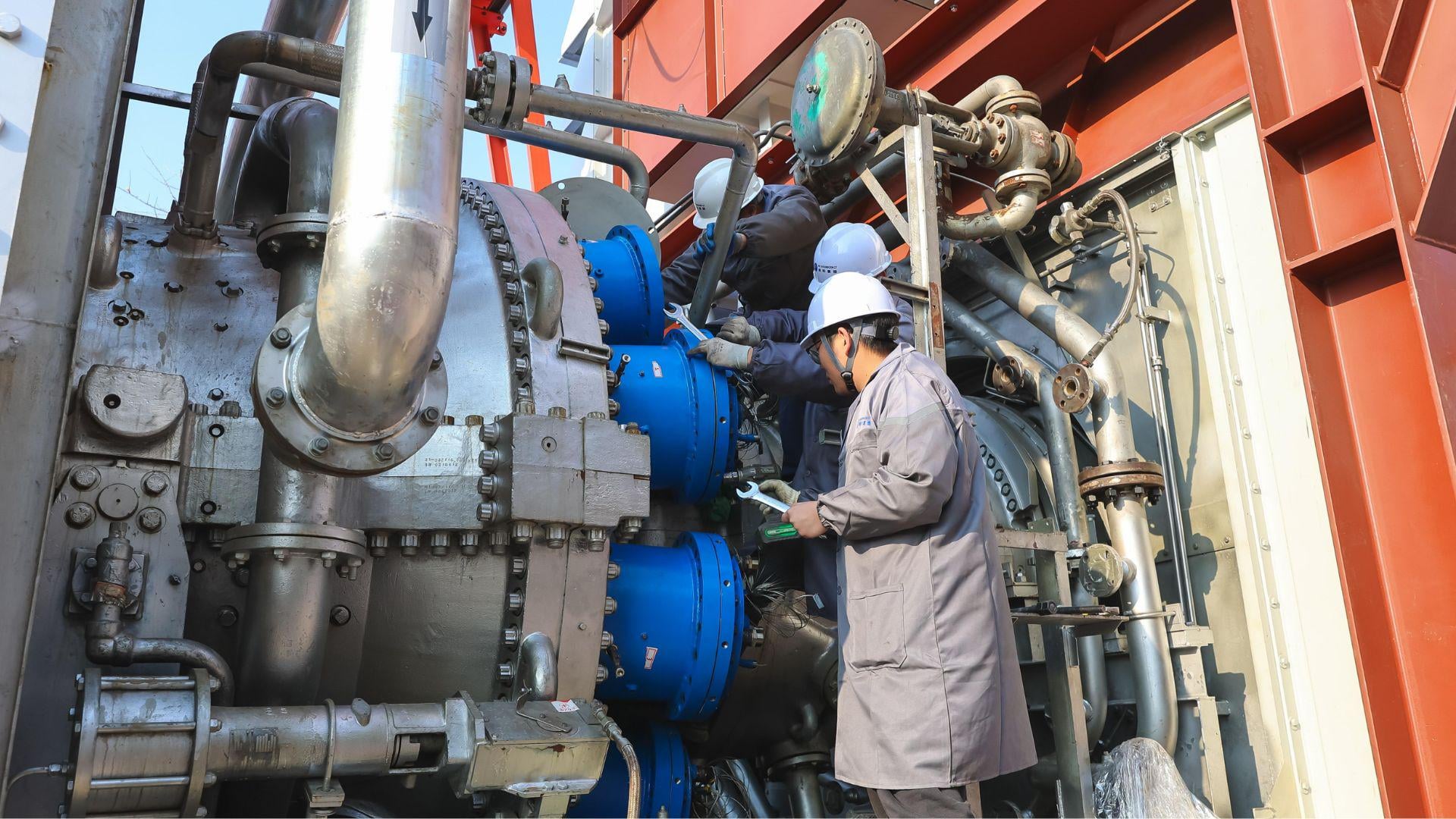
China switches on the world’s first 30-MW pure hydrogen gas turbine
https://interestingengineering.com/energy/worlds-first-hydrogen-gas-turbine
by SarumanWizard
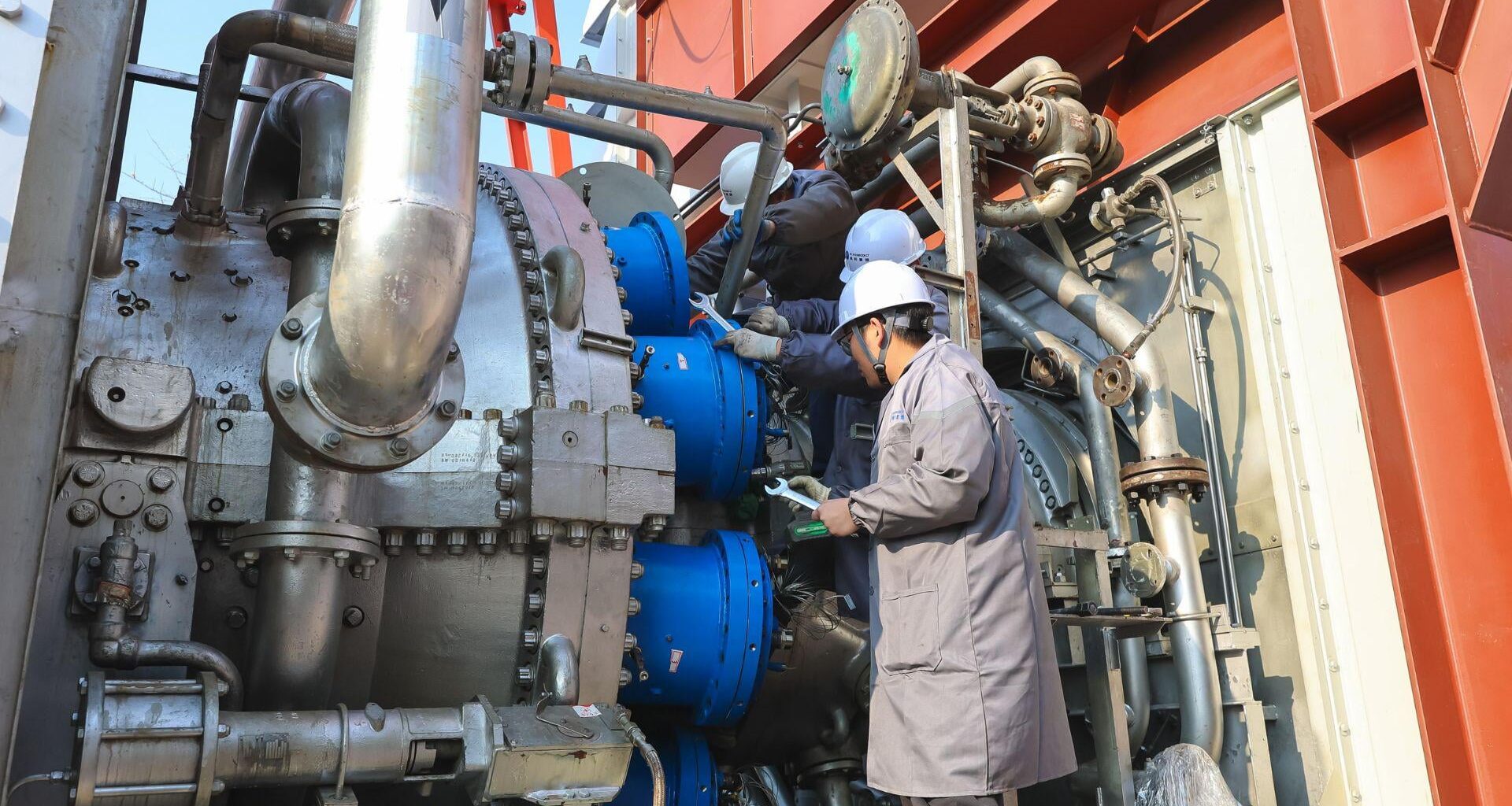
China switches on the world’s first 30-MW pure hydrogen gas turbine
https://interestingengineering.com/energy/worlds-first-hydrogen-gas-turbine
by SarumanWizard
11 comments
I wonder if they process the NOx, H2 gas turbines don’t produce CO2, PM2.5 or SOx, but since they burn way hotter than a hydrocarbon turbine they produce a lot of NOx. That said since the exhaust is only steam and NOx it is easier to process into Nitric Acid, a precursor to Kaboom products. I’m working on document, where the exhaust is cooled with sCO2 to turn a supercritical turbine to extract more electricity, about 10-15% more. In my case it would burn Natural Hydrogen from Nova-Scotia/Quebec or Ontario.
[deleted]
So you are taking an inefficient process of making hydrogen, and then running it through another inefficient process of setting that hydrogen on fire. So you’re maybe getting 30% of the original energy.
The article talks about avoiding curtailment, but if you’re only doing that, than that really limits the hours your electrolyzers can run, increasing capital costs. Or if you are running them 24/7, then you either run them off fossil fuels, or you already have 24/7 renewable energy, the thing you’re trying to solve for.
Alternatively you could design rates to encourage ev charging, industrial processes, electrical or thermal battery charging, literally anything else, to avoid curtailment.
Go hydrogen
Hydrogen is the way since there will be excess solar power at times. Especially hybrid gas turbines.
Burning hydrogen is not hard. Making and storing it is hard.
How much energy was used creating the 30 MW supply of hydrogen?
That’s always the issue and unless I’m blind – which is perfectly possible – I’m missing that part of the information.
Using and storing on site is the way to- transportation and storage for long periods is expensive as hydrogen has high GWP and escapes easily
Why tf are we burning h2 in a turbine? Isn’t fuel cell conversion much more efficient?
75MW of hydrogen 30MW of electricity B)
I worked a lot on hydrogen turbines and economics in the past. Great to hear they have done this. It makes sense the MinYang group designed and built it. It was, and still is as far as I know, impossible to get a warranty on 100% hydrogen. The Koreans and Germans ran a couple of old GE turbines on 100% and just wore the warranty issues. GE used to have plans to make ceramic blades impervious to embrittlement. They have put out brochures for 100% hydrogen turbines in recent years, but after 8 pages of sales fluff a long list of technical risks are detailed. As to gas coming out the back end, it depends on what they add to the hydrogen to make the airflow dense enough to spin the turbine efficiently. I was working on N2 in the past, but it is more effective to just use ambient air. Interesting.
Comments are closed.