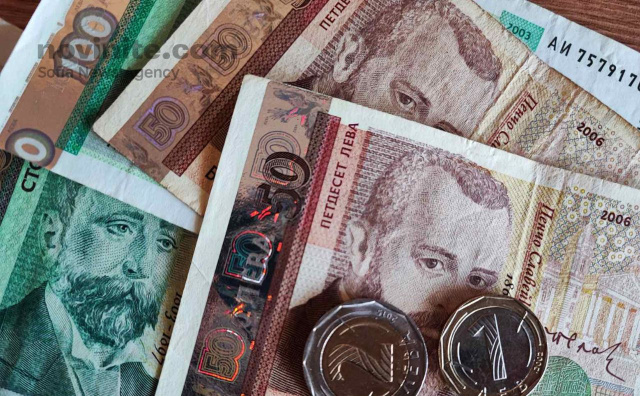
On January 1, 2026, Bulgaria will officially adopt the euro, completing a process of European integration that began with EU membership in 2007. With this step, the Bulgarian lev will exit circulation after nearly a century and a half, closing a chapter that began shortly after the country’s liberation and statehood.
The lev was formally introduced on June 4, 1880, when the National Assembly passed a law granting the Principality of Bulgaria the right to mint its own currency. At the time, lawmakers debated different names. MP Yosif Kovachev suggested “lev” or “aslan”, both meaning lion. According to historian Prof. Daniel Vachkov, this choice was deeply symbolic.
“Evidently, since Bulgarians were already aware that their traditional coat of arms featured the lion, it is likely they arrived at the idea of naming the currency the ‘lev’ (lion),” he explains.
When the lev entered circulation, it did not immediately dominate everyday life. For several years, foreign currencies continued to circulate widely, including Ottoman lira, Russian rubles, Romanian and Serbian coins, and French francs. This mixed system persisted until the end of 1886, when a law finally ended the legal use of foreign coins in Bulgaria.
In its earliest phase, the lev was pegged to the gold French franc through Bulgaria’s membership in the Latin Monetary Union. This made it one of the most stable and convertible currencies in Europe before World War I. The first Bulgarian coins were minted abroad. In 1881, copper coins of 2, 5 and 10 stotinki were produced in Great Britain. Silver coins followed soon after, with denominations of 1 and 2 leva in 1882, 50 stotinki in 1883, and large silver 5-lev coins in 1885. These silver issues continued until 1916, when wartime conditions prevented their circulation.
Bulgaria also issued gold coins, minted in Austria-Hungary. The first gold series appeared in 1894 with denominations of 10, 20 and 100 leva. A second gold issue followed in 1912, marking the anniversary of Bulgaria’s declaration of independence in 1908. Decades later, in 1969, the Bulgarian National Bank produced restrikes of the 1912 coins in limited editions of 1,000 pieces per denomination. Today, these gold leva coins are among the most sought-after Bulgarian numismatic treasures. At a Künker auction around two years ago, a 100-lev gold coin fetched approximately 75,000 euros, far above its initial estimate. The surge in prices reflects growing domestic interest, inflationary pressures, geopolitical uncertainty, and expectations linked to Bulgaria’s eurozone entry.
Until 1952, all Bulgarian coins were minted abroad, using materials such as silver, copper, zinc alloys during wartime, and later aluminum. Domestic minting began after the establishment of Bulgaria’s own mint in 1951. From the late 1960s onward, commemorative coins became part of the monetary landscape, produced in copper, silver and gold and dedicated to historical anniversaries. Between 1965 and 1989, six gold commemorative coins were issued. The most famous among them, “1300 Years of Bulgaria”, was released in 1981 with an official circulation of 2,000 pieces.
The history of Bulgarian banknotes began 140 years ago, during the year of the Unification. A law granted the Bulgarian National Bank exclusive rights to issue paper money. The first Bulgarian banknotes were printed in St. Petersburg, then capital of the Russian Empire. Two series were produced: 20 leva gold and 50 leva gold. At that time, the lev was fully backed by gold, allowing holders to exchange banknotes for precious metal. This financial stability helped fuel economic development until the outbreak of World War I.
Bulgaria is among the few countries that have preserved its earliest banknotes. One of the first 20-lev gold notes can still be seen at the Regional History Museum in Gabrovo.
In 1891, new legislation allowed the BNB to issue banknotes backed by silver, covering one-third of their nominal value. Over the following decades, the gold standard was suspended and reinstated several times, while the silver backing ratio also changed. After the Balkan Wars and World War I, a 1919 law suspended convertibility into gold and silver altogether. Gold backing was restored in 1924, but this stability did not last indefinitely.
The first banknotes printed in Bulgaria itself appeared in the 1930s. After the September 9, 1944 coup, new designs reflected the political shift. High-denomination notes of 5, 10 and 20 leva featured Georgi Dimitrov. The 1-lev note depicted the Shipka Monument, while the 2-lev note showed a grape picker, an image that later became iconic.
Following World War II, the lev again suffered heavy devaluation amid mass printing. The first socialist-era monetary reform came in 1947, aimed at removing excess wartime currency. Citizens were given just three days to exchange money, with a limit of 5,000 leva, roughly equivalent to about 5 US dollars at the time. Many people failed to exchange their savings and lost them entirely. Large quantities of unexchanged banknotes remain preserved in the state archives.
Further reforms followed in 1952, when a denomination sharply reduced nominal values, with 100 leva converted into 4 leva. Another denomination came in 1961, this time at a rate of 10 to 1. Banknotes from this era remain familiar today. The Shipka Monument stayed on the 1-lev note, Georgi Dimitrov appeared on 5, 10 and 20 leva, and the 2-lev note featured grape harvester Kina Gŭrbova.
“When the 2-lev note was issued in 1962, I was very surprised to see my image printed on it,” she later recalled.
After the political changes of November 10, 1989, Bulgaria entered one of the most turbulent periods in the lev’s history. Hyperinflation peaked during the winter of 1996 to 1997, when one US dollar reached nearly 5,000 leva. Banknotes with ever-growing denominations flooded the economy. Stability returned only with the introduction of the currency board in 1997, which tied the lev to the Deutsche Mark. In 1999, three zeros were removed.
“At that point, 1,000 leva became 1 lev. Cents returned to circulation, having disappeared during the period when 1,000 leva equalled 1 mark,” Prof. Vachkov notes.
From 2004 onward, the lev was pegged to the euro. Since then, banknotes of 1, 2, 5, 10, 20, 50 and 100 leva have circulated, featuring prominent Bulgarian figures such as St. John of Rila, Paisius of Hilendar, Ivan Milev, Petar Beron, Stefan Stambolov, Pencho Slaveykov and Aleko Konstantinov.
Over 145 years, more than 20 notable men have appeared on Bulgarian banknotes, while women have been rare. Among them are the female harvester from 1917, the so-called “Maiden” on a 1942 banknote, Kina Gŭrbova in 1962, and Desislava from the Boyana Church frescoes, featured in 1991.
As Bulgaria prepares to adopt the euro on January 1, 2026, the lev concludes a long and eventful existence. From gold-backed stability and wartime collapse to hyperinflation and eventual monetary discipline, the national currency has mirrored the country’s political and economic history. Its retirement marks not just a technical change, but the end of a symbol that accompanied Bulgaria through independence, turmoil, and transformation.