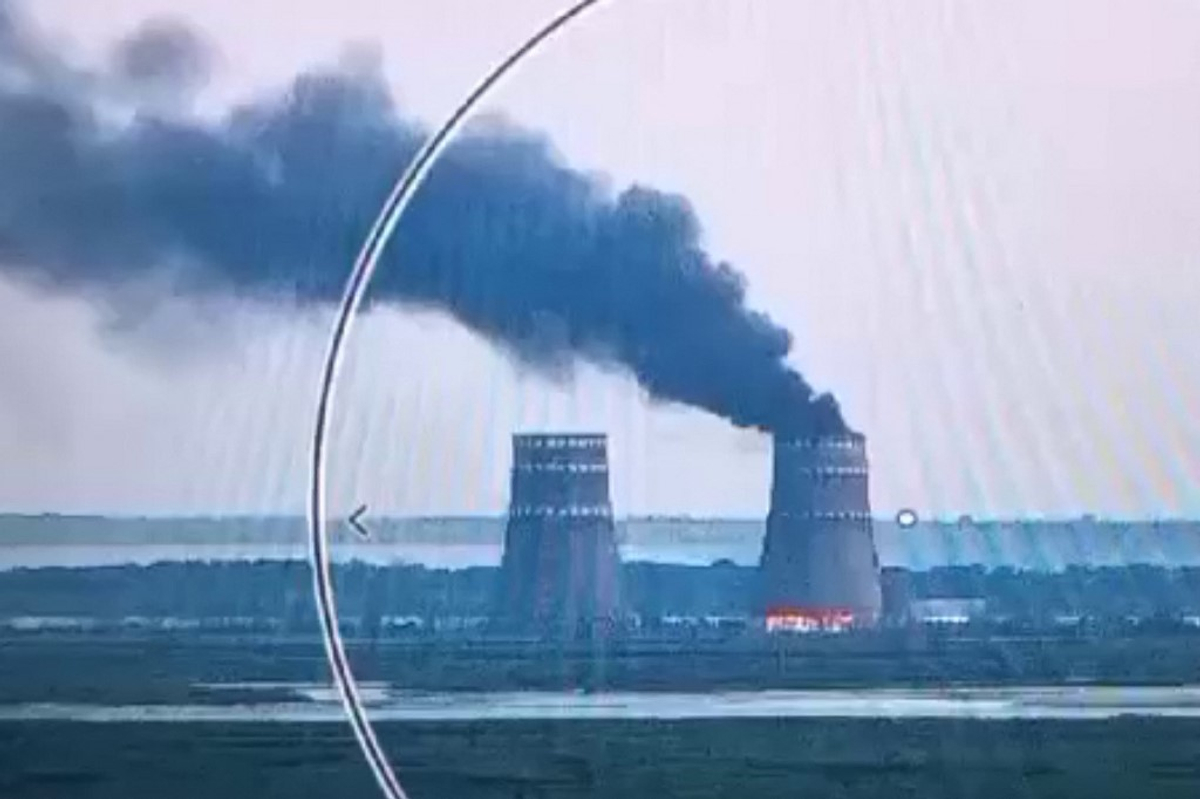
A rare one-day ceasefire between Russian and the Armed Forces of Ukraine (AFU) in Ukraine’s southern Zaporizhzhia region held as planned and allowed maintenance crews to repair power lines critical to keeping nuclear activity at Europe’s biggest atomic power station under control, plant officials said on Tuesday.
The local cessation of fighting organized by representatives of the International Atomic Energy Agency (IAEA) and announced on Monday enabled re-connection of the Russia-occupied Zaporizhzhia Nuclear Power Plant (ZNPP) to external sources of electricity, making continued operation of atomic fuel cooling equipment possible again at the facility.
Follow our coverage of the war on the @Kyivpost_official.
Artillery fire along with possible drone strikes in mid-December cut high power transmission lines linking the plant’s transformer station with the nearby Zaporizhzhia Thermal Power Plant, forcing the atomic energy station to operate its cooling pumps on diesel-fueled generators instead of outside-delivered electricity.
The ZNPP’s reactors have been shut down for more than three years, but the nuclear fuel within them remains nominally active. Theoretically, were the cooling pumps to shut down for several weeks or more, there would be risk of the fuel’s nuclear reaction accelerating unpredictably or – in a worst-case scenario – going critically out of control similar to the 1986 Chornobyl accident.
Other Topics of Interest
Ukraine Hits Russian Long-Range Drone Launchers in Pre-Emptive Attack
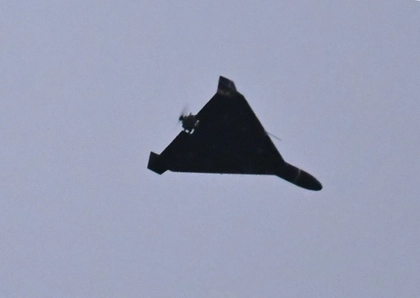
Russia has bombarded Ukraine with tens of thousands of Iranian Shahed drones for years, but – in recent weeks – Ukraine’s drone forces have started hitting the launchers before they fire.
Workers used the IAEA “window of silence” to conduct urgent repairs to damaged power transmission lines. By Monday evening, the station had a continuous supply of outside electricity, and did not need to use on-site generators, a Tuesday ZNPP statement said.
The statement went on to say that all work was carried out under the supervision of IAEA inspectors. IAEA teams had previous mediated short-term ceasefires in October and November 2025 for similar repairs. Captured by Russian forces in the early days of the Russo-Ukraine War, in Feb. 2022, the six-reactor ZNPP is a major bone of contention between Kyiv and Moscow, both of whom say they must control the energy production site – Europe’s biggest – prior to any full-scale peace being agreed to.
Both sides have accused each other of targeting the plant or territory around it to terrorize states adjacent to Ukraine fearful of a nuclear accident and radiation. Ukraine in addition has accused Russia of replacing in-house nuclear scientists familiar with the station with Russian technicians unfamiliar with the plant, and of hiding military personnel inside the facility.
Alexey Likhachev, CEO of the Russian national atomic energy agency Rosatom commented to Russian reporters in November that the station “belongs to Russia” and is operated to Rosatom standards, with no military personnel on site.
The facility was fully licensed as a Rosatom power production asset in late 2025, however, neither Ukraine nor Russia have made official predictions on when the plant might actually generate electricity for consumers.