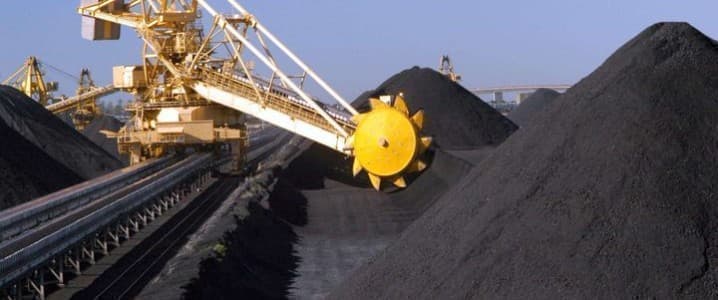
South Korea’s move to kill coal will almost certainly have repercussions on two of its largest energy customers, Australia and the United States.
A decision on the polluting fossil fuel was made at the COP30 climate conference in Brazil, when South Korea’s Ministry of Climate, Energy and Environment announced plans to retire most of the country’s coal-fired power plants by 2040, and to at least halve its carbon emissions by 2035. Forty of the plants already have confirmed closure dates.
South Korea has been criticized for not acting faster to address the climate, according to the Guardian.
A new policy direction came with the election of a more liberal president in June, Lee Jae Myung, who campaigned for stronger climate commitments than his conservative predecessor, Yoon Suk Yeol.
The country is a major importer of coal and natural gas and lags its counterparts in the adoption of renewable energies.
The Guardian notes South Korea has the world’s seventh-largest coal power fleet and is the fourth-largest thermal coal importer behind China, India and Japan. Coal provides about 30% of its electricity.
Related: Where are The World’s Rare Earth Minerals Located?
It is also a significant importer of metallurgical coal, used in steelmaking, and has substantial nuclear and gas-power fleets, each supplying roughly one-third of its electricity.
By contrast, renewable energy generated just 10.5% of South Korea’s domestic power last year. Japan, whose economy is more than twice the size of South Korea, uses double the amount of renewable energy.
There are plans to boost offshore wind power capacity to 4 gigawatts, around 10 times the current level.
Climate activists are rejoicing South Korea’s move away from fossil fuels, but the policy places the country in a quandary with the United States.
That’s because, as part of a trade deal with the Trump administration that would see it avoid higher tariffs, South Korea agreed to raise imports of US liquefied natural gas.
The Associated Press reports Talks are underway for South Korea to invest $350 billion in U.S. projects and purchase up to $100 billion worth of U.S. energy products, including LNG, a natural gas cooled to liquid form for easy storage and travel. It burns cleaner than coal, but still causes planet-warming emissions, especially of methane.
It’s important to note that the agreement with the US is still under negotiation. AP says depending on the deal’s duration, the country may import between 3 and 9 million tons of US LNG a year.
Story Continues