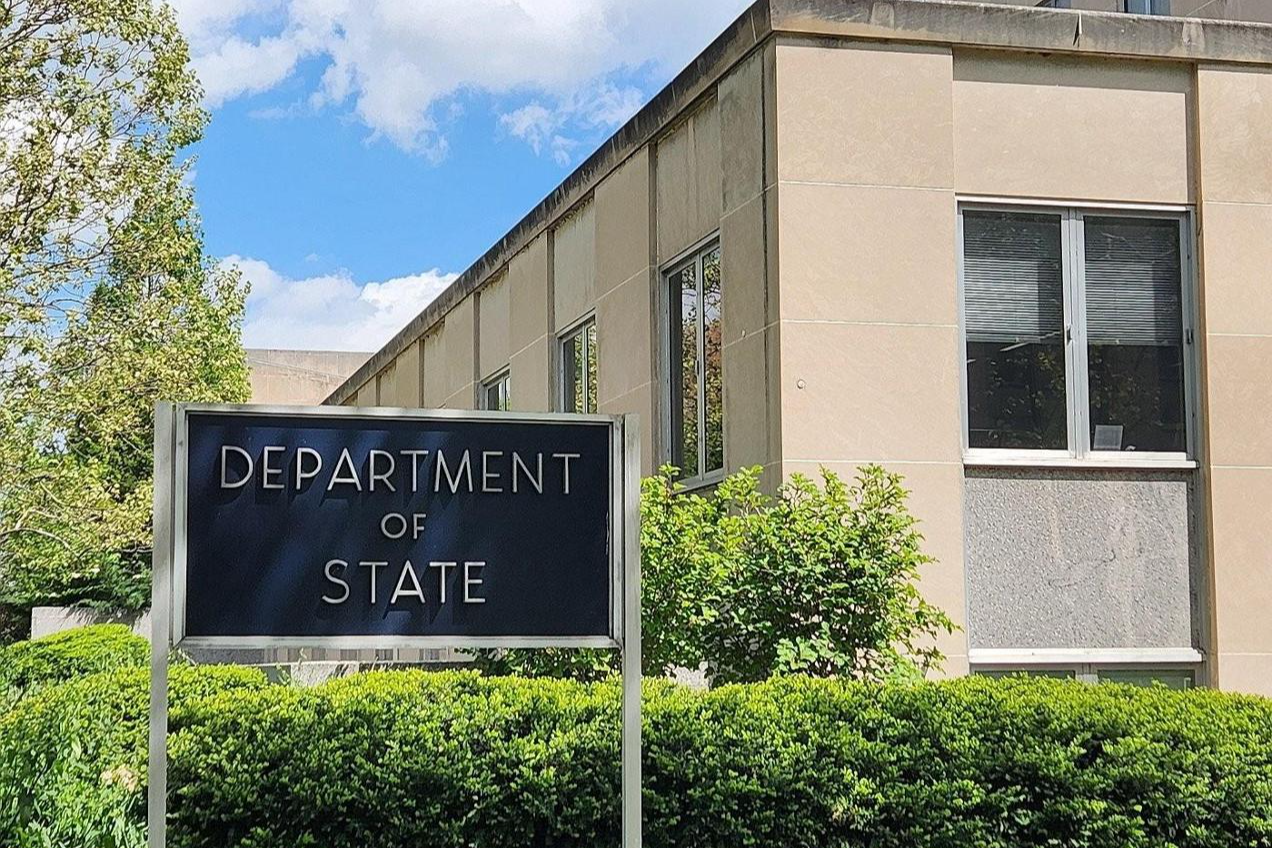
The State Department in Washington / Yonhap
WASHINGTON — A senior U.S. diplomat has expressed concerns over a recently passed revision to a South Korean law aimed at addressing false and fabricated online information, saying it could give regulators an “invasive license for viewpoint-based censorship” and would undermine technology cooperation.
Under Secretary of State for Public Diplomacy Sarah Rogers made the remarks in social media posts on Tuesday — in a public display of concern over the revision that stoked worries over the possibility of diplomatic and trade tension between the two countries.
South Korea’s National Assembly passed the amendment to the Information and Communications Network Act last week, which seeks to stop acts of spreading illegal and fabricated information online, which would instigate violence and discrimination.
“South Korea’s proposed amendment to its Network Act, ostensibly focused on redressing defamatory deepfakes, reaches much further — and endangers tech cooperation,” she wrote on X.
“Deepfakes are understandably concerning, but it’s better to give victims civil remedies than give regulators invasive license for viewpoint-based censorship,” she added.
Her remarks came apparently out of concern that the revision could have an impact on major U.S. online platform companies, such as Google and Meta. Moreover, U.S. President Donald Trump’s administration has sought to “restore” freedom of speech and end “censorship.”
In a joint fact sheet released in November to outline bilateral trade and security agreements, the two countries committed to ensuring that U.S. companies are not discriminated against and do not face unnecessary barriers in terms of laws and policies concerning digital services, including online platform regulations.