
The year 2025 saw conflicts erupt and expand forth from different parts of the world. As ongoing wars intensified in Ukraine and Palestine, new ones found fertile political ground to crop up. As per a report of the Armed Conflict Location & Event Data (ACLED), an estimated 831 million people, i.e. 16% of the global population were exposed to conflicts. This reflects an increasing internationalisation of conflicts, along with the shifting of battlefronts to densely populated cities. Combined with rapid adoption of new warfare technology, these factors contributed to the civilian death toll of over 2,40,000 in 2025.
As global peacefulness declined, non-state armed groups, as well as governments showed less restraint and took to redefining proportionality when it came to armed responses.
Also read | The reality of the changing dimensions of warfare
Here are some of the key conflicts that defined the geopolitical atmosphere in 2025:
Russia, Ukraine continue a bloody war
The Russian invasion of Ukraine emerged as the deadliest military conflict of 2025, as global powers converged to hammer out a ceasefire agreement that is yet to appease both sides for the fourth consecutive year. As Russia pressed on with an aim to seize an increased portion of the Donbas region, Ukraine saw an increase in the number of battles at different locations, including the Zaproizhia, Dnipropetrovsk and Sumy regions.
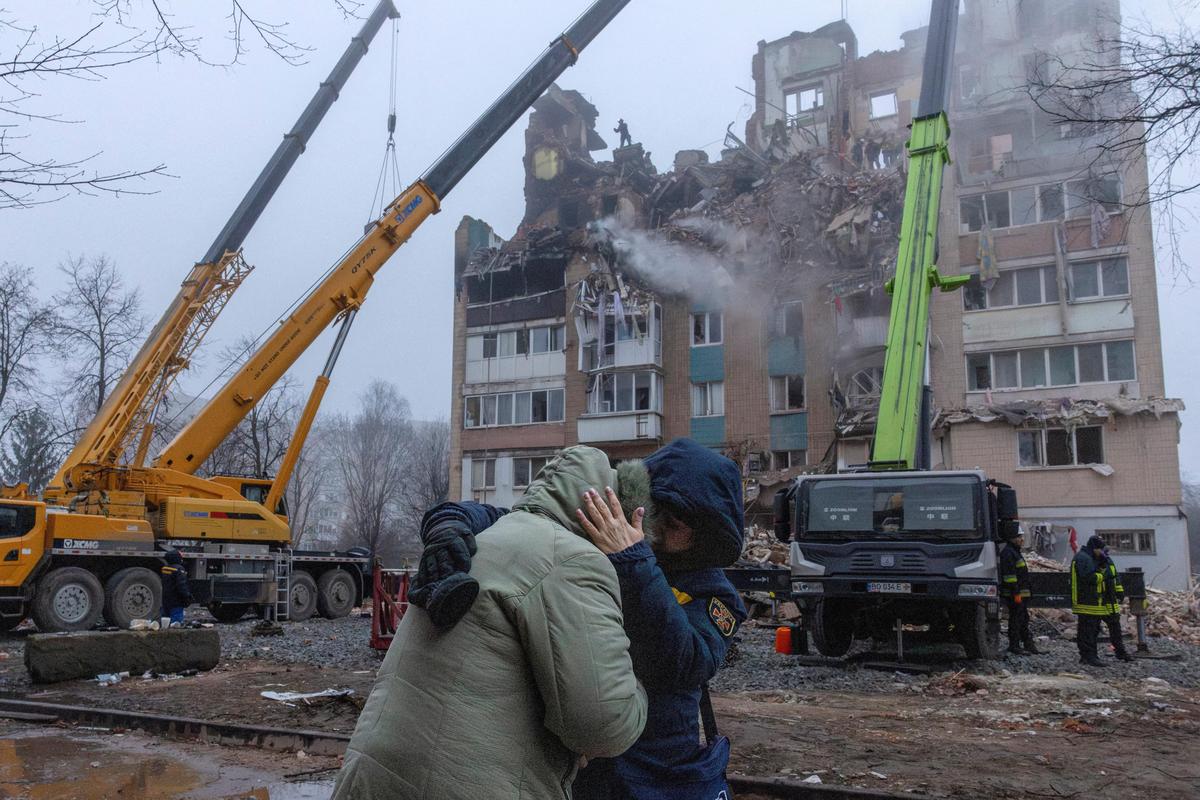
A psychologist comforts a resident on November 20, 2025 in front of an apartment building that was hit by a Russian missile the previous day, amid Russia’s attack on Ukraine, in Ternopil.
| Photo Credit:
Reuters
ACLED recorded a 53% increase in battle events (26,500) when compared to 2024 with Russia increasing the intensity of aerial attacks and drone use in densely-populated areas — directly contributing to the deaths of over 2,000 civilians. The two countries also took to targeting each other’s critical infrastructure as Ukraine’s energy sites witnessed repeated attacks, while it responded by attempting to paralyse Russia’s oil production.
A report by the Institute for the Study of War (ISW) noted that Russia’s efforts delivered only a measly 0.77% territorial gain in 2025. It described the Kremlin’s actions in 2025 as “a cognitive warfare effort to present the Russian military and economy as able to inevitably win a war of attrition against Ukraine”. On the other hand, Ukraine was confronted with exhausted allies eager to end this war, as both the U.S. and the EU sought to renegotiate their financial commitments towards Ukraine’s defence.
Accordingly, Western nations spent the year finalising settlement terms and by December, Ukraine President Volodymyr Zelenskyy expressed optimism towards the 20-point peace plan. The peace framework calls for a demilitarised zone in Donbas and pushes out Russian forces from parts of Dnipropetrovsk, Mykolaiv, Sumy and Kharkiv. If agreed upon, it would also provide Ukraine with security guarantees that match NATO’s Article 5 and stipulate funds for reconstruction of areas affected by the war. The U.S., whose influence has loomed large over these negotiations, would also be entering into trade agreements with both Russia and Ukraine, as part of the peace deal.
However, all of this remains contingent upon Russia accepting this version of the plan, and Moscow so far has not given any positive indications.
Israel expands military conflicts across West Asia
Israel’s theatre of war in 2025 spread across West Asian nations, and brought the risk of full-blown conflicts to the doorsteps of U.S. allies. As per ACLED, Israel attacked more foreign countries (Palestine, Lebanon, Syria, Yemen, Iran, and Qatar) than any other nation in 2025, undertaking 12,500 military actions in the West Asian region.
Israel’s military actions in occupied Palestinian territories:
The year was bookended by fragile ceasefire agreements for the vulnerable Palestinian territory. Ahead of U.S. President Trump taking power in January, Israel and Hamas agreed upon a truce that prioritised the swapping of Israeli hostages for Palestinian prisoners. However, Israel renewed military action in March and over the next several months, Benjamin Netanyahu expanded the scope of this operation. He went on to vocalise plans for taking over all of the Gaza Strip while shifting Palestine’s civilian population. In September, the Israeli forces began an intensified ground campaign targeting “Hamas strongholds” in Gaza City and al-Mawasi.
At the same time, as negotiations laboured on in the background (mediated by U.S., Egypt and Qatar), Israel conducted strikes against negotiators from Hamas in Qatar, killing at least six people, including five negotiators. This attack not only drew significant condemnation but also fast-tracked the peace plan, which came into effect on October 10, 2025. A ceasefire under the aegis of the watchful West called for cessation of armed conflict, exchange of hostages and prisoners and outlined conditions for Israeli withdrawal.
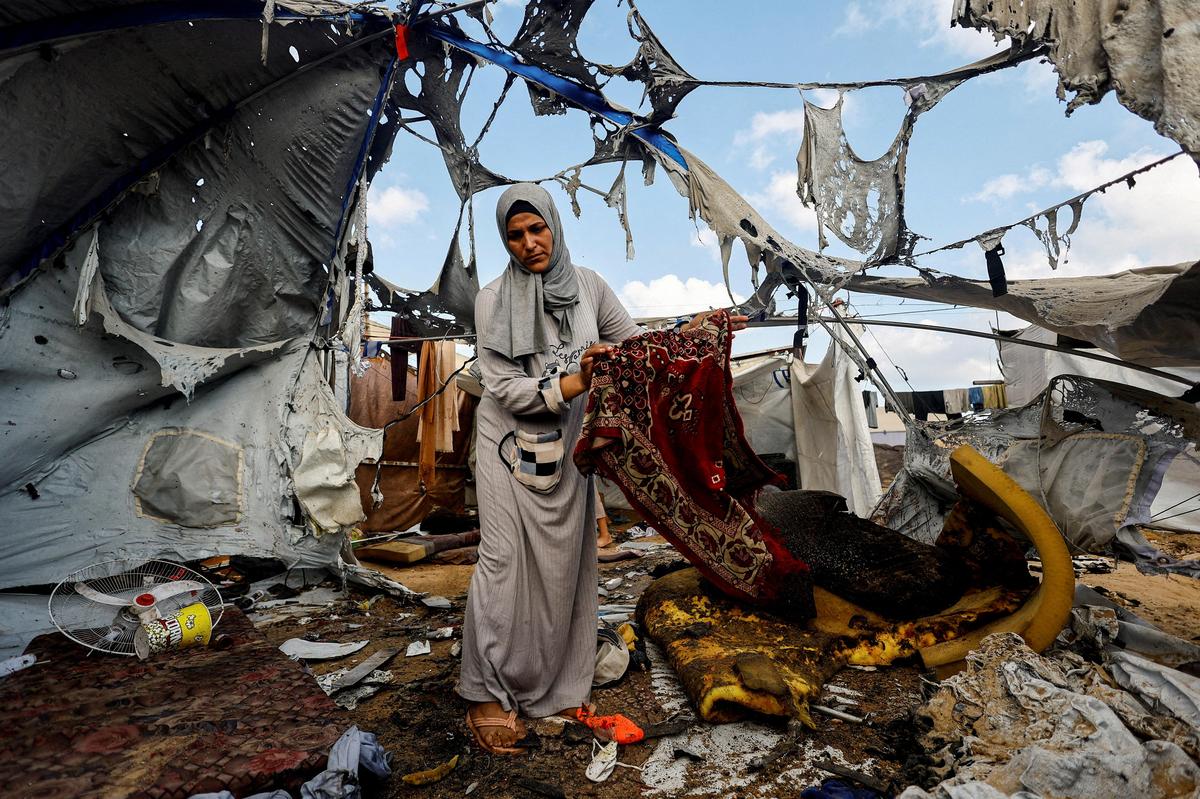
A Palestinian woman carries a prayer mat at the site of an overnight Israeli strike on a tent, in Gaza City on September 8, 2025.
| Photo Credit:
Reuters
Over two months into the “ceasefire”, and Israel has been accused of violating it on multiple occasions with upwards of 350 Palestinians killed since October, and over 16,000 since January. Moreover, a U.K. government report notes that the Israeli Defence Forces continue to retain control over at least 53% of Gaza. This is apart from the IDF’s increased presence in the occupied West Bank, which has seen double the number of attacks on unarmed civilians since 2024, and the highest level of settler violence in a decade.
Israel’s 12-day conflict against Iran
Israel launched airstrikes targeting Iran in June in what would eventually snowball into a 12-day conflict. Targeting government institutions, nuclear facilities and senior political and military figures as well as scientists, Israel carried out at least 350 strikes across 26 Iranian Provinces.
Iran responded with a wave of missiles targeting Israel. On June 22, 2025, the United States entered the conflict, using bunker-buster bombs to hit three key Iranian nuclear facilities — Fordow, Natanz, and Isfahan.
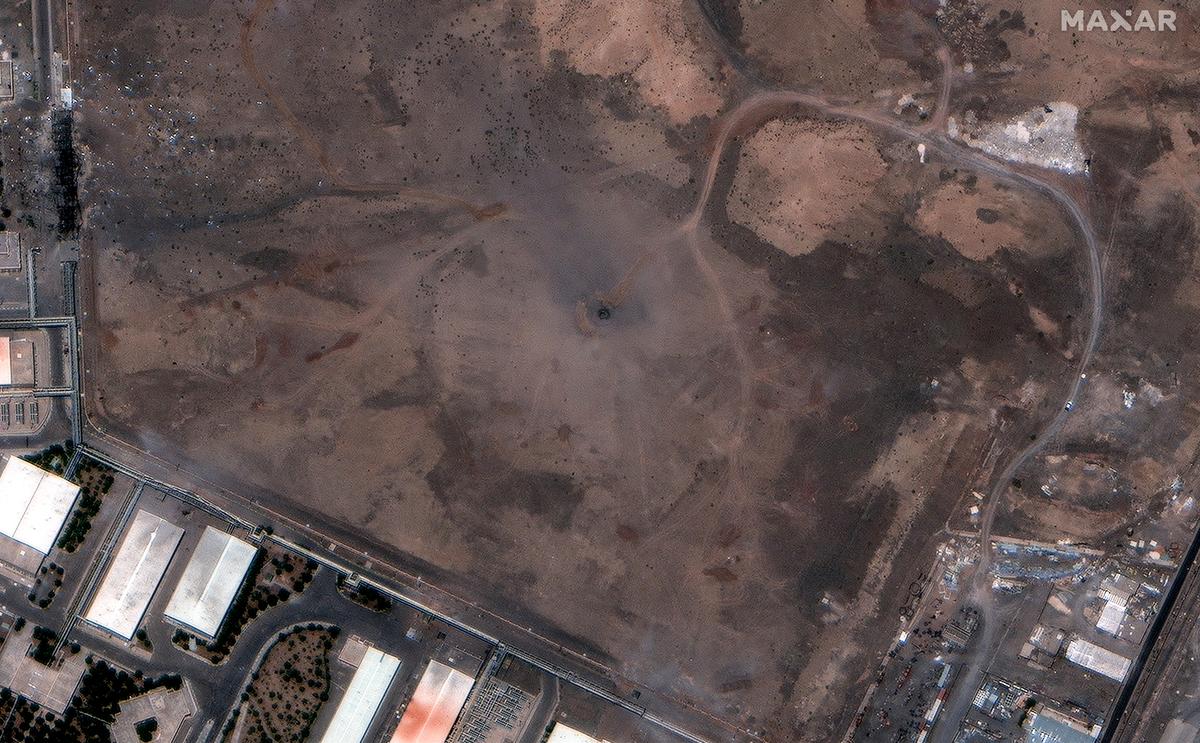
Satellite image shows a close up of a crater over the underground facility of Natanz Enrichment Facility, after it was hit by U.S. airstrikes, near Natanz, Iran, June 22, 2025. Photo: Maxar Technologies via Reuters
A day later, Mr. Trump announced a ceasefire between the countries, with both Israel and Iran having “wound down and completed their in progress, final missions”.
Sudan stares at a deadly future
Amidst the continuing battle between the Sudanese Armed Forces (SAF) and the paramilitary group the Rapid Support Forces (RSF), Sudan’s civilians find themselves and their country entrapped in a two-year-long civil war that shows no signs of slowing down in the near future. This year was defined by significant territorial gains for the opposing groups, splitting Sudan’s map as fighters moved to secure what was left to conquer, as civilian casualties mounted.
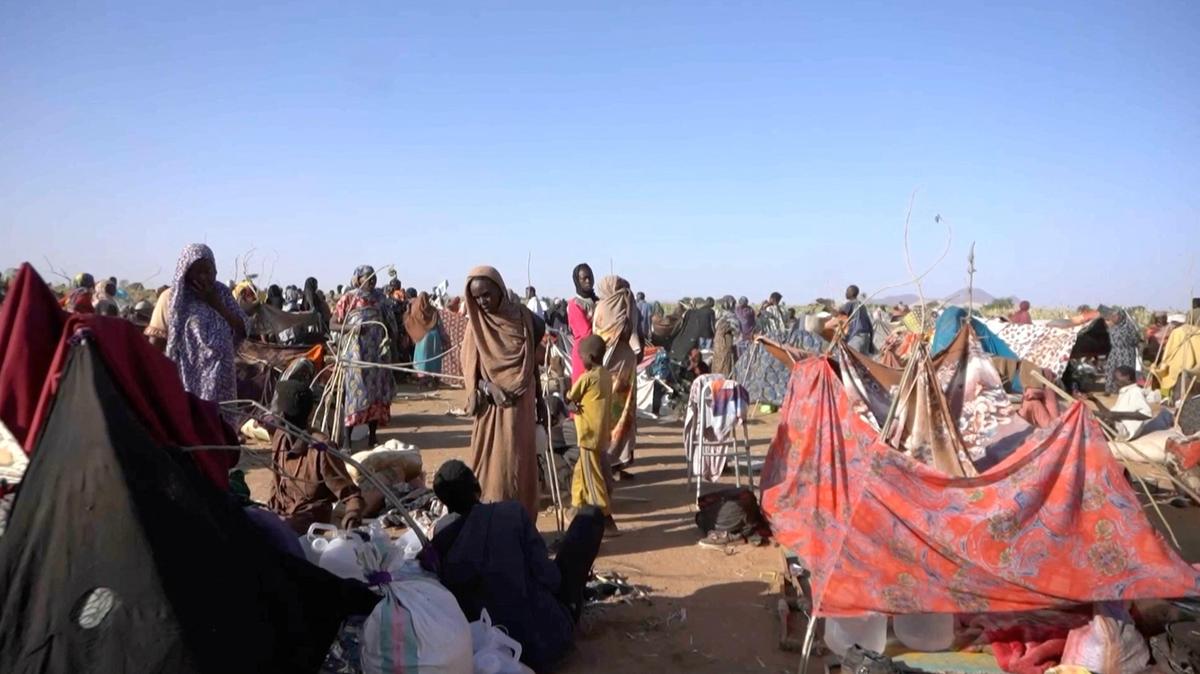
Displaced Sudanese gather and sit in makeshift tents on October 29, 2025 after fleeing Al-Fashir city in Darfur, in Tawila, Sudan, in this still image taken from a Reuters video.
| Photo Credit:
Reuters
The Saudi-backed SAF covered significant ground in the east, by recapturing Khartoum and Port Sudan, and eventually installing Kamil Idris as the Prime Minister of Sudan. Meanwhile, with the support of the UAE, the RSF’s takeover of Darfur placed them in an advantageous position. The October conquest of El Fasher, however, attracted international attention with the killing of at least 1,300 civilians.
In December, Mr. Idris submitted a peace proposal at the UNSC that outlined a framework for ceasefire along with the RSF’s withdrawal from occupied territory. RSF, which has sought to establish itself as a legitimate ruling authority, has rejected this proposal. The U.N., in the meantime has warned that the civil war could be heading towards its deadliest phase yet, as the number of displaced Sudanese continues to rise.
Thailand-Cambodia reach a peace deal
Thailand and Cambodia will look to enter 2026 in relative peace when compared to the turbulent 2025 the two countries endured. Closing off the year, both sides entered into a ceasefire agreement in December that came on the heels of weeks of fighting and the death of dozens of civilians.
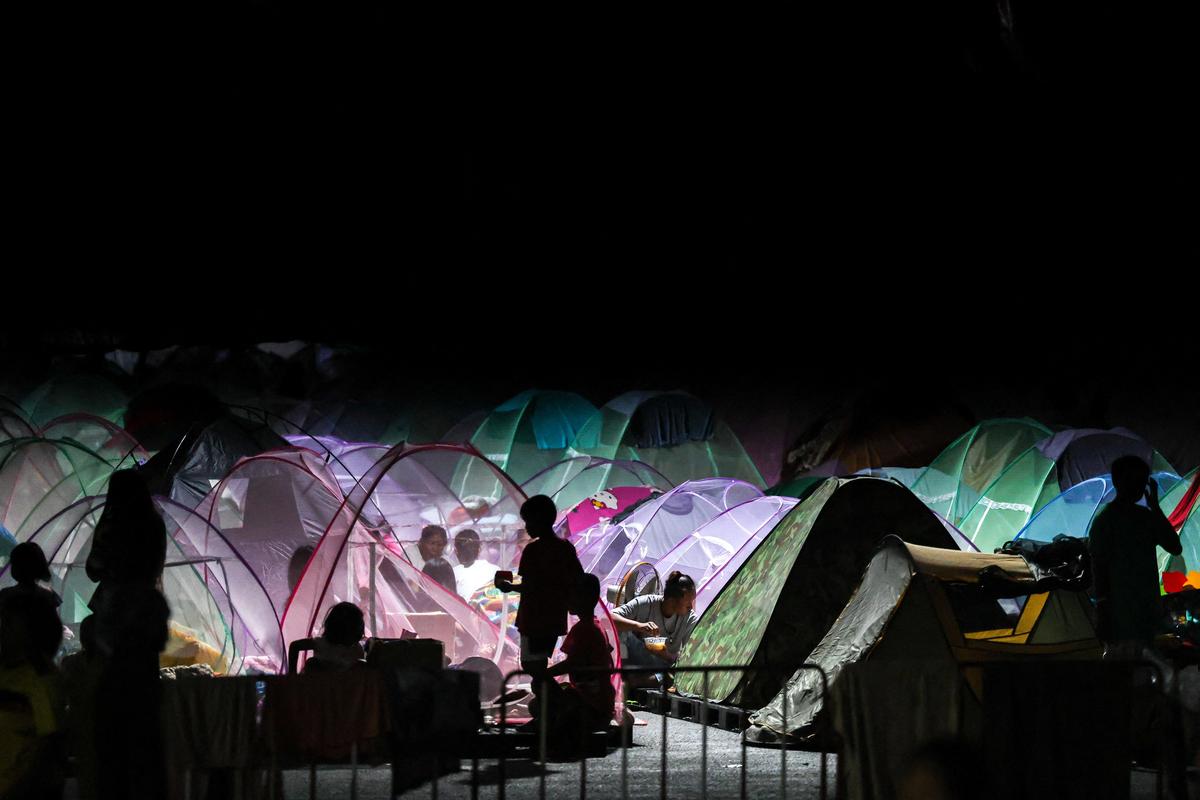
Displaced people gather inside a temporary shelter amid clashes between Thailand and Cambodia along a disputed border area, in Buriram Province, Thailand, on December 16, 2025.
| Photo Credit:
Reuters
Heightened tensions over a territorial dispute emerging from colonial-era border demarcation, as both countries lay claim over ancient temples in the disputed area, eventually gave way to violent clashes first in July. A quick four days later, a ceasefire brokered by the U.S., China and ASEAN-chair Malaysia brought calm to the region. An agreement signed to this effect in October, barely lasted a month before a landmine blast in November killed a Thai soldier and reignited the conflict.
ASEAN stepped in again, but it took weeks this time before either side agreed to lay down arms. The ceasefire brings peace back to the region for now, but doesn’t resolve the dispute that led to the clashes. Domestic political tensions and simmering nationalist sentiments proved to be fertile ground for this issue to catch fire. Thailand saw the departure of then Prime Minister Paetongtarn Shinawatra, over a leaked phone call that ended up portraying her as a weak rival to Cambodian posturing. As the ceasefire sets into motion, China will host Cambodian and Thai Foreign Ministers next year for further talks.
Rwanda and the Democratic Republic of Congo fail to implement peace treaties
Peace accords may not always reflect the situation on ground, as is being witnessed from the ongoing conflict between the Democratic Republic of Congo (DRC), and the Rwandan-backed M23 rebels.
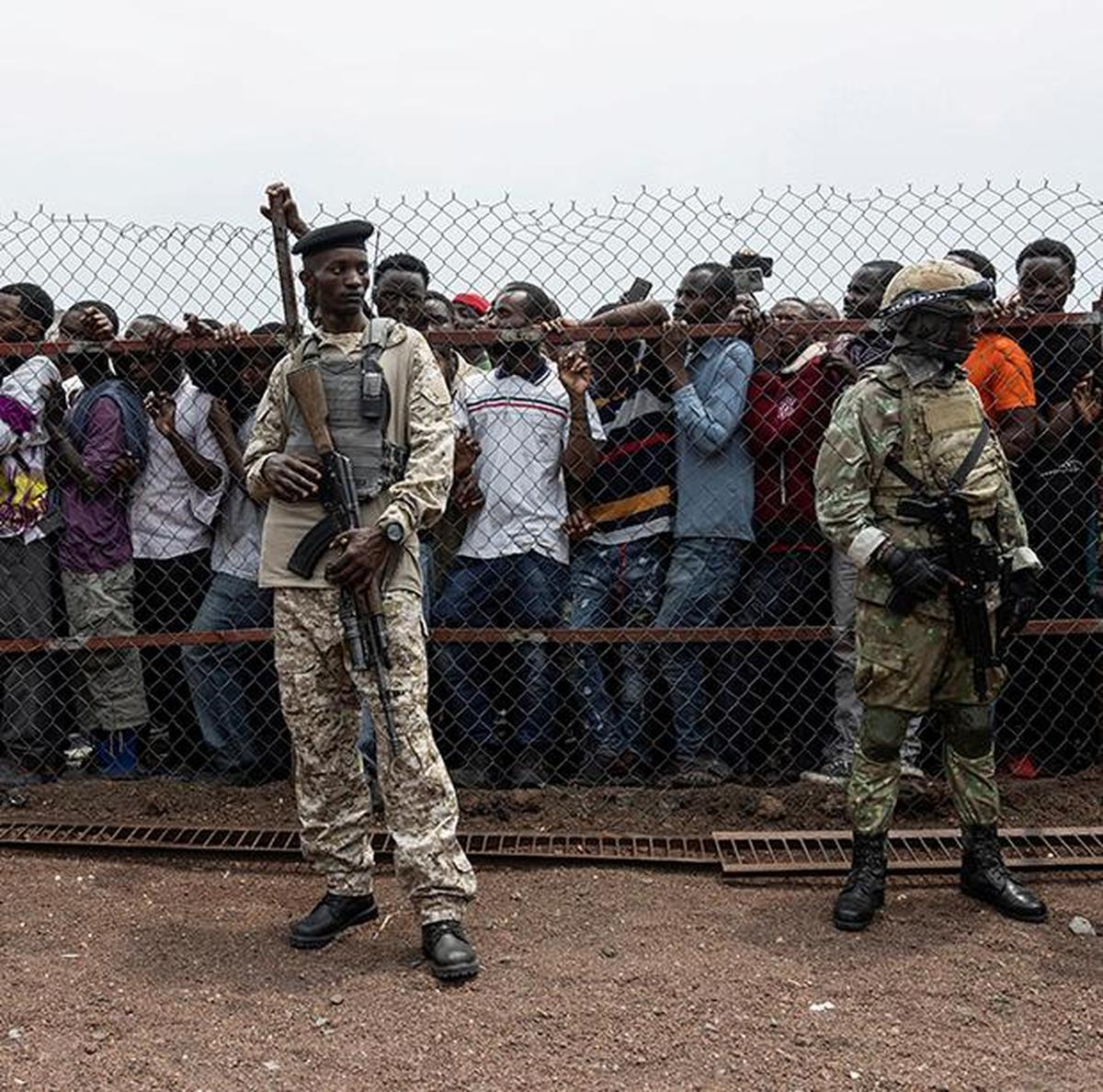
M23 rebels stand guard near civilians during a meeting organised by the M23 at the Stade de l’Unite, after the town of Goma was taken by the M23 rebels, in Goma, Democratic Republic of Congo, on February 6, 2025.
| Photo Credit:
Reuters
In their fifth year of fighting, DRC and Rwanda on December 4, 2025, signed the Washington Accords for Peace and Prosperity, reaffirming a peace agreement signed earlier in June in which both countries agreed to work towards a peaceful resolution. However, over this year, clashes between the two sides have not subsided. M23’s capture of Goma and Bukavu cities in January deepened fissures, and put up a death toll of 7,000 within a month. The death toll and the number of displaced persons has steadily risen since then.
Alongside talks in the U.S., DRC officials have held parallel talks with M23 representatives in Doha. Though, as the M23 moves to capture more territory and put parallel administrative structures in place, the implementation of peace remains elusive.
India’s Operation Sindoor against terrorist infrastucture in Pakistan
Responding to the April 22, 2025 terrorist attack in Pahalgam, which saw the brutal killing of 26 people, India launched Operation Sindoor on May 7, 2025 targeting terrorist infrastructure. Nine terrorist bases were targeted — four in Pakistan and the rest in Pakistan-occupied Kashmir. Over the next three days, intense aerial warfare ensued as both sides targeted key cities and installations.
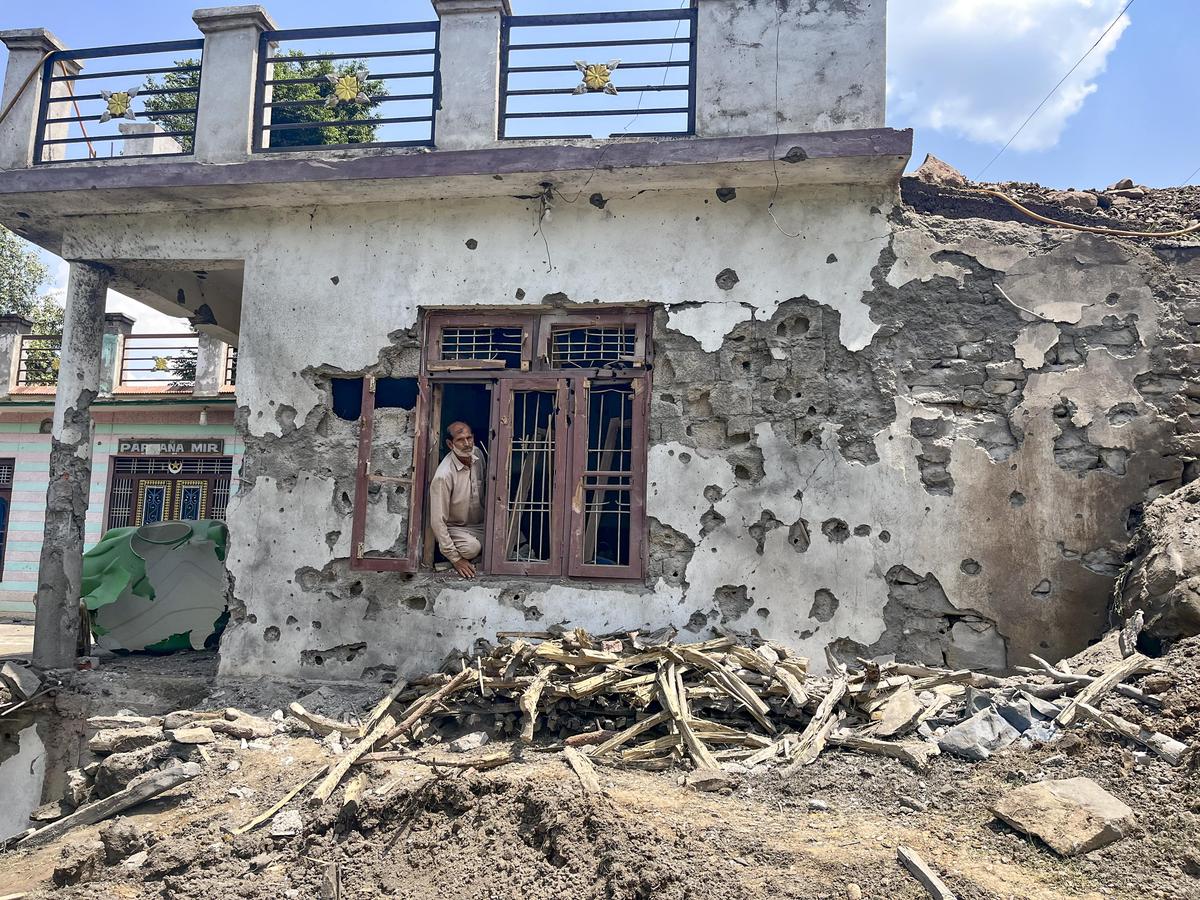
A man stands inside a house damaged after cross border shelling by Pakistan at Behra village of Mendhar sector, in Poonch district, Jammu and Kashmir on May 10, 2025.
| Photo Credit:
PTI
While Indian air defence systems intercepted Pakistan’s aerial offensives, border town residents such as in Poonch in Jammu and Kashmir lost their lives to acute shelling.
India’s retaliatory strikes targeted airbases and other military installations across Pakistan, with the Government claiming that 20% of Pakistan’s air force infrastructure was destroyed.
On May 10, 2025, Pakistan’s Director General of Military Operations called his Indian counterpart and both sides reached an agreement to cease military action. Though both, PM Modi and Defence Minister Rajnath Singh, have emphasised that the military operation is only “paused” and not fully suspended.
India and Pakistan have also not climbed down from the diplomatic measures introduced earlier this year including the suspension of visa services, closure of airspace and placing the Indus Water Treaty in abeyance.
Afghanistan-Pakistan conflict
Pakistan faced its second major border conflict this year in October as it launched airstrikes against Afghanistan in response to domestic attacks claimed by the Tehrik-e-Taliban Pakistan (TTP). Looking to hit TTP leadership, Islamabad conducted strikes in Kabul and Kandahar. Meanwhile, the Taliban government of Afghanistan responded with attacks along the border.
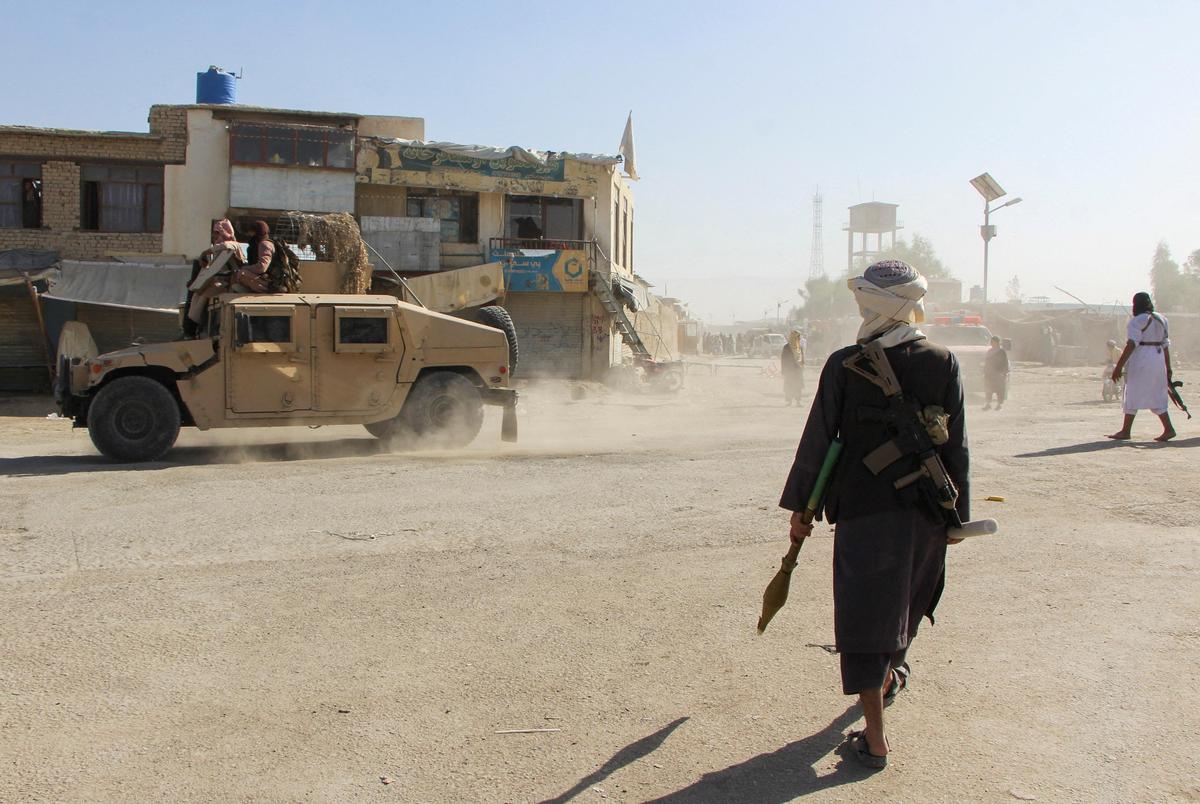
Afghan Taliban fighters patrol near the Afghanistan-Pakistan border in Spin Boldak, Kandahar Province, following exchange of fire between Pakistani and Afghan forces in Afghanistan on October 15, 2025.
| Photo Credit:
Reuters
The 10-day long conflict took a pause on October 19, 2025 as talks mediated by Qatar and Turkiye resulted in a ceasefire.
Since October, dozens of civilian deaths, compounded with cross-border displacement and the suspension of trade has left the Afgan-Pakistan relations in a limbo. While Pakistan seeks commitment from Afghanistan in dealing with the TTP threat, Kabul refuses to take on a burden it considers to be foreign. Sporadic fighting in violation of the ceasefire continues as both sides fail to register concrete progress in recent talks.