A country suffering international isolation has recognised a small territory desperate for international attention.
That’s the case with Israel and Somaliland, the breakaway Somalian province on the Horn of Africa which Israel became the first UN member state to formally recognise as a country last week.
The move might seem strange or unimportant, but it caused an enormous stir, provoking condemnation from across the region and triggering an emergency meeting of the UN Security Council.
So why did Israel decide to partner with this small territory, with only around six million people, a long way from its own borders?
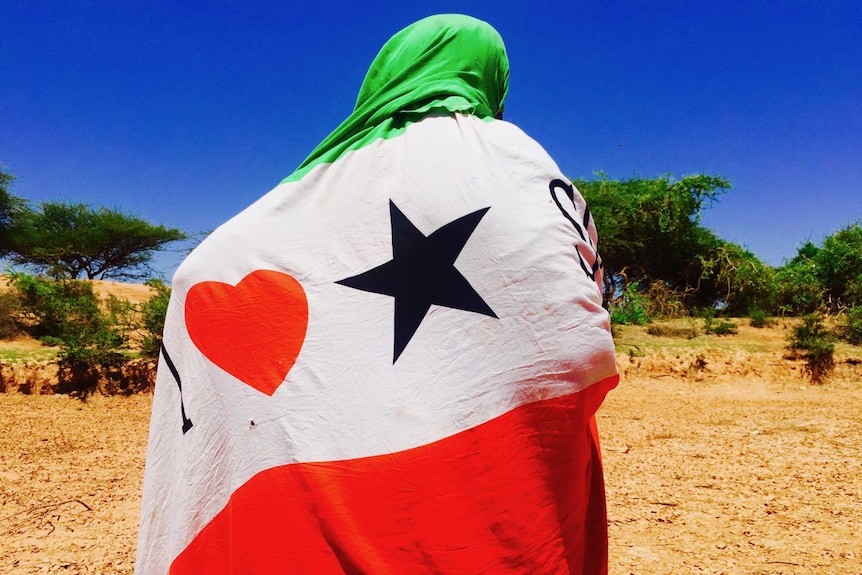
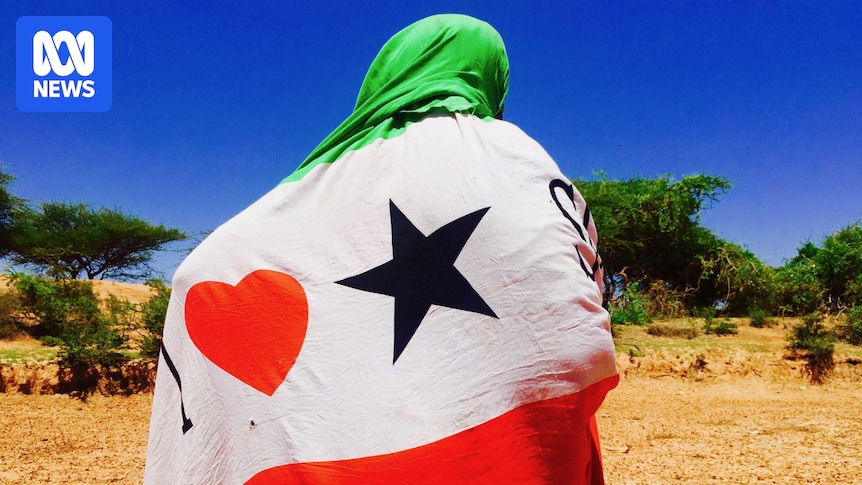
A woman wearing Somaliland colours in 2017. (ABC News: Sally Sara)
Reason one: Securing an ally near the Houthis
Analysts agree the main reason is to build a base against the Houthi rebels in Yemen, just across the Gulf of Aden, who began attacking international shipping connected to Israel and firing rockets at the Jewish state, purportedly in support of Palestinians, after the October 7 Hamas attacks in 2023.
Cultivating allies close to its enemies has long been an Israeli strategy, said Asher Lubotzky, a senior research fellow at the Israel-Africa Relations Institute.
He pointed to the “nice structure” of alliances Israel has built around Iran, including its close relationship with Azerbaijan, which borders Iran on the Caspian Sea, and the Kurdish region in Iraq, which borders north-west Iran.
“So Israel knew how to get really close to Iran when they needed to, versus the Houthis, where there was nothing,” he said.
“I’ve been saying in the last year and a half… if you want to get closer to the Houthis, if you want to have more presence on the Red Sea, you’ve got to work with Somaliland.
“They’re almost the best ally you can ask for.”Who are Iran’s key allies in the Middle East and globally?
Israel’s ally in the Gulf region, the United Arab Emirates, already has a military base in Somaliland and a UAE company runs the port at Berbera.
Israel has historically undertaken this approach, known as the “periphery doctrine”, to cultivate non-Arab allies in an otherwise hostile region, such as Turkey, Ethiopia and pre-Revolution Iran.
Reason two: A theory about Gazan refugees
Somaliland, which declared independence in 1991, has been looking for allies and particularly seeking recognition from the United States in its pursuit of international legitimacy.
In March 2025, reports suggested US and Israel officials had approached Somaliland, as well as Somalia and Sudan, to consider accepting Palestinians relocated from Gaza under the so-called “Trump Riviera Plan”.
The idea, which included the complete expulsion of Gazans, was quietly shelved by the White House after broad international condemnation and allegations of ethnic cleansing.
However some Israeli ministers continue to push for the relocation of Gazans from the strip, calling for “voluntary emigration”.
Back then, Somaliland did not rule out accepting the resettlement of Palestinians from Gaza, although it said diplomatic recognition and working relations would be a prerequisite for such a move.
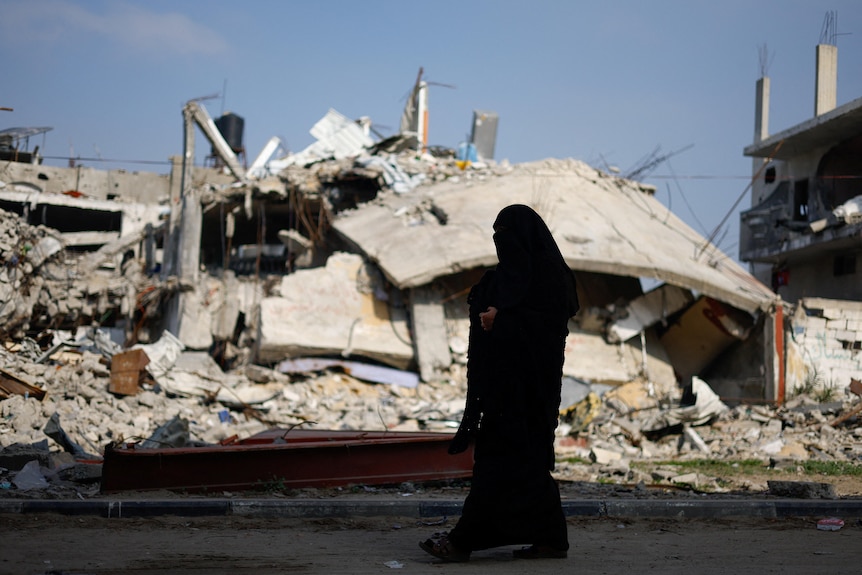
Reports suggested that Somaliland was approached to consider accepting Palestinians relocated from Gaza. (Reuters: Mohammed Salem)
After Israel’s recognition, Somaliland’s foreign minister Abdirahman Dahir Adam denied his government had agreed to accept any Gazans in exchange for the move, telling Israel’s public broadcaster KAN: “Somaliland has neither discussed nor agreed to host or receive people from the Gaza Strip on its territory.”
Dan Diker, the President of the Jerusalem Center for Security and Foreign Affairs, which is considered close to the current Israeli Government, said he had heard Somaliland was willing to consider hosting Gazans.
“The Somalilanders did offer to take, I heard, numbers in the hundreds of thousands, if not more,” he told the ABC.
But Dr Diker said the idea was contentious within Somaliland, with questions raised about its security implications.
“There is, you know, a very active dialogue and discourse going on over that point. But I do think that the Somaliland government would accept, with the proper financial compensation, a number of … to relocate either temporarily or permanently,” he said.
Dr Lubotzky, from the Israel-Africa Relations Institute, said he doubted the potential relocation of Gazans was being seriously considered by the Israeli government. He said it was only promoted by extreme right-wing ministers pandering to a domestic audience.
“I’m willing to put a lot of money on assuming that this is not at all any factor and it was not even discussed with the Somalilanders, for a few reasons,” he said.
“First, I don’t think Somaliland would ever do that. Second, I think that actually [Prime Minister Benjamin] Netanyahu and [Foreign Minister] Gideon Saar, they understand this is not realistic, this idea that was more for domestic reasons.”
Reason three: Countering the influence of Türkiye
The final benefit, if not a deciding factor, for Israel may have been the chance to annoy and counter the influence of Türkiye, its former ally-turned adversary under the government of President Recep Tayyip Erdoğan.
Türkiye has been a major supporter of the Somali government, has a military base in Mogadishu and has recently announced it is working on energy exploration off the Somali coast.
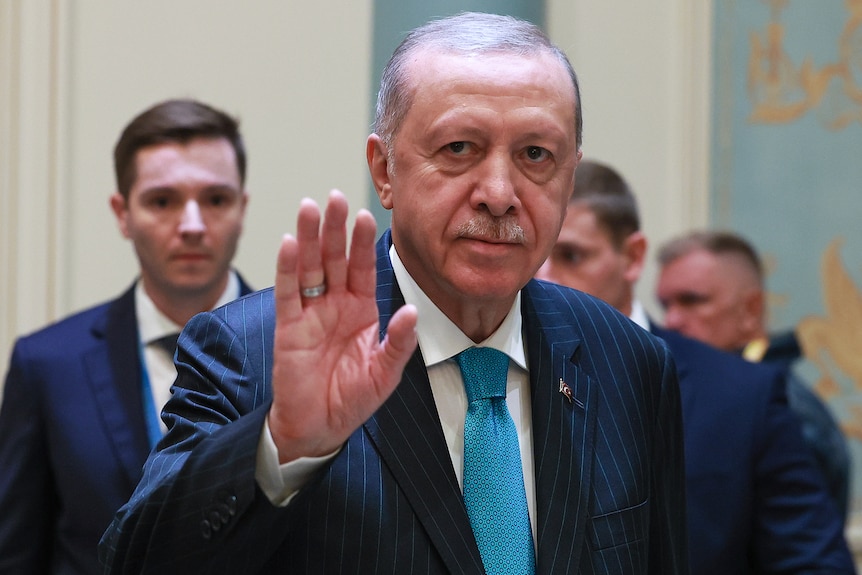
Türkiye has become an ally-turned-adversary under President Erdoğan. ( AP: Vladimir Smirnov: Sputnik: Kremlin Pool Photo)
President Erdoğan condemned Israel’s recognition of Somaliland, calling it “illegal and unacceptable”.
But Dr Lubotzky said Türkiye’s activities in the region were a secondary consideration.
“Israel did not do that [recognise Somaliland] because of Türkiye,” he said.
“I mean, it’s kind of a nice to have, [because for] the current government in Israel, the perspective is that to kind of utz [‘annoy’ in Yiddish] Türkiye is nice, but this is not why they did it.
“Israel … is worried that in the long run, Türkiye would be trying to encircle Israel.
“This is something that people are worried about, but this is not the first priority. And in Israel you work only by first priorities.”