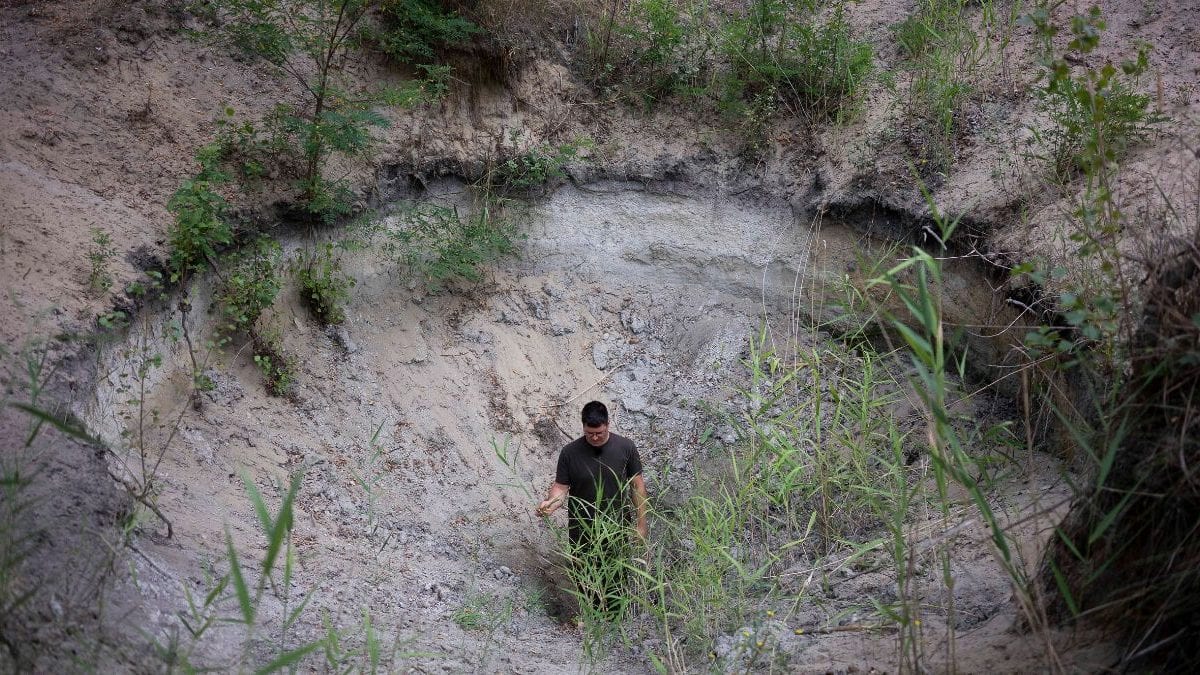
Southern Hungary’s Homokhatsag region is drying out as climate change and poor water management turn once-fertile farmland into near desert. Farmers are now using treated thermal water to mimic natural flooding to slow desertification.
The region in southern Hungary, once an important site for agriculture, has become increasingly parched and dry. Where a variety of crops and grasses once filled the fields, today there are wide cracks in the soil and growing sand dunes more reminiscent of the Sahara Desert than Central Europe.
“It’s much worse, and it’s getting worse year after year,” a farmer said as cloudy liquid slowly seeped into the hole. ”Where did so much water go? It’s unbelievable,” he added.
The region, known as the Homokhatsag, has been described by some studies as semiarid. In parts of Africa, the American Southwest or Australian Outback is characterized by very little rain, dried-out wells and a water table plunging ever deeper underground.
Fields that in previous centuries would be regularly flooded by the Danube and Tisza Rivers have, through a combination of climate change-related droughts and poor water retention practices, become nearly unsuitable for crops and wildlife.
A group of farmers and other volunteers, are trying to save the region and their lands from total desiccation using a resource for which Hungary is famous: thermal water.
According to the water guardians’ plan, the water, cooled and purified, would be used to flood a 2 1⁄2-hectare (6-acre) low-lying field — a way of mimicking the natural cycle of flooding that channelizing the rivers had ended.
Following another hot, dry summer this year, the water guardians blocked a series of sluices along a canal, and the repurposed water from the spa began slowly gathering in the low-lying field.
Persistent droughts in the Great Hungarian Plain have threatened desertification, a process where vegetation recedes because of high heat and low rainfall.
Weather-damaged crops have dealt significant blows to the country’s overall gross domestic product, prompting Prime Minister Viktor Orban to announce this year the creation of a “drought task force” to deal with the problem.
(With inputs from AP)
End of Article