California’s Department of Motor Vehicles has announced it will postpone the cancellation of approximately 17,000 commercial driver’s licenses until March, providing a temporary reprieve for immigrant truckers and bus drivers who were facing the loss of their credentials in early January 2026.
This move comes after a class-action lawsuit challenged the state’s efforts to strip these licenses from holders whose status is tied to immigration or work authorization documentation. The decision comes amid intense federal pressure and legal disputes over licensing processes and public safety requirements.
Federal Officials Threaten Funding Cuts
Under the revised schedule, the DMV has extended the planned revocation of nondomiciled commercial driver’s licenses by 60 days to March 6, 2026. The agency says this extension will allow more time to work with the Federal Motor Carrier Safety Administration and to ensure that drivers who are legally eligible to maintain their commercial credentials can do so. California officials also hope this additional time will allow the resumption of license issuance once compliance concerns are addressed.
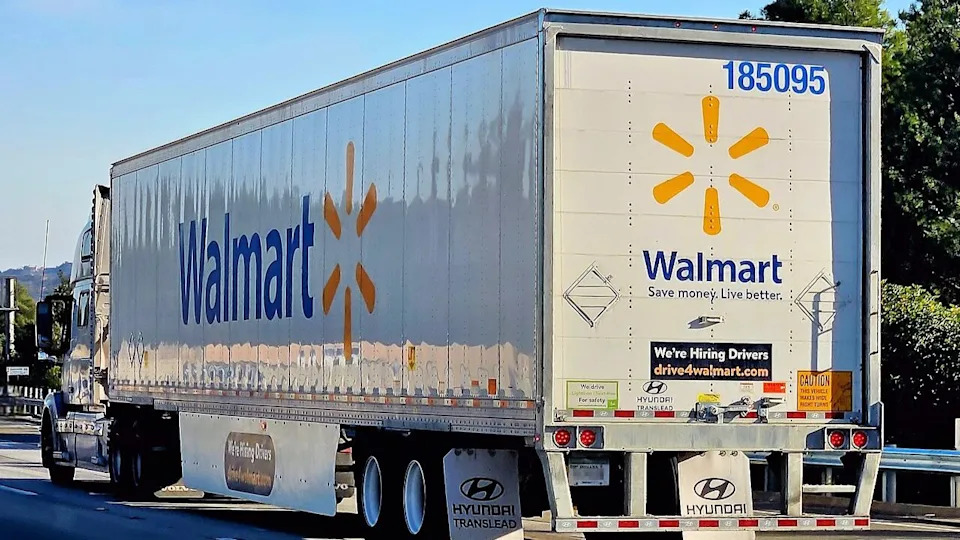
Image Credit: Eric Polk – Own work, CC BY-SA 4.0, Wikimedia.
Federal officials have taken a starkly different view. U.S. Transportation Secretary Sean Duffy has publicly condemned California’s delay, asserting that the state does not have authority to extend the deadline and warning that failure to revoke the licenses by January 5 could jeopardize up to $160 million in federal transportation funding.
Duffy has already withheld $40 million in federal funds from the state, citing enforcement deficiencies including failure to verify English proficiency for commercial drivers. His office also emphasized that some commercial driver’s licenses remained valid on state records long after the license holders’ federal work authorizations had expired. Duffy has framed strict enforcement as vital to road safety, a stance backed by recent national scrutiny following fatal crashes involving drivers without proper authorization.
The legal challenge driving the state’s reconsideration originated with a class-action lawsuit filed by immigrant advocacy groups including the Sikh Coalition, the Asian Law Caucus, and Weil, Gotshal & Manges on behalf of several affected drivers and the Jakara Movement. Plaintiffs argue that California’s original plan to revoke the licenses violated due process because affected drivers were not given adequate notice or a mechanism to correct expiration date errors on their commercial driver’s licenses.
Specifically, the lawsuit alleges that the California DMV improperly set expiration dates that did not align with federal work authorization documentation or failed to update system records to reflect current authorizations. This arguably left some drivers unfairly vulnerable to losing their credentials.
Advocates Hail Delay
Image Credit: Virrage Images/Shutterstock.
Advocates for the drivers describe the delay as a crucial reprieve for workers and their families, preserving employment and livelihoods while the legal dispute moves forward. The KMPH cites legal Director Munmeeth Kaur of the Sikh Coalition as stating that the extension provides immediate relief and creates space to protect drivers’ rights as the process unfolds.
Senior attorney Katherine Zhao of the Asian Law Caucus echoed that sentiment, highlighting relief for individual clients and calling for continued protections that ensure due process.
The controversy has drawn attention to broader tensions over immigration policy, public safety, and labor needs. Immigrants make up a significant portion of the U.S. trucking workforce (estimated around 20 percent nationally) and the nondomiciled commercial licenses at issue represent about 5 percent of the total commercial driver’s license population.
California officials have underscored how critical these drivers are to supply chains and community connections throughout the state, noting that abrupt removal of thousands of drivers could disrupt transportation networks and economic activity.
Legal and Funding Stakes Remain Unresolved
At the same time, industry groups, particularly some trucking trade associations, have welcomed efforts to tighten standards for commercial licenses. They support removing unqualified drivers from the roads and have backed federal efforts to scrutinize commercial driving schools and ensure that licenses meet safety and language proficiency standards.
The DMV’s extension does not resolve the fundamental dispute between state regulators, federal authorities, and advocacy groups. California continues to work with federal agencies to satisfy compliance requirements, and the lawsuit will proceed in Alameda County Superior Court where plaintiffs seek permanent protections against arbitrary or improper license cancellations.
Meanwhile, the state faces the looming possibility of losing significant federal funds if it fails to meet enforcement benchmarks, and it must strike a balance between regulatory requirements and protecting the livelihoods of thousands of commercial drivers.
Source: California DMV