Synopsis: The piece argues that today’s transatlantic tension is real but overstated. Washington wants Europe to shoulder more of its own defense as U.S. focus shifts toward China, yet Europe is already rearming in response to Russia’s war in Ukraine.
-The most telling indicator is what Finland and Sweden did in 2023 and 2024: they “voted with their feet” and joined NATO, judging themselves safer inside the alliance than outside it.
-Russia’s gray-zone provocations—like Baltic cable incidents and airspace probes—are meant to test resolve, not trigger war. Estonia’s spy chief adds the core point: keep investing, and deterrence holds.
NATO In 2026: That’s A Complicated Phrase
In the eighty years since the end of the Second World War, at no other time has the transatlantic alliance appeared so frayed.
China hawks in the Trump Administration admonish old allies in Europe to do more, spend more, be more—and, above all, take more responsibility for their own protection. Because, as they say, the United States has the business of defending Taiwan from a looming Chinese invasion to take care of, and cannot be everywhere for everyone all at once.
But casting aside the blame game of responsibility, Europe has, in its typical European bureaucratic fashion, stepped up. Though Russia continues to make incremental gains in Ukraine’s east, Kyiv is far from collapse, and will, with European support, soldier on.
The Trump team negotiations are volatile and largely dependent on the mercurial mood shifts of the American president, but barring an unforeseen act of God, won’t reach a decisive breakthrough this year, nor do they appear destined to reach an agreement next year either, given the vast chasm that separates two unreconcilable positions: Moscow’s revanchist territorial ambitions and the impossibility of Ukrainians accepting what could only be characterized as a defeat.
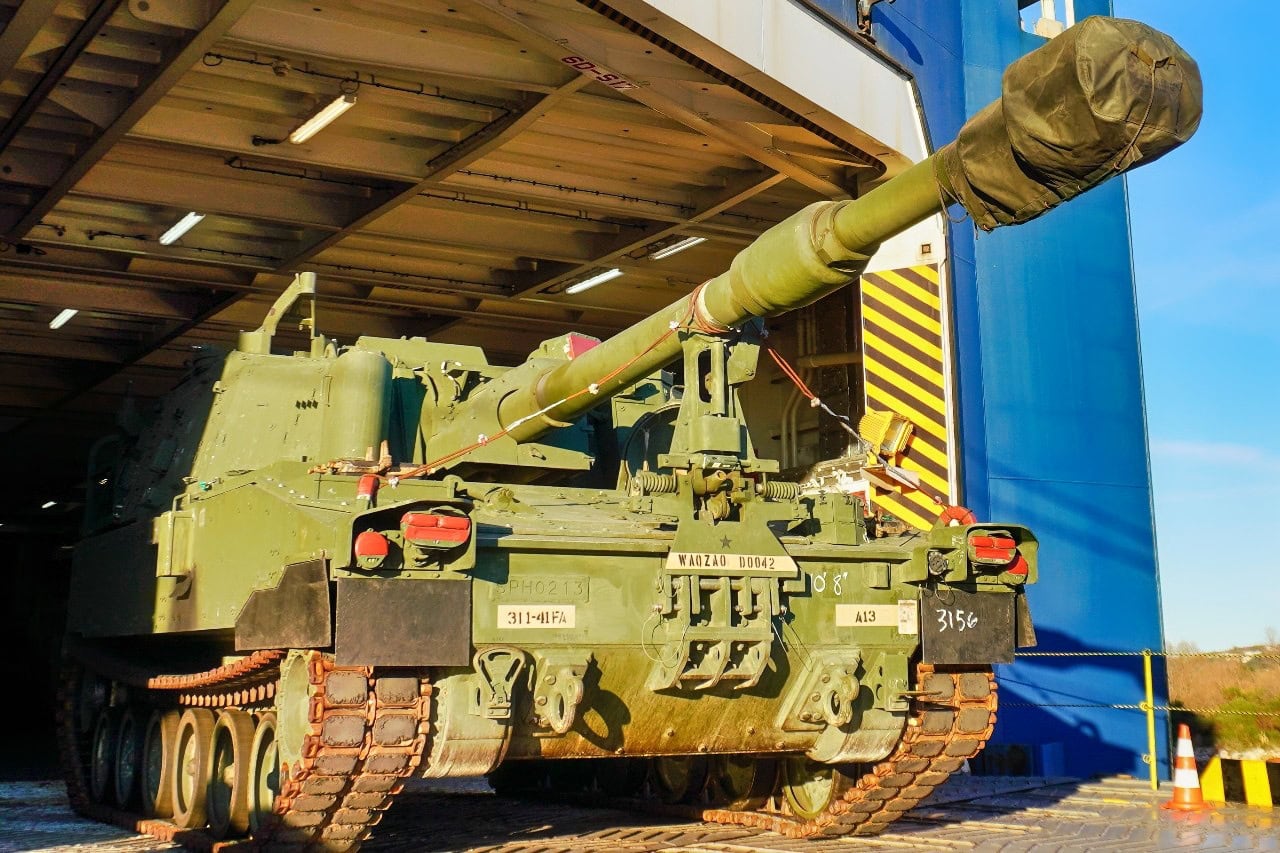
A U.S. M109 Paladin howitzer drives off the vessel Liberty Peace during offloading operations at the port of Koper, Slovenia on December 28, 2024. This Reception, Staging, and Onward Movement (RSOM) operation in the port of Koper is bringing in 1-3ID, the next Regionally Aligned Force (RAF), into the European Theater. These forces will be then transported by the 21st Theater Sustainment Command to their forward operating sites across NATO where they will conduct interoperability training with Allies and partners. The intent of these RAFs is to assure our allies and deter all adversaries.

The Ariete is often described by many as the worst tank in NATO.
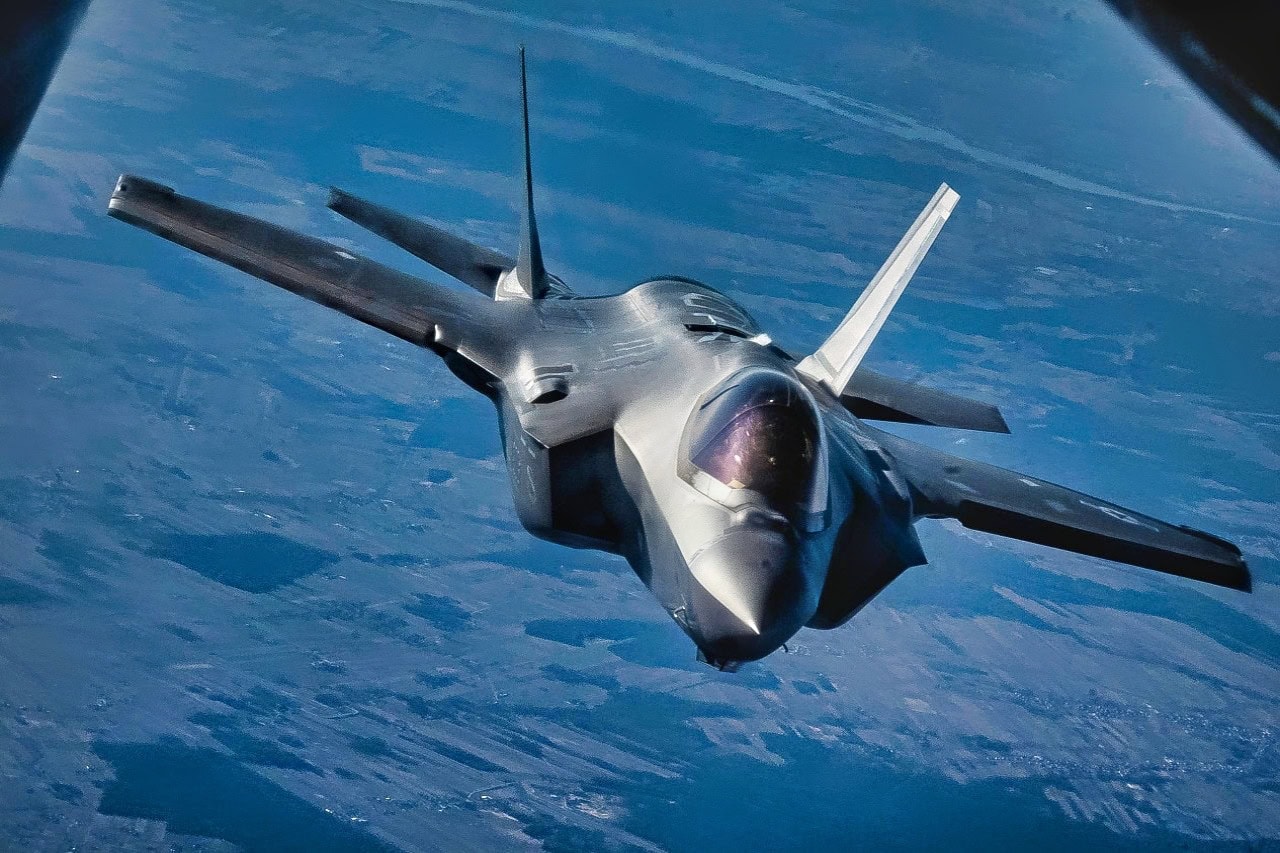
The 388th Fighter Wing’s F-35 Lightning II fifth-generation fighter cruises in Eastern European airspace, Feb. 28, 2022, in support of NATO’s collective defense. U.S. Air Forces in Europe – Air Forces Africa’s ability to support and integrate with NATO’s air policing missions continually hardens the alliance’s solidarity, collective resolve, and ability to adapt to a dynamic warfighting environment. (U.S. Air Force photo by Airman 1st Class Edgar Grimaldo)
The Cold War is one of history’s glaring misnomers. The two superpowers exchanged blows at their peripheries: Korea, Vietnam, and Afghanistan were, to Moscow and Washington, their biggest battles, not to mention the dozens of smaller conflicts in Africa, Asia, the Middle East, and Latin America in which both powers were involved.
It is said that people vote with their feet. That is, individuals signal their dislike of organizations by leaving them. The same holds for joining organizations, too. In 2023 and 2024, Sweden and Finland, respectively, upended nearly eight decades of precedent by voting with their feet and joining the North Atlantic Treaty Organization.
Both countries came to the stark realization that they would be more secure within NATO than outside it.
NATO in 2026: Nations Voted with Their Feet
What should we make of the identical decisions made in Stockholm and Helsinki? Was the political leadership of Sweden and Finland wrong?
Are their countries less safe now inside NATO than they were outside of the alliance?
Hardly. Those two Nordic countries rightly observed that the Soviet Union or its successor, Russia, has never once attacked NATO.
Countries outside of the alliance and in Russia’s near-abroad, however, lived in the shadow of the bear: parts of Moldova, Georgia, and Ukraine are occupied by Russian forces, Belarus is heavily dependent on Russia, and in the quarter-century since Vladimir Putin has been at the helm of the Russian state, he has waged five wars. None of them has been against a NATO member.
More recently, Russia’s so-called hybrid warfare strategy that blends both non-military tactics has made waves thanks to a spate of communications cable-cutting in the Baltic Sea and several drone incursions into NATO airspace. Designed to test NATO’s resolve and response time, that interference is both concerning for NATO and denied by Russia. But it does not fundamentally threaten the integrity of the alliance.
Within the NATO alliance, defense spending is generally inversely related to a nation’s distance from the Kremlin and partially explains why the Baltic countries spend more on defense as a percentage of GDP than countries farther afield, such as Spain or the United Kingdom. It was therefore very telling when Estonia’s spy chief, Kaupo Rosin, flatly rejected the theory that Russia has plans to attack the NATO alliance.
“Russia does still respect NATO,” Mr. Rosin said. “Our task is to keep it that way, so that if they respect it today, they will also respect it a year from now and three, five, or 10 years into the future. To achieve that, we have to invest in our defense—we meaning Estonia, meaning the European Union and NATO.”
With the flames of war still alight on NATO’s doorstep, and in light of the vast investments now taking place across Europe in that continent’s defense, there is no reason to think Russia’s respect for NATO will change.
As the war in Ukraine approaches its fourth year, it is essential to keep in mind the reality on the ground there. Russia has several on-paper advantages in that conflict: it borders Ukraine and has very short, well-protected supply lines. Ukraine has no navy and a small air force. Russia has nuclear weapons and a distinct manpower advantage—but has not been able to wrench victory from stalemate.
Russia and NATO: What Happens Now?
Ultimately, “Russia is concerned about Europe’s rearmament,” Mr. Rosin opined. “If Europe stays on this course, it’s entirely possible that in the coming years, we could actually win this arms race, if we choose to call it that, against Russia.”
About the Author: Caleb Larson
Caleb Larson is an American multiformat journalist based in Berlin, Germany. His work covers the intersection of conflict and society, focusing on American foreign policy and European security. He has reported from Germany, Russia, and the United States. Most recently, he covered the war in Ukraine, reporting extensively on the war’s shifting battle lines from Donbas and writing on the war’s civilian and humanitarian toll. Previously, he worked as a Defense Reporter for POLITICO Europe. You can follow his latest work on X.