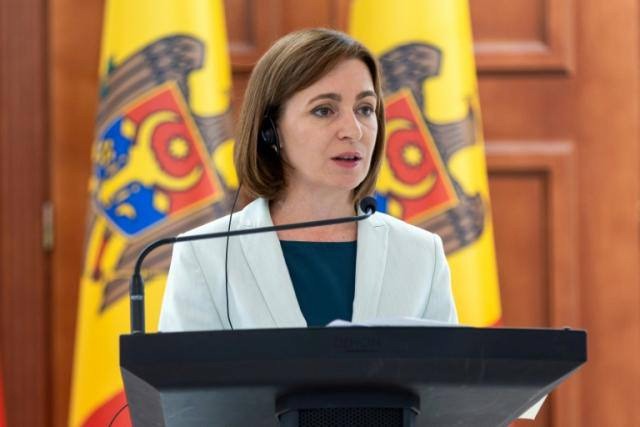
In The Telegraph’s shortlist, Sandu was selected ahead of Italy’s Prime Minister Giorgia Meloni and Argentina’s President Javier Milei, alongside nominees including Zambia’s Hakainde Hichilema and Syria’s Ahmed al-Sharaa.
The award places an international spotlight on a leader of a country that is small by European standards, bordering Romania and Ukraine, and whose politics has long been shaped by competing pulls between Brussels and Moscow. Moldova’s population is a little over 2.3 million, according to the World Bank, and its economy has been exposed to shocks linked to Russia’s war against Ukraine, including energy disruption and refugee inflows.
In reporting around its decision, The Telegraph emphasised Sandu’s personal frugality and her public posture on state spending. A Moldovan business daily citing the newspaper said Sandu earns less than £1,000 a month as president, and highlighted her argument that austerity at the top is consistent with efforts to make public spending more efficient.
Sandu’s standing in 2025 was closely linked to electoral outcomes that, in the view of Western officials and independent monitors, were accompanied by an unusually overt campaign of external interference. Moldova held parliamentary elections on 28 September 2025, with Sandu’s Party of Action and Solidarity (PAS) winning roughly half the vote and retaining a parliamentary majority.
The campaign period was marked by repeated claims of Russian attempts to shape the result through disinformation, covert financing and disruption. Moldovan authorities accused fugitive oligarch Ilan Shor of organising voter bribery schemes, including transfers routed through banking cards and other methods, while Shor denied wrongdoing. In an October 2024 report, Reuters cited Moldovan police as saying that tens of thousands of people had received funds and that investigators had linked the operation to Russia.
Disinformation targeting Sandu personally became a recurring theme in wider reporting on Moldova’s political climate. Euronews documented fabricated stories circulated online, including false claims published via cloned media pages, in narratives aimed at discrediting Sandu with socially conservative voters.
Cyber security was also a central concern. The Guardian reported disruptions including cyber-attacks and bomb threats, particularly affecting voting by the diaspora abroad, an electorate generally seen as more supportive of the pro-European direction. Cloudflare data published after the vote showed large-scale malicious traffic directed at election-related services during the election period, underlining the extent of the digital pressure on institutions responsible for information and voter access.
For Sandu and her allies, the September result was not only about domestic governance but about Moldova’s place in Europe’s security picture. Moldova lies on Ukraine’s western flank and sits alongside a region of unresolved conflict in Transnistria, a factor repeatedly raised in debates on the country’s long-term stability and its prospects for EU accession. The Guardian noted that Moldova’s EU ambitions remain constrained by reform requirements and by broader political dynamics inside the Union.
Sandu has framed EU accession in existential terms. In remarks cited from her interview with The Telegraph, she described the accession process as a “survival strategy”, arguing that it is about Moldova’s ability to endure as a democracy. That message is aimed not only at external audiences, but at a domestic electorate that has faced inflationary pressures, energy volatility and the wider costs of a war next door.
The Telegraph’s recognition of Sandu, and the emphasis placed on Moldova as a test case for political interference, arrives as European governments and security services continue to assess how tactics used in smaller states might scale to larger democracies. In that sense, Moldova’s elections in 2025 were treated in European capitals less as a local contest and more as an indicator of the pressure points likely to define future votes across the continent.
Post Views: 1,080