Bulgaria yesterday became the 21st country to switch to the euro as it entered the new year, a milestone met with cheers and fears, nearly 20 years after the Balkan nation joined the EU.
At midnight, Bulgaria gave up the lev currency, which has been in use since the late 19th century, and Bulgarian euro coins were projected onto the central bank’s building.
Successive governments in the country of 6.4 million people have advocated joining the euro, hoping that it would boost the economy of the EU’s poorest member, reinforce ties to the West and protect against Russia’s influence.
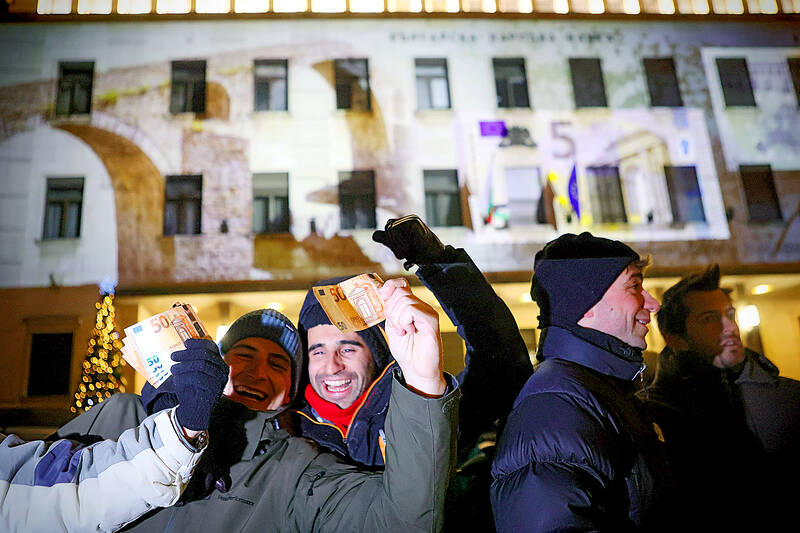
Photo: AP
Bulgarians have long been divided over the switch, with many worrying the introduction could usher in higher prices and add to the political instability rattling the country.
In a speech broadcast shortly before midnight, Bulgarian President Rumen Radev hailed the euro adoption as the “final step” in Bulgaria’s EU integration, as thousands of people braved subzero temperatures in the capital, Sofia, to celebrate the new year.
However, Radev voiced regret that Bulgarians had not been consulted by referendum on the adoption.
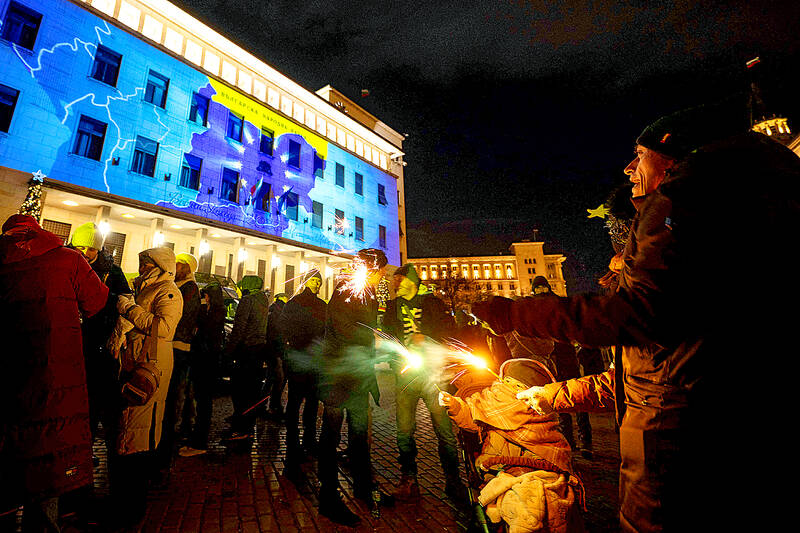
Photo: AFP
“This refusal was one of the dramatic symptoms of the deep divide between the political class and the people, confirmed by mass demonstrations across the country,” he said.
Anti-corruption protests swept a conservative-led government from office in the middle of last month, leaving a country anxious about inflation on the verge of its eighth election in five years.
“People are afraid that prices will rise, while salaries will remain the same,” said a woman in her 40s in Sofia who declined to give her name.
At one of the city’s largest markets, stalls displayed prices of everything from groceries to New Year’s Eve essentials such as sparklers in levs and euros.
“The whole of Europe has managed with the euro, we’ll manage, too,” retiree Vlad said.