I remember an 11am episode of Jeremy Kyle some years ago, on a hangover so bleak I was holding my mug of tea the way Jack clung onto the door that Rose lay on. A bedraggled man was being accused of stealing a tenner from his girlfriend’s sister’s dog, or something with the same tragic architecture. Kyle strutted about like a discount Torquemada, wearing the easy confidence of someone who’s never had to choose between heat and food.
What struck me wasn’t the cruelty — that was the price of a ticket to his little colosseum — but the power imbalance of it all. The poor sods onstage looked as though life had worked them over in an alley and then, for good measure, sent them to a TV studio to finish the job. Kyle, meanwhile, had the glow of a man returning from a long lunch and a briefly successful flirtation with a waitress. His claim to ‘understand the working class’ had the same charm as a man peering at exotic animals: marvellous to look at, lucrative to display, but you wouldn’t catch him living in the cage with them. It was working-class struggle as entertainment, repackaged for the midday pleasure of people who wouldn’t last ten minutes living the real thing.
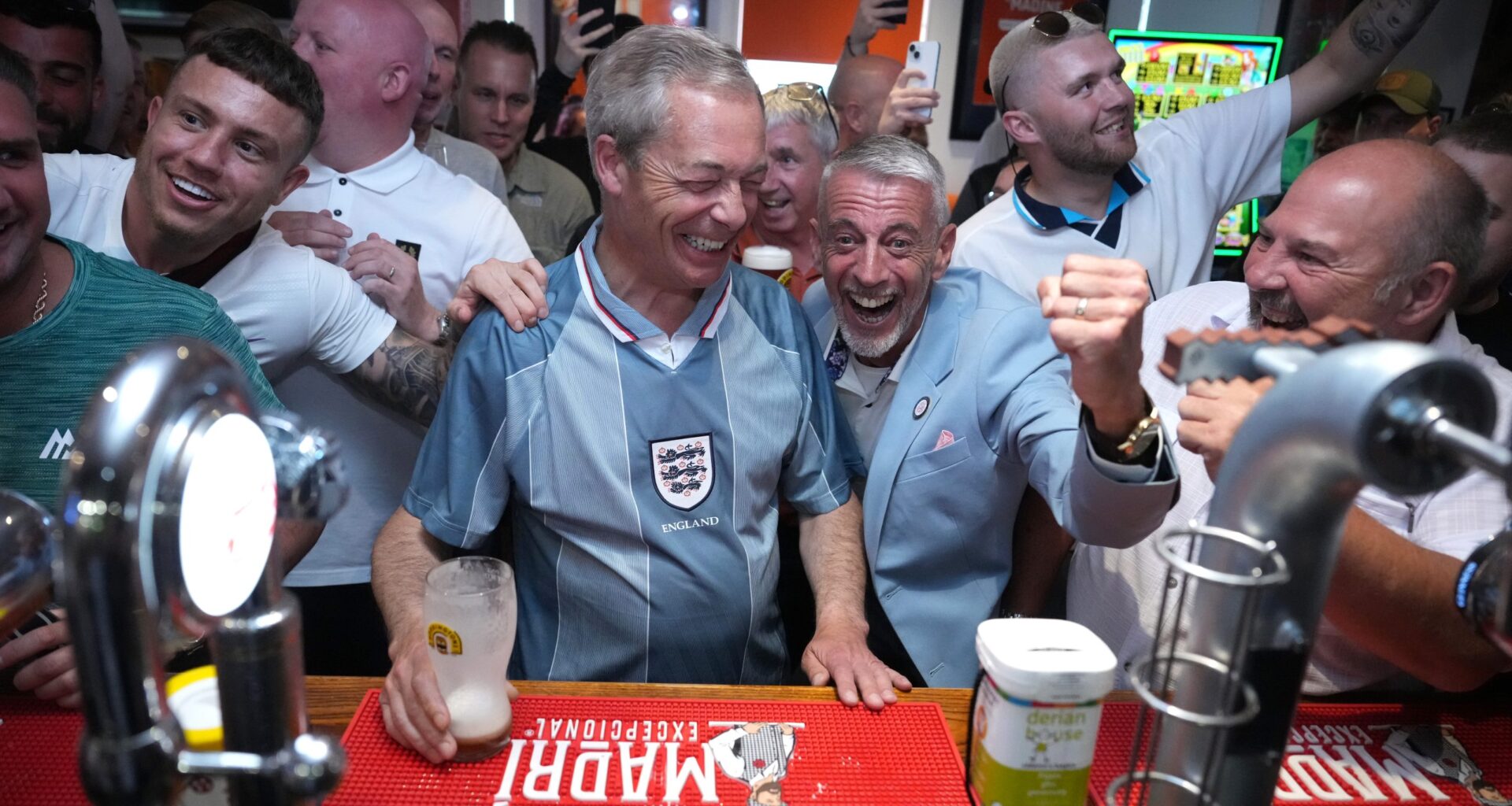
So when I heard that Reform UK had unveiled Kyle as one of its national champions, I didn’t so much raise an eyebrow as nod knowingly into my pint glass. Of course they did. Reform has always treated working-class Britain as performance art, a bit of costume drama for posh boys who like the smell of the pit but not the work. Why wouldn’t they hire the impresario?
People tell me Reform’s rise in post-industrial Britain signals some great ideological shift. Absolute nonsense. Spend five minutes talking to the people who actually live there. The ones who keep the country breathing on wages that belong in the 1980s. The ones who hold up crumbling institutions while their names are quietly left off the credits. The ones who know that approaching a public service now is less about asking for help and more about buying a ticket to purgatory.
They aren’t flocking to Reform because they’ve suddenly discovered a burning passion for reactionary politics. They’re going there because they’re worn down to the threads. Every brush with the state feels like a mild punishment for daring to need anything at all.
‘Those people in Westminster don’t care, at least Nigel seems to,’ is an epitaph in every conversation I have with newly converted Reformers. I’ve spoken to people who, by any historical logic, should be tattooed Labour voters from birth. Instead, they tell me, half-apologetically, ‘I’ll be voting Reform.’ Then comes the list: the police never showed up, the doctor’s appointment evaporated, the buses stopped somewhere north of teatime, the landlord treated the mould as a decorative feature, and their MP, as well as their councillor, couldn’t care less. This isn’t a great ideological crusade; it’s just desperation.
But what does Reform offer this newly engaged, frustrated working class? Theatre, mostly. Poshboy theatre, at that. The sort where men with double-barrelled surnames put on their best ‘man of the people’ voices like they’re rehearsing for a provincial pantomime. A formidable example is when the party’s MPs voted against the Employment Rights Bill, a gesture so honest it deserved applause — proving, if proof were needed, that its leaders are not champions of labour, but choirboys singing the same old hymn of the bosses, especially if he’s wealthy enough to buy drinks. Reform’s politics could be bottled and sold as ‘Original Recipe Thatcherism’, now with added shouting.
But then, despite its fundamentally anti-populist ethos, Reform does actually show up in working-class communities. Reform figureheads speak plainly. They venture into rooms others have quietly tiptoed past for years. Meanwhile, large parts of the Left behave as though visiting whole stretches of working-class Britain requires a risk assessment and a local guide. Reform fills that void by fetishising working-class anger the way historical English collectors fetishised colonial artefacts, as something thrilling, exotic, and safely removed from their own lives.
This brings me, with the reluctance of a man returning to a bar tab, to GB News. Most of the Left treats GB News the way Victorians treated cholera: avoid the pump and pray. But millions of working-class people watch it. Some because it’s chaotic, some because it’s loud, but many because it’s the only thing on television that honestly admits the country might extend past London Zone 2. The refusal to appear on it by many left figures isn’t a principle; it’s self-sabotage. You don’t win people back by whispering from the doorway. You step inside, make your case, and accept that occasionally you’ll be debating across the table from a man in a Union Jack waistcoat, who is convinced that refugees cause potholes. For all its considerable downsides, this is still preferable to silence.
Reform does seem to understand one thing: working-class dissatisfaction isn’t a well-formed ideology; it’s a daily condition. It’s the quiet certainty that everything is getting worse while everyone in charge insists you simply haven’t grasped the decade-long strategy. It’s the dry laughter of people promised ‘change’ so often that the word now triggers the same enthusiasm as a letter from the dentist. Reform doesn’t really offer to solve any of this. They simply bottle the resentment, slap a Union Flag label on it, and flog it back to the very people who made it.
Watching them do it, I’m always dragged back to that Jeremy Kyle episode. In the end, the poor bloke hadn’t stolen the tenner at all. The lie detector, that sacred totem of daytime television truth, had simply got it wrong. Kyle apologised briskly, the way a three-star restaurant might apologise for slightly overcooking your steak, while the man’s dignity lay carved up behind him like a Sunday joint. That is Reform in miniature: a great booming certainty built on unreliable machinery, a confident diagnosis delivered by people who never stick around for the consequences. The spectacle doesn’t survive because it’s convincing; it survives because the audience has learned not to expect anything sturdier. The Left won’t beat that by rolling its eyes from a safe distance. It will only beat it by turning up — in the pubs, on the doorsteps, even on the questionable news channels, and speaking plainly enough to drown out the circus.