Letter from Warsaw
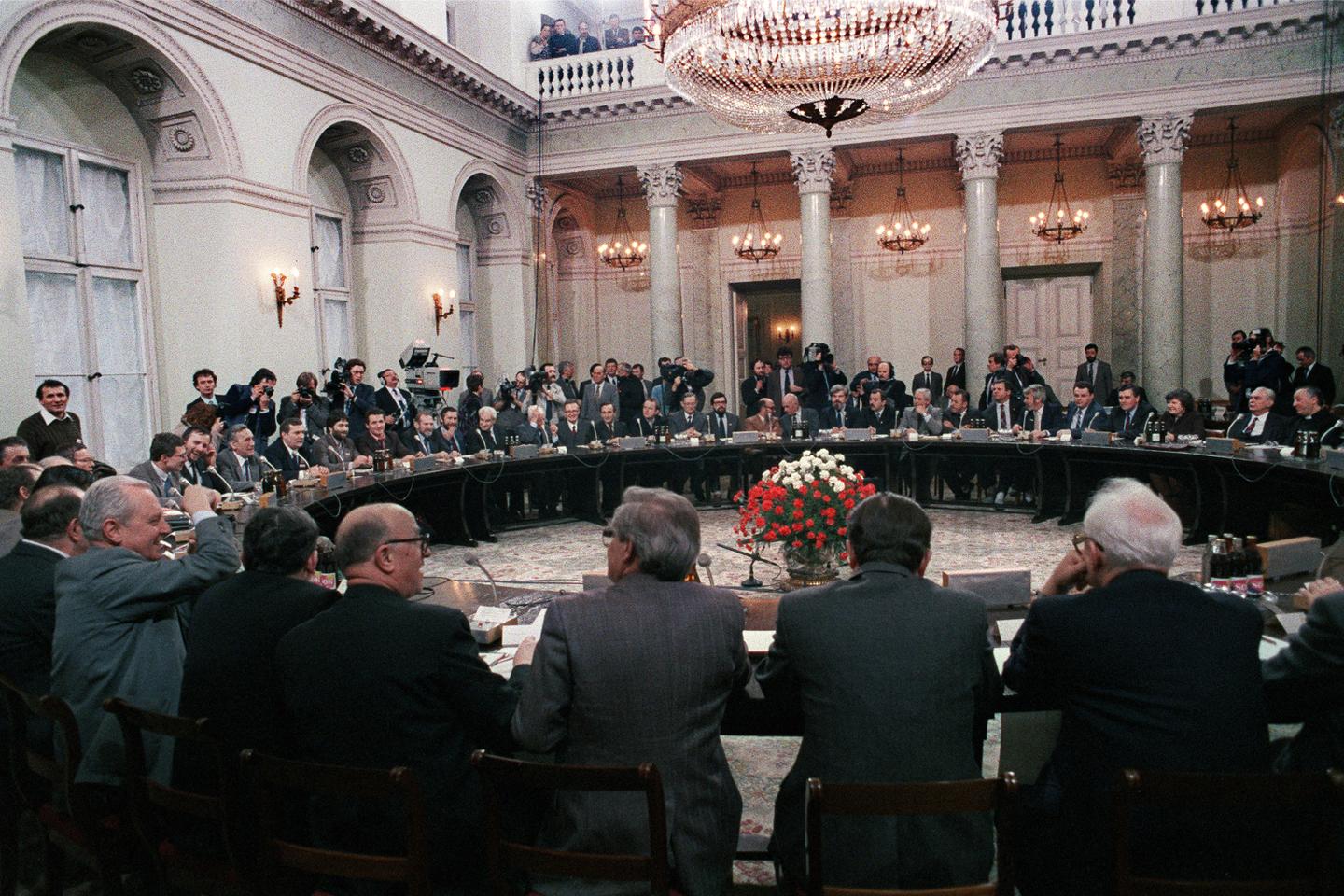
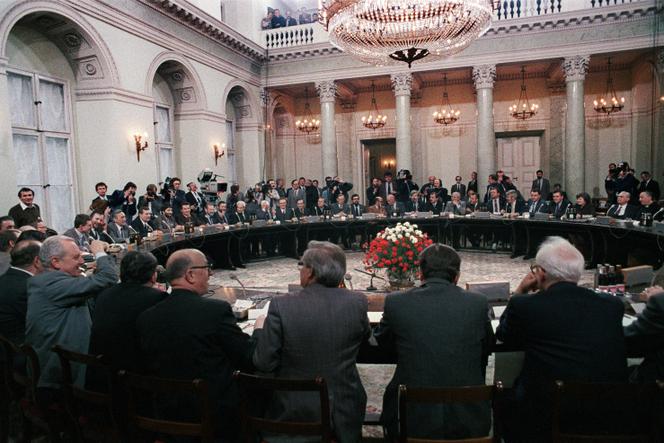 Round table discussions were held on February 6, 1989, in Warsaw between the Polish government and the opposition to address the country’s political and economic challenges. AFP
The iconic round table, a central symbol of Poland’s democratic transition 36 years ago, no longer holds a place at the presidential palace. Nationalist President Karol Nawrocki made this clear on December 18. Just four months earlier, he had taken office after winning the presidential election in spring 2025.
The president, in direct opposition to the center-right government, proudly appeared on social media as the table was being dismantled in the background. “Ladies and gentlemen, today, post-communism has come to an end,” he declared, announcing that the table was being moved to the new Museum of Polish History in Warsaw, where it is due to go on display in 2027 after restoration.
Around this huge table that is eight meters in diameter, several activists from the independent trade union Solidarnosc (Solidarity), including its leader Lech Walesa, twice agreed in 1989 to sit in plenary sessions with representatives of the communist regime, under the auspices of both the Catholic and Protestant churches, to negotiate a transition to democracy.
Example of a bloodless exit from dictatorship
You have 79.4% of this article left to read. The rest is for subscribers only.