Estonian businesses in the agriculture and forestry sectors are calling on the state to support a Finnish initiative calling for the simplification of the European Union’s nature restoration regulation.
Estonian entrepreneurs say the new rules will create excessive financial and administrative burdens.
They have seized upon an initiative by Finnish Prime Minister Petteri Orpo to draft a joint declaration among EU member states calling for the regulations to be relaxed.
The Chamber of Agriculture and Commerce, the Forest and Wood Industries Association, the Private Forest Union, the Peat Association, and the Estonian Employers’ Confederation want Estonia to support Orpo’s initiative.
In a letter sent to the Ministry of Climate, the associations wrote that the regulation may lead to difficulties in interpretation, unreasonably high costs, and increased administrative workload.
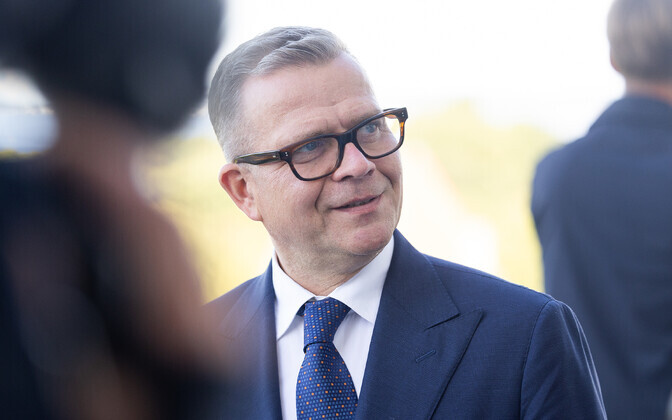 Finnish Prime Minister Petteri Orpo visited Estonia on August 22, 2025. Source: Siim Lõvi /ERR
“The biggest concern right now is that Estonia has not yet drawn up a restoration plan,” Hardo Becker, head of forestry and climate policy at the Forest and Wood Industries Association, told ERR.
This means that entrepreneurs do not understand what specific costs will be included under restoration.
“This has also been a concern in other countries, they began drafting restoration plans only to discover very high costs. We would like Estonia to join Finland’s initiative purely to reduce Estonia’s administrative burden and lower the potential costs,” Becker added.
He said the letter’s drafters are not against Estonia drawing up a plan, but want to ensure that nature restoration is carried out as simply and cost-effectively as possible.
“More broadly in Europe, many policies have moved in the direction of simplification. We also want to avoid over-regulating ourselves with multiple directives. It just seems that during the previous European Parliament session, a great deal of new regulation and bureaucracy was introduced. Now there’s a strong push to reduce it, and we’d prefer to keep pace with that. For us in the land use sector, the well-being of nature is extremely important, but at the same time so is our competitive advantage — we do not want to lose it,” Becker explained.
Minister: The regulation already allows sufficient flexibility
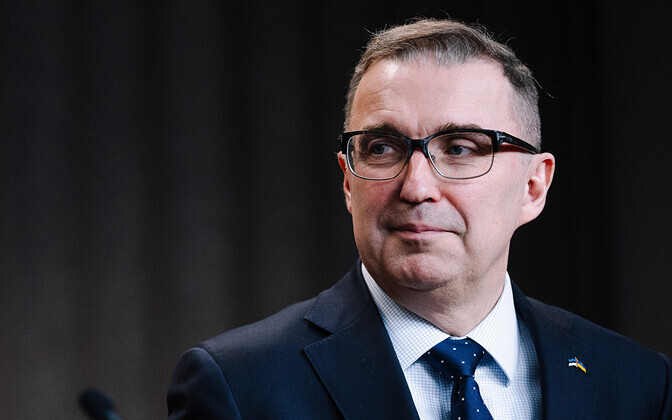 Andres Sutt. Source: Ken Mürk/ERR
Estonia does not plan to join Finland’s initiative, the Ministry of Climate said.
Minister of Energy and the Environment Andres Sutt (Reform) explained that Finland’s concerns have received more attention because the situation is worse in several areas. This means restoration will be more expensive.
However, each country’s situation is different.
“We have many ecosystems in poor condition both in Estonia and across Europe. It is in all our interests to improve the state of nature,” Sutt said.
He said there is already a lot of flexibility about how countries follow the EU’s regulations.
“These activities can be divided into two categories: active ones, where more human involvement is needed, and passive ones, where nature is allowed to restore itself. For example, when we talk about restoring exhausted peat fields, that is a very clear area where a high return can be achieved for every euro invested,” said Sutt.
The ministry said in November it was starting to draft the restoration plan. The process will involve cooperation with scientists, practitioners, communities, and landowners, it said. Sutt said the first meeting will take place in January.
—
Follow ERR News on Facebook and Twitter and never miss an update!