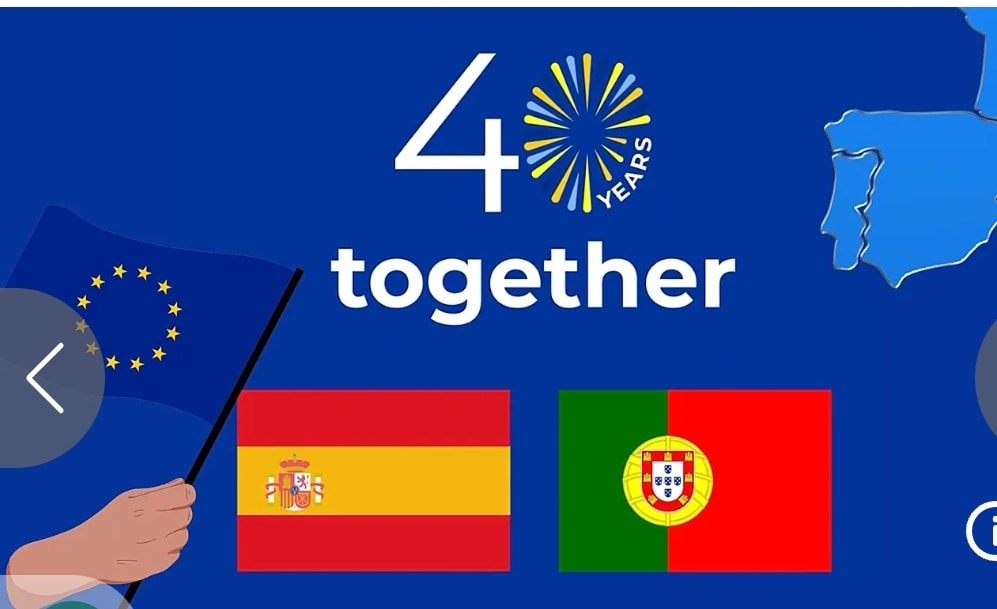
In 1986, Spain and Portugal took a decisive step that would redefine their futures: they joined the European Economic Community, the predecessor of today’s European Union. For both nations, accession was more than a diplomatic milestone—it symbolized a return to Europe after decades of political isolation under authoritarian rule. Nearly forty years later, their journey within the European Union offers a compelling story of transformation, resilience, and ongoing challenges.
From isolation to integration
The road to EU membership was paved by profound political change. Portugal’s Carnation Revolution in 1974 ended nearly half a century of dictatorship, while Spain’s transition to democracy followed the death of General Francisco Franco in 1975. These shifts opened the door to European integration, which was widely seen as a safeguard for democracy and stability.
Joining the EU anchored both countries firmly within a framework of democratic norms, rule of law, and shared values. Membership reassured citizens and investors alike that Spain and Portugal had turned a definitive page on authoritarianism. It also gave both governments access to institutions that would shape policymaking for generations.
Economic transformation and growth
Perhaps the most visible impact of EU membership has been economic. In the decades following 1986, Spain and Portugal underwent rapid modernization. Structural and cohesion funds from Brussels helped build highways, rail networks, ports, and urban infrastructure that dramatically improved connectivity and productivity.
Spain emerged as one of Europe’s major economies, diversifying beyond agriculture into manufacturing, tourism, and services. Portugal, while smaller, strengthened key sectors such as renewable energy, automotive components, and export-oriented industries. Living standards rose significantly in both countries, narrowing—though not eliminating—the gap with wealthier northern European states.
EU membership also opened vast markets. Spanish and Portuguese companies gained access to millions of consumers, while foreign investment flowed in, attracted by stability and integration into the single market. For many citizens, the EU became synonymous with opportunity, mobility, and economic progress.
Social and cultural change
Beyond economics, EU integration reshaped societies. Freedom of movement allowed millions of Spaniards and Portuguese to live, work, and study across Europe. Programs like Erasmus created generations of young people who saw themselves not only as national citizens but as Europeans.
Social policies also evolved. EU standards influenced labor rights, gender equality, environmental protections, and consumer safety. Cities such as Barcelona, Madrid, Lisbon, and Porto became increasingly cosmopolitan, blending local traditions with a broader European identity.
At the same time, this openness sparked debates about identity and sovereignty. While most citizens embraced European integration, concerns occasionally surfaced about cultural dilution or loss of national control—questions that remain relevant today.
Political influence within the EU
Over four decades, Spain and Portugal have moved from newcomers to influential participants in EU decision-making. Spain, in particular, has played a significant role in shaping policies on enlargement, migration, and relations with Latin America. Portugal has often acted as a bridge-builder, known for diplomatic pragmatism and consensus-seeking.
Both countries have held the rotating EU Council presidency multiple times, using the platform to highlight priorities such as social cohesion, digital transformation, and transatlantic relations. Their experiences as once-poorer member states have also given them credibility in debates about solidarity and development within the Union.
Weathering crises
EU membership has not been without hardship. The global financial crisis of 2008 hit both economies hard, exposing structural weaknesses and leading to painful austerity measures. Portugal required an international bailout, while Spain faced soaring unemployment and social unrest.
These years tested public faith in both national governments and European institutions. Critics argued that EU-imposed fiscal discipline came at too high a social cost. Yet the recovery that followed—supported in part by EU mechanisms—also demonstrated the value of collective action, particularly during later crises such as the COVID-19 pandemic.
Challenges and opportunities ahead
As Spain and Portugal mark nearly four decades in the EU, new challenges loom. Climate change, digital transformation, demographic aging, and geopolitical uncertainty demand coordinated responses. Both countries are positioning themselves as leaders in renewable energy and green transitions, areas strongly supported by EU policy and funding.
At the same time, debates over migration, regional inequality, and political polarization continue. The rise of populist movements across Europe has not bypassed the Iberian Peninsula, reminding policymakers that economic growth alone does not guarantee social cohesion.
A shared European future
The journey of Spain and Portugal since 1986 illustrates the transformative power of European integration. EU membership helped consolidate democracy, modernize economies, and broaden horizons for millions of citizens. While challenges persist, the overall trajectory points to progress shaped through cooperation rather than isolation.
Four decades on, Spain and Portugal are no longer on Europe’s periphery. They are integral voices in shaping its future—proof that integration, while imperfect, can be a powerful engine for national renewal. Their story stands as a reminder that the European Union is not just a political project, but a shared journey, continually evolving with its members.