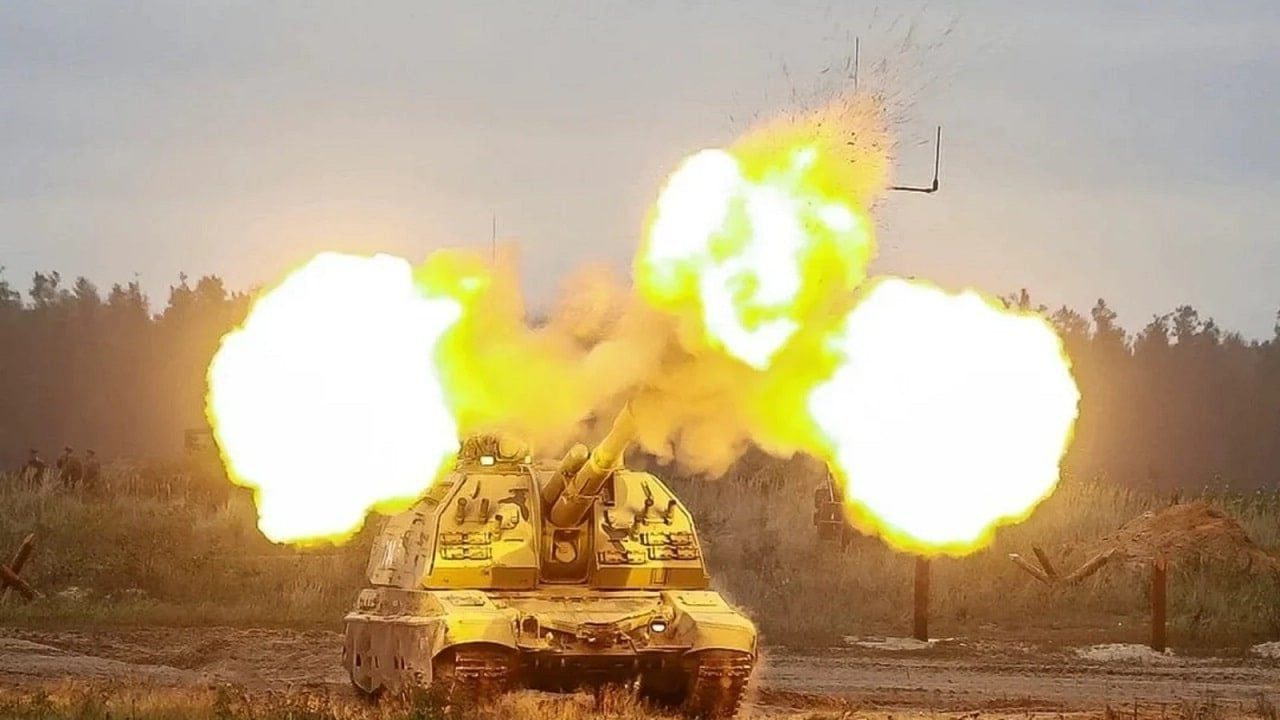
Key Points and Summary – The piece uses a Ukrainian cross-country skier’s refusal to speak with Russians—calling them “terrorists”—as a blunt window into why peace remains elusive.
-It argues that while clearly not every Russian commits violence, Russia’s military and coercive elite clearly do, and the broader society’s silence or support creates moral responsibility that Ukrainians will not forget.
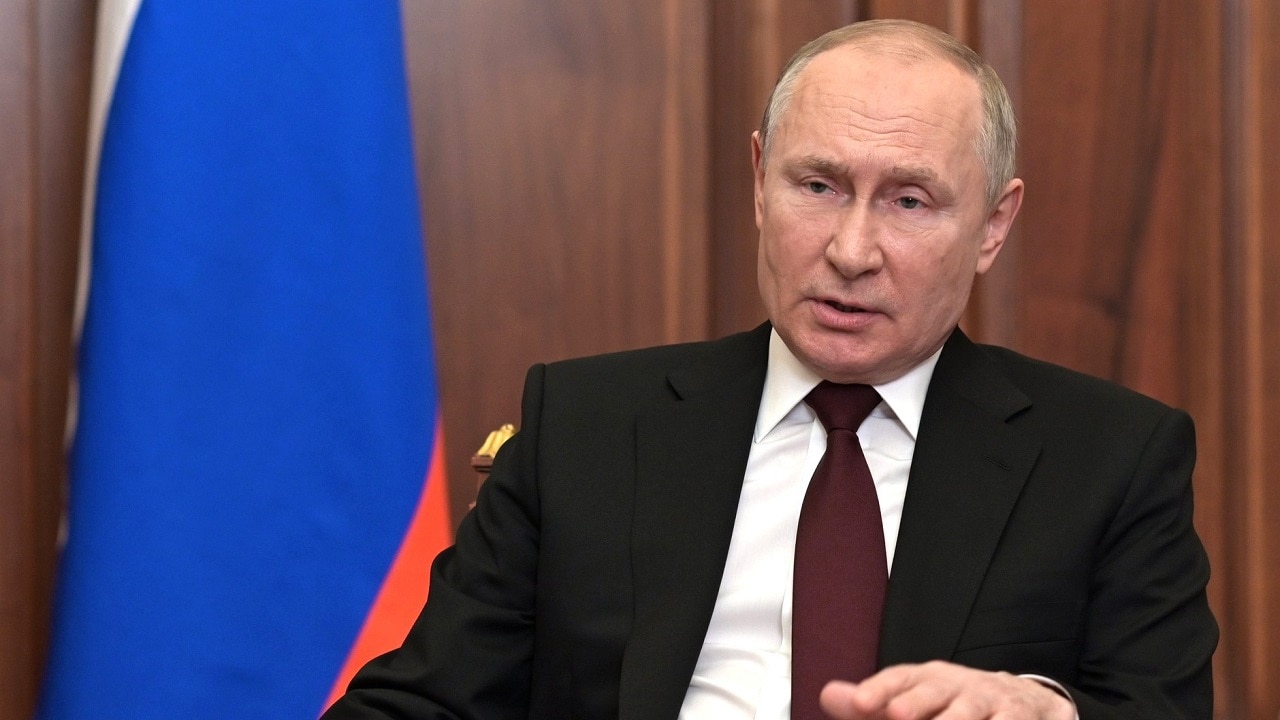
Russian President Putin addressing the nation.
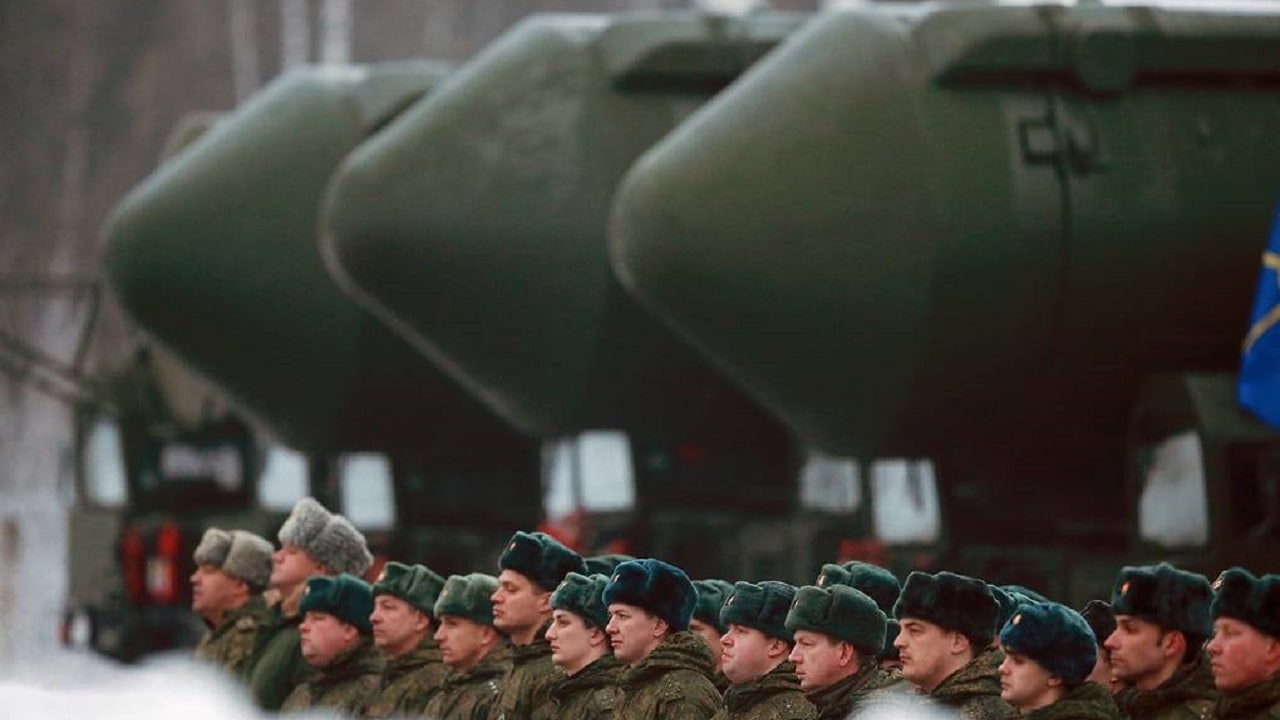
Russian nuclear weapons. Image Credit: Russian State Media.
-The author contends that Putin has destroyed decades of post-1991 goodwill, turning Ukrainians who once felt cultural closeness toward Russia into hardened opponents.
-Until Russians confront complicity and seek forgiveness, the essay concludes, Russia’s neighbors will continue to fear renewed aggression.
The Hard Truth Ukraine Keeps Forcing on the World: Who Is Responsible for Russia’s War?
While Ukrainian, American, and Russian officials were embroiled in the latest round of seemingly fruitless “peace” negotiations, an unlikely Ukrainian cut to the chase and revealed some of the key obstacles to peace.
Cross-country skier Andrii Dotsenko said he would refuse to talk with Russians during the Tour de Ski 2025-2026 World Cup competitions because “Russians are terrorists.”
Dotsenko’s words are strong, but they say a great deal about what Russia’s illegitimate president, Vladimir Putin, likes to call the “root causes” of the war. They also raise issues of moral guilt and responsibility that the vast majority of Russians, like Germans during the Nazi era and Russians during Stalin’s criminal regime, would prefer to ignore.
Naturally, not all Russians are terrorists, if by terrorists we mean people who employ violence to terrorize a civilian population. But, if the definition is applied consistently, it’s hard not to conclude that every Russian soldier, both in the front lines and the rear, is a terrorist since he is employing violence to terrorize Ukrainian civilians, especially the aged and children.
So, too, is every member of the Russian political, military, and coercive elite, with Putin—who has already been accused of war crimes by the International Criminal Court—heading the pack.
All in all, some 2-3 million Russians may therefore be termed terrorists: no small sum for a population of 144 million. All of them are directly involved in waging terror against Ukraine. Should they all eventually be punished? Of course. Will they? Fat chance. Which means that, whatever the outcome of the war, Russia will be saddled with a significant criminal population disinclined to make Russia a civilized nation.
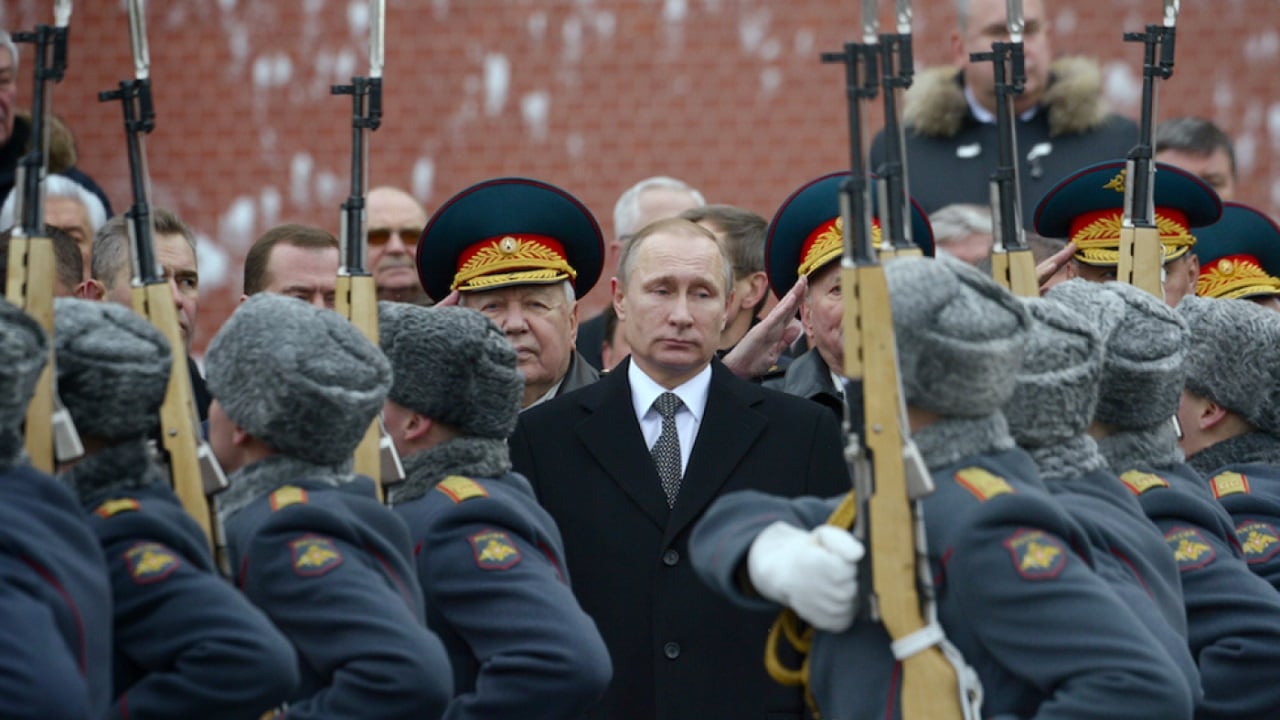
Russian President Putin. Image Credit: Creative Commons.
Of course, Dotsenko’s statement goes far beyond the Russian criminal elite. He obviously means that all Russians, even those taking part in a seemingly innocent undertaking such as a ski competition, have blood on their hands and are therefore terrorists.
He’s probably gone too far, but his claim is essential for two reasons.
First, his assertion reveals the extent of Ukrainians’ animus toward all Russians, whether Putin or Pushkin or some nameless skier. We shouldn’t be surprised. After four years of death and devastation that amount to nothing less than genocide, after endless sleepless nights in the cold, after knowing that one may not wake up the next morning, Ukrainians are mad as hell. And they know who is to blame: Russia and the Russians.
The irony is that, for most years after independence in 1991, the vast majority of Ukrainians, in the west and east, harbored positive attitudes toward Russians and their language and culture. In just four years, Putin undid all that, transforming Ukrainian Russophiles into ardent Russophobes. A similar dynamic was present among German Jews. Thanks to Hitler, they changed from lovers of all things German to haters of all things German.
Just as with Jews and Germany, it will take decades for Ukrainians to develop some degree of warmth toward the people who slaughtered them and applauded. And that’s assuming post-war Russians will attempt to make amends—which is an enormous if.
We are now at the core of Dotsenko’s accusation. Although a minority of Russians has been directly involved in terrorism, the overwhelming majority of Russians either support Putin’s “special military operation” or pretend that nothing of note is going on. Like Nazi-era Germans, they look the other way, even as they can see with their own eyes that Russia is embroiled in a bloody war that has produced over one million Russian casualties. There are too many young Russians without arms or legs for Russians to pretend that there is no war.
We accuse Nazi-era Germans of moral cowardice and moral responsibility for the war and the Holocaust. If we apply the same standards to today’s Russians, logical consistency demands that we treat them the same way and conclude that Russians are also guilty of moral cowardice and criminal responsibility. True, Nazi Germany and Putin’s Russia are violent fascist states that punish resistance. That said, just as we expect—no, demand—Germans to have done something, so too we may demand that Russians do something.
Instead, we encounter silence and indifference throughout Russia and most of its diaspora.
What Happens Now?
Putin would never agree, but the fact is that Russians’ moral culpability is one of the root causes of the war. Until Russians learn to say no to fascism and imperialism, they will always remain responsible for the war crimes that their elites happily commit.
Like post-war Germans, Russians will have to confront the ugly truth about themselves and ask their victims for forgiveness. Otherwise, no neighbor of Russia will be spared the threat of invasion, war, and genocide.
About the Author: Dr. Alexander Motyl
Dr. Alexander Motyl is a professor of political science at Rutgers-Newark. A specialist on Ukraine, Russia, and the USSR, and on nationalism, revolutions, empires, and theory, he is the author of 10 books of nonfiction, including Pidsumky imperii (2009); Puti imperii (2004); Imperial Ends: The Decay, Collapse, and Revival of Empires (2001); Revolutions, Nations, Empires: Conceptual Limits and Theoretical Possibilities (1999); Dilemmas of Independence: Ukraine after Totalitarianism (1993); and The Turn to the Right: The Ideological Origins and Development of Ukrainian Nationalism, 1919–1929 (1980); the editor of 15 volumes, including The Encyclopedia of Nationalism (2000) and The Holodomor Reader (2012); and a contributor of dozens of articles to academic and policy journals, newspaper op-ed pages, and magazines. He also has a weekly blog, “Ukraine’s Orange Blues.”