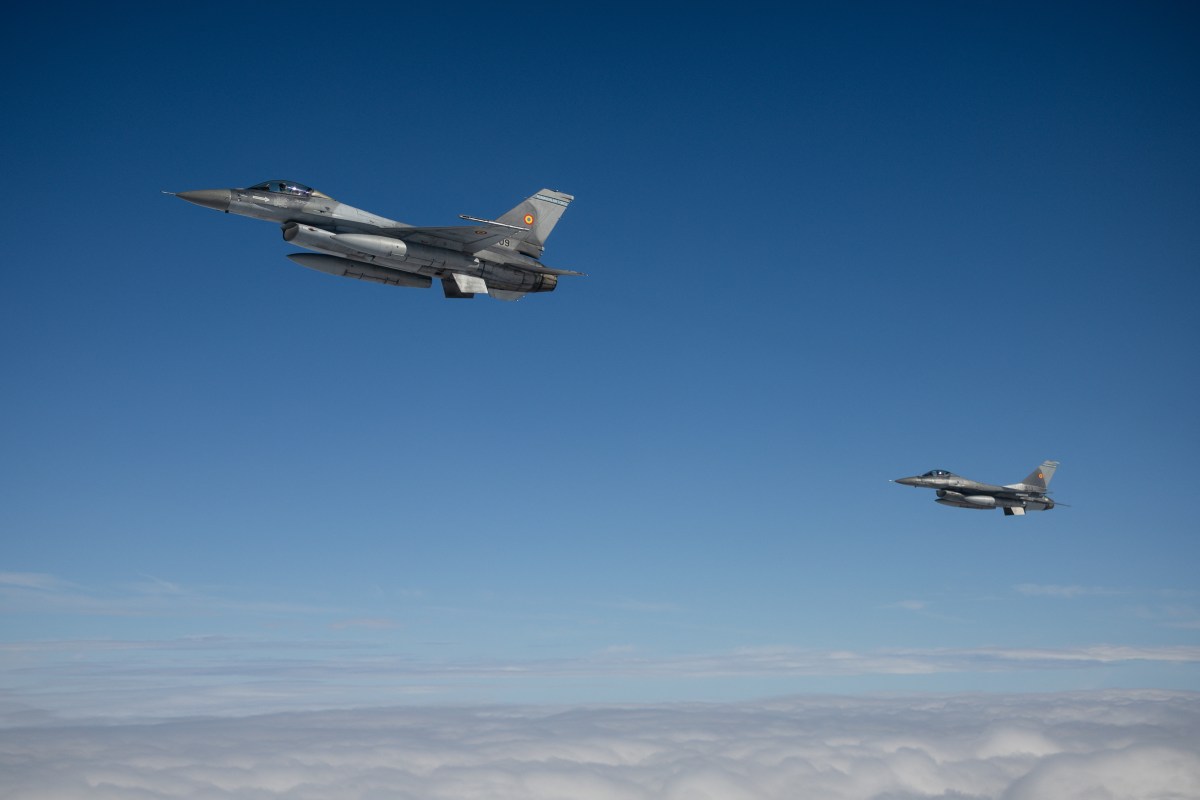
NATO member Romania scrambled F-16 fighter jets in response to a Russian drone attack on Friday, the country’s Ministry of National Defense said.
Officials said there was no violation of NATO airspace from the Russian weapons and that two jets were deployed to “monitor the border area with Ukraine.”
Newsweek contacted the Romanian Ministry of National Defense for comment.
Why It Matters
The proximity of Russian strikes to NATO territory has raised security concerns in the region, prompting questions about the alliance’s readiness and deterrence capabilities.
Under Article 5 of the NATO treaty, an attack against one member can trigger a collective response, placing additional scrutiny on events close to the alliance’s borders.
What To Know
Romania’s Ministry of National Defense said in a statement: “On Friday, January 2, the Ministry of National Defense’s surveillance system identified aerial drones launched by the Russian Federation towards Ukrainian ports on the Danube near the border with Romania.
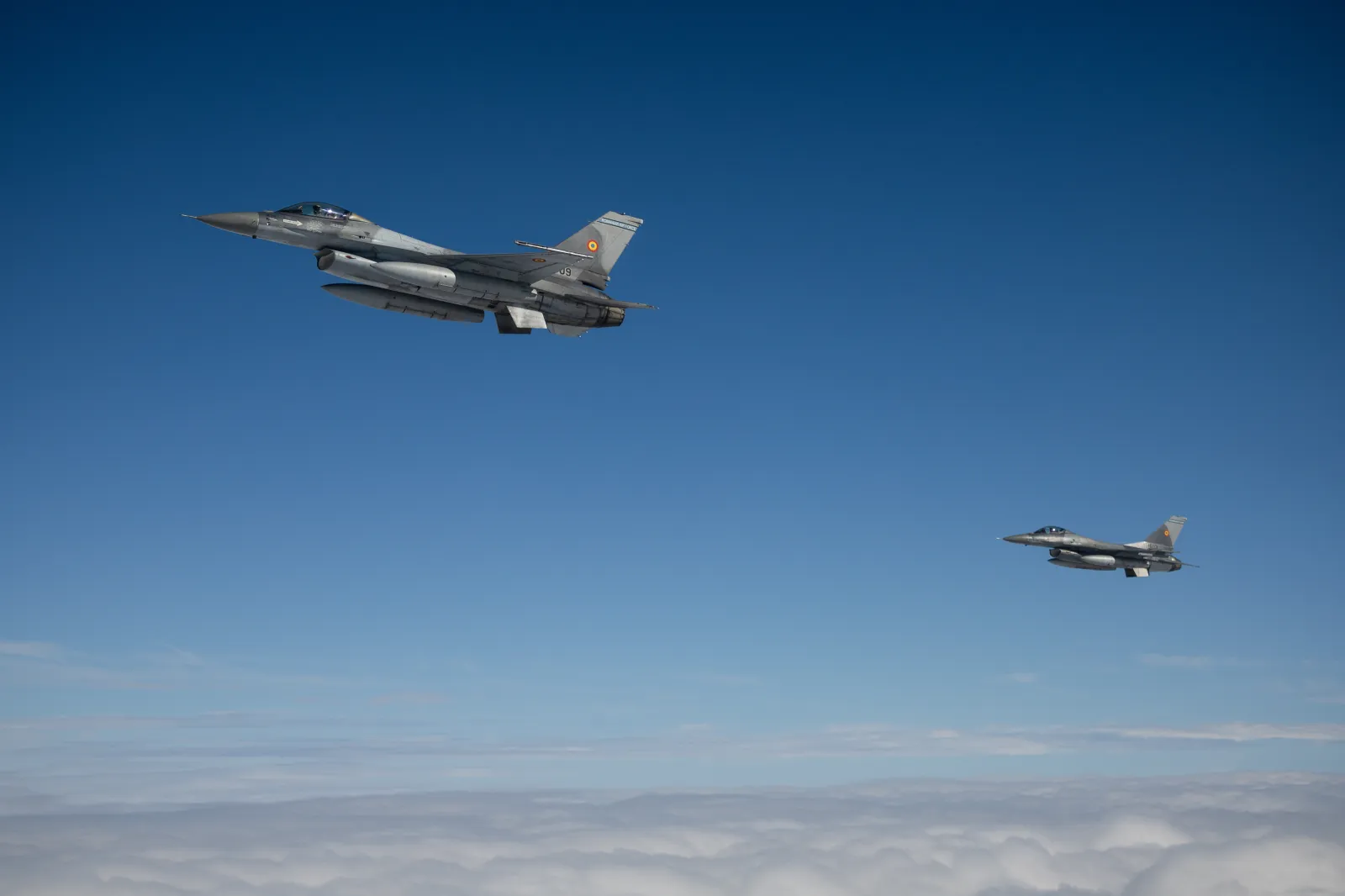
“At around 11:50, two F-16 fighter aircraft from the 86th Air Base in Fetești were taken into the air to monitor the border area with Ukraine, in northern Tulcea County. At 12:00, the population in northern Tulcea County was warned via RO-Alert message.
“The alert state ended at 12:22 p.m. During the mission, no unauthorized intrusions into national airspace were recorded.”
Romania’s statement came shortly before Ukrainian President Volodymyr Zelensky condemned a “heinous” Russian attack on the Ukrainian city of Kharkiv.
Taking to X to share images of the destruction, he said: “Preliminary reports indicate two missiles struck an ordinary residential area. One of the buildings has been severely damaged. A rescue operation is currently underway, with all necessary services on site. The exact number of casualties is yet unknown.”
Ukraine’s leader went on to say: “This is how the Russians treat life and people—they continue killing, despite all efforts by the world, and especially by the United States, in the diplomatic process. It is only Russia that does not want this war to end, and every day it does everything to ensure the war continues.”
It comes after Russia accused Ukraine of killing 24 people and injuring at least 50 more as they rang in the new year in a Russian-occupied village in Ukraine’s Kherson region.
Kyiv denied Moscow’s “war crime” allegations, calling them a ruse to derail ongoing peace negotiations, and saying that exclusively Russian military forces or energy sites were targeted.
What People Are Saying
In his New Year address, Zelensky said that a peace deal was “90 percent ready,” but cautioned that the remaining 10 percent—reportedly involving critical issues such as territorial disputes—would “determine the fate of peace, the fate of Ukraine and Europe, how people will live.”
On Wednesday, Trump’s special envoy Steve Witkoff revealed that he, Secretary of State Marco Rubio, and Trump’s adviser Jared Kushner held a “productive call” with national security advisers from Britain, France, Germany, and Ukraine to discuss advancing the peace process.
He wrote on X: “We focused on how to move the discussions forward in a practical way on behalf of [the] peace process, including strengthening security guarantees and developing effective deconfliction mechanisms to help end the war and ensure it does not restart.”
What Happens Next
NATO members are expected to maintain elevated air surveillance and rapid response capabilities as long as Russian strikes target areas close to the alliance’s eastern borders.
Update: 1/2/26, 08:10 a.m. ET. This article was updated with additional information.
Update: 1/2/26, 09:27 a.m. ET. This article was updated with additional information.