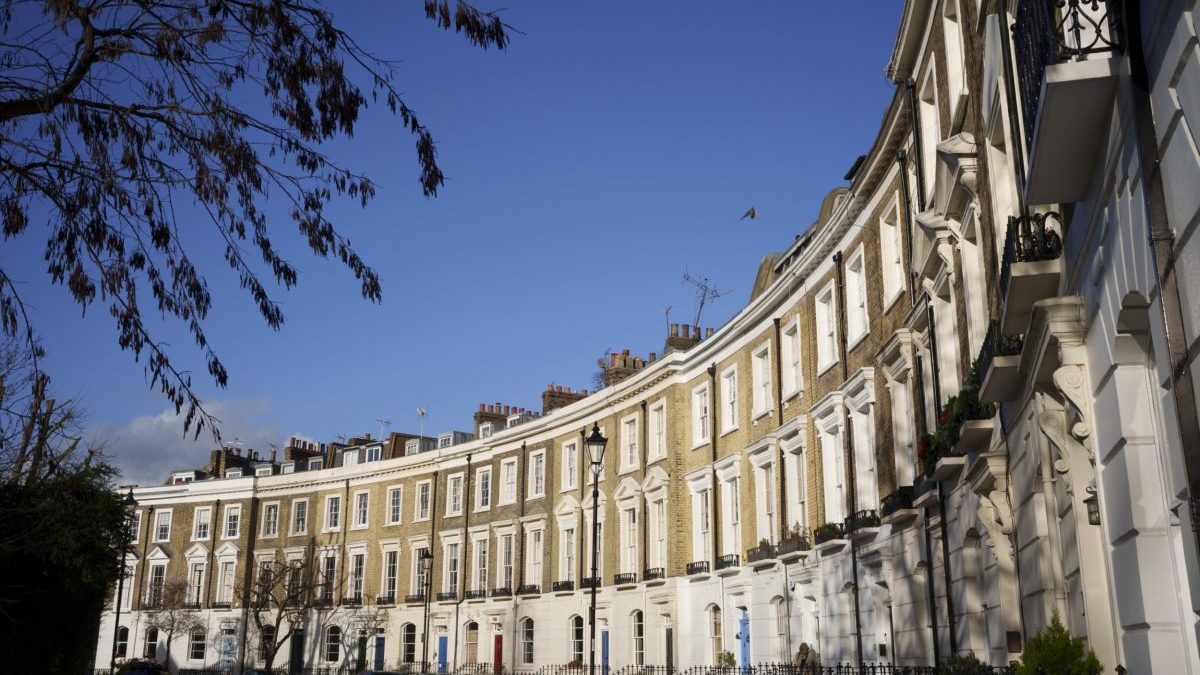
The Bank of England cut interest rates last month, and some experts believe mortgage rates could fall further by spring
HSBC is set to start 2026 with a series of mortgage rate cuts – with a price war expected between lenders in the comings months.
It comes after the Bank of England reduced the base rate last month – and as Sir Keir Starmer bets his political future on bringing down the cost of living by the time crunch local elections are held in May.
HSBC – which is one of the UK’s largest mortgage lenders – will lower rates on multiple home loans from 5 January.
Rates for existing borrowers and first-time buyers are being cut across different fixed deal lengths but the exact size of the reductions have not yet been revealed.
New FeatureIn ShortQuick Stories. Same trusted journalism.
The cuts come at the start of a year when 1.8 million are set to move off existing deals.
The cheapest mortgage deals on the market – for those with large amounts of equity in their home – sit at just above 3.5 per cent, but some customers coming off deals in 2026 are currently on rates below 2 per cent or even 1 per cent.
This is because some mortgage holders are coming to the end of five-year deals signed in 2021, when the Bank of England base rate sat at 0.1 per cent.
However, those coming off two-year fixes signed in 2024 can expect to see a reduction in their bills.
The Prime Minister will speak at an event on Monday where he will outline his plans to help families with the cost of living – and point to six interest rate cuts and falling inflation during his time in power as evidence that his policies are working. But whether his push to bring down living costs, including a bid to cut energy bills and a freezing of rail fares, will be enough to turn around Labour’s poll ratings remains to be seen.
Labour has made putting more money in people’s pockets a key aim of this Parliament, but have so far made little headway with a struggling economy.
Economists predict that both inflation and interest rates are set to fall again this year. Some are forecasting inflation to drop below the Bank of England’s 2 per cent target during the second half of 2026, while it tends to lower rates when inflation approaches its target.
A lower base rate from the Bank of England generally means cheaper mortgages.
The base rate subsequently rose between December 2021 and 2023 to 5.25 per cent, before falling to its current level of 3.75 per cent.
Although many will inevitably face paying hundreds of pounds per month more than their current deals when they switch to a new fix, they will be hoping prices fall as much as possible beforehand.
Experts said last month that 3 per cent deals were possible by Spring amid an anticipated price war led by the larger high street banks, but many households are being warned to expect higher bills than they are currently paying.
Nick Mendes, head of marketing at mortgage broker John Charcol, said: “For households, 2026 will still be a year of adjustment. Around 1.8 million borrowers are due to refinance.
“Those coming off two-year fixes taken in 2024 should see some improvement, while borrowers rolling off five-year deals agreed when rates were near historic lows will still face higher repayments, even after recent cuts.”
How far mortgage rates could fall in 2026
Mortgage rates tend to follow swap rates, which are partly based off predictions for where the Bank of England base rate will go in the future.
So if the Bank’s rate – the base rate – does fall further than expected, then borrowers could expect drops in home loan costs.
Interest rates currently sit at 3.75 per cent, and most experts expect them to sit at 3.5 per cent or 3.25 per cent this time next year.
Speaking last month, Simon Gammon, managing partner at Knight Frank Finance said: “Given that leading fixed rates now sit at 3.55 per cent, it’s possible that we see two-year fixed rates below 3 per cent by spring.”
But Mendes said sharp cuts might only happen if the Bank of England were to reduce interest rates by more than expected.
“Competition between lenders remains intense, but the scope for sharp further falls looks limited unless markets become convinced bank rate will settle closer to 3 per cent,” he said.
What to do if your mortgage expires in 2026
If your mortgage deal is ending in 2026, you will want to lock in a new one.
If you wait until your current fix ends you will move on to an expensive standard variable rate, which could mean your bill go up by hundreds of pounds a month.
If you want to lock in a new fix, you can usually secure a new rate up to six months in advance. If deals improve further in that window, most lenders will let you switch to the cheaper equivalent before completion.
If deals get worse, which is not expected but could happen, then you have the cheaper deal locked in, so you will not end up paying more.
The other option is to go on to a tracker deal. These track the Bank of England base rate, so go down if it is lowered, but also up if it increases.