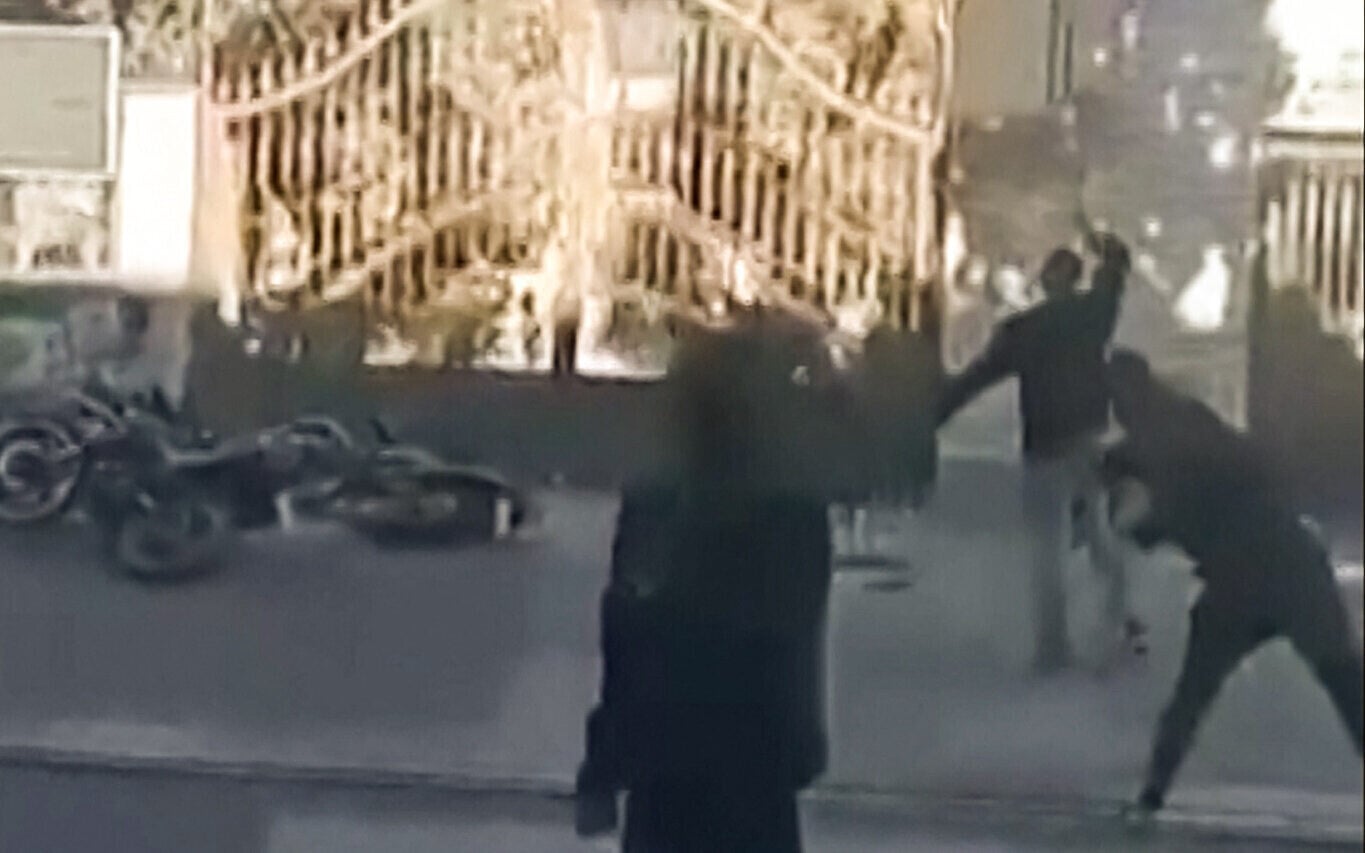
State-affiliated media and rights groups in Iran reported Friday that at least 10 people have been killed in the nationwide protests against the regime since Wednesday, including one man who authorities said was a member of the Basij paramilitary force affiliated with the elite Revolutionary Guards.
The demonstrations were sparked in part by the collapse of Iran’s rial currency but have increasingly seen crowds chanting anti-government slogans, posing the biggest internal threat to Iranian authorities in years.
A local official in western Iran, where several deaths were reported, was cited by state media as warning that any unrest or illegal gatherings would be met “decisively and without leniency.”
The deadly unrest prompted US President Donald Trump to warn Friday that the United States was “locked and loaded” to respond if Iran killed protesters, which Iranian officials responded to with their own threats.
“Trump’s message today, likely influenced by those who fear diplomacy or mistakenly believe it is unnecessary, is reckless and dangerous,” Foreign Minister Abbas Araghchi wrote on X, insisting the protests were mostly peaceful and pointing to the US leader’s own deployment of the National Guard in US cities.
Get The Times of Israel’s Daily Edition
by email and never miss our top stories
By signing up, you agree to the terms
In a letter to the UN secretary-general and president of the Security Council, Iranian UN Ambassador Amir-Saeid Iravani called for the Security Council to condemn Trump’s statements, while citing the Islamic Republic’s “inherent right to defend its sovereignty, territorial integrity and national security, and to protect its people against any foreign interference.”
“Iran will exercise its rights decisively and proportionately. The United States of America bears full responsibility for any consequences arising from these unlawful threats and any ensuing escalation,” he said in the letter.
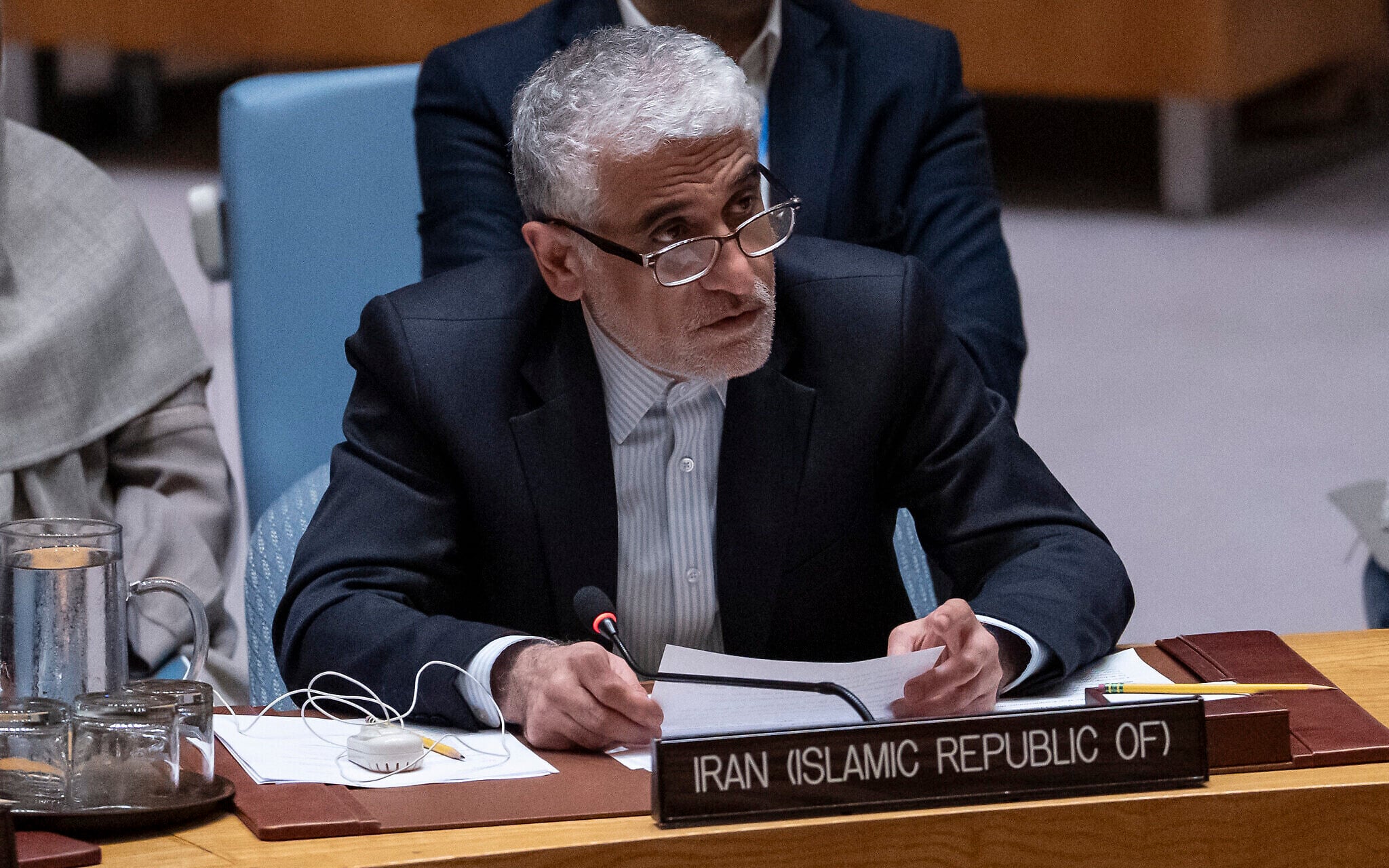
Iran’s Ambassador to the United Nations Amir Saeid Iravani speaks during a Security Council meeting at UN Headquarters, June 24, 2025. (AP Photo/Yuki Iwamura)
Iranian leaders have in recent days said that peaceful protests over Iran’s dire economy were legitimate and understandable, while at the same time warning of a firm response to any instability.
An Iranian police spokesman said on Friday that the authorities acknowledged that the protests “express the will of the people to improve their living conditions.”
“The police clearly distinguish between the legitimate demands of the people and destructive actions… and will not permit any enemies to transform the unrest into chaos,” spokesman Said Montazeralmahdi added in a statement.
The prosecutor of the district of Lorestan, where clashes took place on Thursday, was quoted on the judiciary’s Mizan website as saying: “Any participation in illegal gatherings and any action aimed at disturbing public order, destroying property, disobeying law enforcement, inciting illegal gatherings… will be treated with the greatest firmness.”
UN human rights chief Volker Turk urged Iranian “authorities to uphold the rights to freedom of expression, association and peaceful assembly.”
The protest movement comes as Iran has found itself weakened by major blows dealt to its regional allies in Gaza, Lebanon and Syria.
Iran also fought a 12-day war with Israel in June that saw the United States briefly join with strikes on nuclear sites.
The protests have affected at least 20 cities to varying degrees, largely in the country’s west, according to an AFP tally based on Iranian media reports.
Sixth day of anti-established protests
A group of protesters chant in favour of the Pahlavi dynasty in Tehranpars, east Tehran.
Location: https://t.co/OEd22OHeVn…@GeoConfirmed pic.twitter.com/4gRXyOXqIv
— Ghoncheh Habibiazad | غنچه (@GhonchehAzad) January 2, 2026
However, local media do not necessarily report on every incident, and state media downplayed coverage of protests, while the videos flooding social media are often impossible to verify.
The demonstrations are smaller than the last major round of unrest in 2022, triggered by the death in custody of Mahsa Amini, who was arrested for allegedly violating Iran’s strict dress code for women.
Her death sparked a nationwide wave of anger that left several hundred people dead, including dozens of members of the security forces.
Iran was also gripped by nationwide protests that began in late 2019 over a rise in fuel prices, eventually leading to calls to topple the country’s clerical rulers.
Times of Israel staff contributed to this report.
Is The Times of Israel important to you?
If so, we have a year-end request.
Every day during the past two years of war and rising global antisemitism, our journalists kept you abreast of the most important developments that merit your attention. Millions of people rely on ToI for fact-based coverage of Israel and the Jewish world.
We care about Israel – and we know you do too. So as 2025 draws to a close, we have an ask: show your appreciation for our work by joining The Times of Israel Community, an exclusive group for readers like you who appreciate and financially support our work.
Already a member? Sign in to stop seeing this
You appreciate our journalism

You clearly find our careful reporting valuable, in a time when facts are often distorted and news coverage often lacks context.
Your support is essential to continue our work. We want to continue delivering the professional journalism you value, even as the demands on our newsroom have grown dramatically since October 7.
So today, please consider joining our reader support group, The Times of Israel Community. For as little as $6 a month you’ll become our partners while enjoying The Times of Israel AD-FREE, as well as accessing exclusive content available only to Times of Israel Community members.
Thank you,
David Horovitz, Founding Editor of The Times of Israel
Already a member? Sign in to stop seeing this