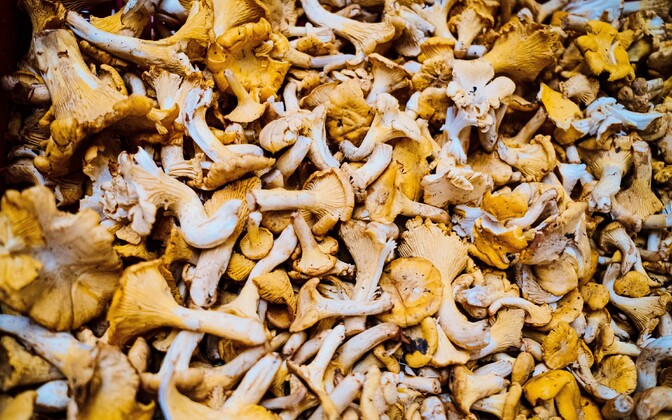
Last year was one of the warmest in Estonia’s history and the year closed with a December so warm that autumn mushrooms and migratory birds were spotted.
“December brought with it many extraordinary phenomena,” the Environment Agency said in a blog post published on Friday. “Extremely rare hair ice was observed, along with chanterelle mushrooms, and even a viper and a common crane were seen during Christmas.”
The average air temperature in Estonia last month was 2.4 degrees Celsius, which is far higher than the average -1 degrees. This ranks December 2025 in sixth–seventh position in terms of warmth in the long-term dataset, the agency said.
The highest air temperature was recorded on December 10 in Heltermaa on the island of Hiiumaa, at 9.3 degrees. The lowest air temperature was measured on December 31 in Kuusiku, Rapla County, at -15.8 degrees.
Jana Põldnurk, head of the agency’s climate department, said the air temperature has been rising in recent years.
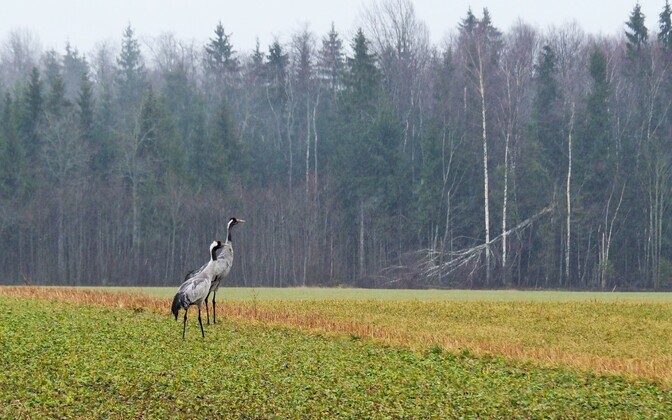 Common cranes in Estonia. Source: Minupilt.err.ee/Riina RL
“The year 2025 ranked third in terms of warmth; 2024 was even warmer, and the warmest year in the entire measurement history was 2020. Since the late 1980s, scientists have identified a regime shift, and since then a temperature anomaly has been in effect,” she said.
Advantages and disadvantages
Zoologist Uudo Timm said nature responds to long-term changes and seeks to take advantage where it can.
“For example, you can currently encounter several bird species in Estonia that should normally have left, and most indeed have gone to warmer areas, but thrushes, robins, and wrens are still here. If winter does not come, then in spring they will have the advantage of claiming the best spots,” he said.
Additionally, in milder winters, badgers, raccoon dogs, and male brown bears may also be more active. But bark beetles that threaten coniferous trees can also continue to breed.
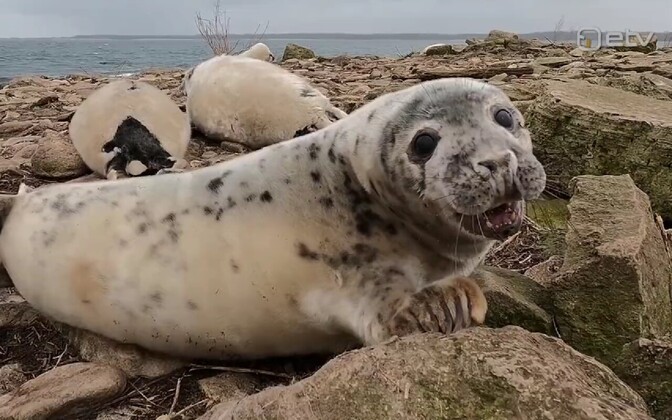 Ringed seal on Saarema shoreline. Source: ERR
However, some species are clearly at risk.
“The ringed seal is threatened by climate warming, as it needs a frozen sea to give birth, and the better the ice conditions, the more comfortable it is for the seal to build its den in the pack ice,” Timm said.
Põldnurk added that Estonia’s residents can quickly adapt, for example, finding joy in being able to ride a bike in midwinter like in the Netherlands.
“A sign of climate change is shorter winters, and the number of snow and ice days is decreasing. Spring arrives earlier, but that does not mean nice weather — it can also be gloomy,” said Põldnurk.
—
Follow ERR News on Facebook and Twitter and never miss an update!