Synopsis: Main battle tanks aren’t obsolete in 2026—badly protected, poorly networked tanks are. The leading NATO designs combine heavy armor with modern sensors, thermal sights, improved fire control, and (in the top tier) active protection to survive precision-guided threats and drone-saturated battlefields.
-This ranking highlights five standouts, from Britain’s heavily protected Challenger 2 and France’s fast-firing Leclerc to Poland’s K2 Black Panther, Germany’s Leopard 2A7V, and the U.S. M1A2 SEPv3 Abrams.
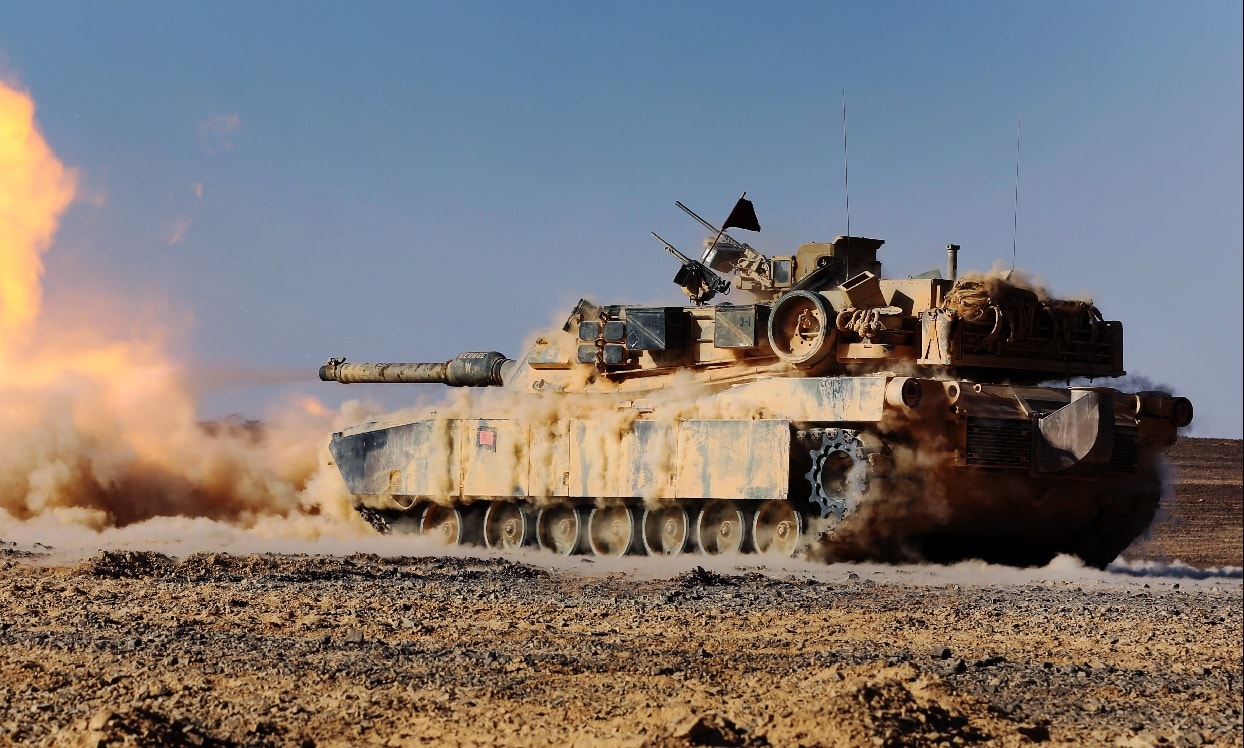
An M1A1 Abrams Main Battle Tank with 24th Marine Expeditionary Unit, fires its 120 mm smoothbore cannon during a live-fire event as part of Exercise Eager Lion 2015 in Jordan, May 9, 2015. Eager Lion is a recurring multinational exercise designed to strengthen military-to-military relationships, increase interoperability between partner nations, and enhance regional security and stability.
(U.S. Marine Corps photo by Sgt. Devin Nichols/Released)
-The common theme: survivability, awareness, and lethality—delivered at tempo.
The 5 Best NATO Tanks in 2026—and the Tech That Keeps Them Alive
Main battle tanks still play a vital role in warfare in 2026; however, only those built for survival, equipped with smart sensors, and capable of quick adaptation truly dominate the battlefield.
The top tier combines heavy armor with active protection, thermal sights and networking, modern 120mm firepower, and the mobility to fight dispersed, drone-saturated battles. With networked targeting systems and active protection, these five tanks set the standard for NATO.
Despite Ukraine’s drone-saturated battlefield, the tank isn’t dead—it’s evolving.
So, here is a list of NATO’s Top 5 Main Battle Tanks of 2026.
#5 The British Challenger II
The Challenger II is among the best-protected main battle tanks operated by the 32 NATO member allies, thanks to its Dorchester armor.
The armor, itself an evolution of the United Kingdom’s Chobham armor used on the M-1 Abrams, is a multi-layered composite material, thought to be made of several kinds of metals, ceramics, and possibly other materials that are a tightly guarded British secret.

Army Reservists of the The Royal Wessex Yeomanry (RWxY), the South West’s Army Reserve Cavalry Regiment taking part in Challenger 2 main battle tank live firing exercise.
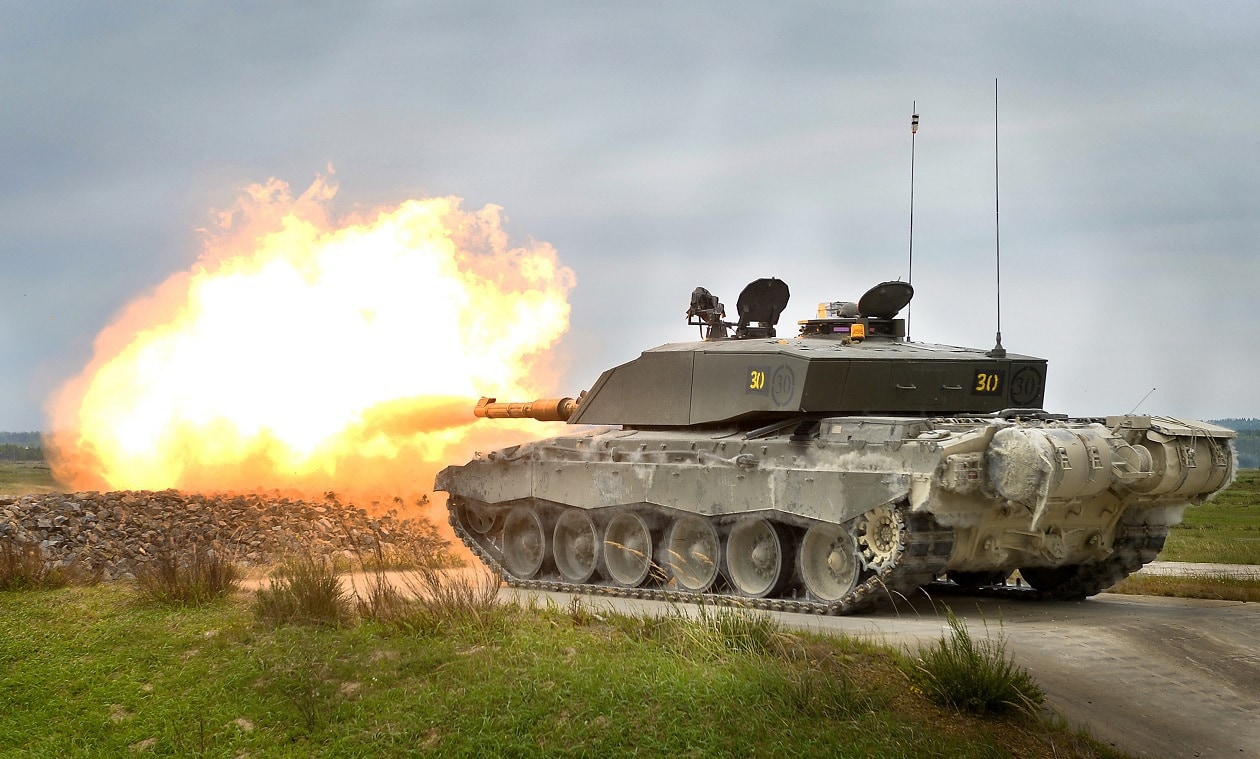
A Challenger 2 main battle tank (MBT) is pictured during a live firing exercise in Grafenwöhr, Germany.
One example of how tough the armor is was when a Ukrainian tank crew survived a direct hit from a high-explosive round during a rocket attack by Russian helicopters.
“The damage was 720 mm deep, but the crew inside survived. The tank could still move and complete its mission,” according to the tank commander.
Sniper-Like Accuracy
The tank crew relayed that one of Challenger II’s key strengths is its accuracy. The tank features a rifled 120mm gun and a sophisticated firing system that compensates for factors such as wind speed and humidity.
The brigade has changed its usage, now using the Challenger IIs to support the infantry rather than the other way around. Other tankers said they fight their tank from Ukrainian-controlled treelines, firing at Russian-controlled treelines up to 1.8 miles away while drones correct their shots.
The targets were the Russians’ “full-concrete, dug-in positions.” But “no vehicles yet,” one tanker added.
The Challenger II’s Weight Is A Concern
The Ukrainians didn’t use them in attacks for which they were designed. The Challenger II was intended as a break-out, defensive line-penetrating platform during the counteroffensive. They were used more as mobile assault guns than in a traditional tank role.
The crew in the Forbes article explained why. “Cross-country mobility is difficult,” one tanker said. “For our ground, the 71-ton British tank is heavy.”
Like its American counterpart, the M1 Abrams main battle tank, the British Challenger II’s mobility and range are compromised by an effective but heavy armor protection package.
Drawbacks of the Challenger II include the need for specialized ammunition, the heavy tank getting bogged down in Ukraine’s soft soil, and its underpowered engine.
#4 The French-built Leclerc Tank
This third-generation, French-built MBT “oozes with firepower,” as National Interest describes it. Designed to replace the French Army’s aging fleet of AMX-30 tanks, the tank was initially conceived in the 1980s and first deployed in 1991.
It is a widely respected MBT in armor circles, despite not being as well-known as some other NATO designs.
The Leclerc Main Battle Tank
The Leclerc is equipped with an automatic loading system for the main armament. Remote-controlled machine guns allow for a crew of just three – a commander, driver, and gunner.
The third-generation tank is armed with a 120mm smoothbore main gun. It is longer than the guns on the Leopard 2 or the M1 Abrams, but it fires essentially the same ammunition.
The 120mm gun is fully stabilized to allow firing on the move, even across open country, with very accurate results. With its autoloader, the Leclerc can sustain a rate of fire of 12 rounds per minute.

France’s Leclerc Main Battle Tank. Image Credit: Creative Commons.
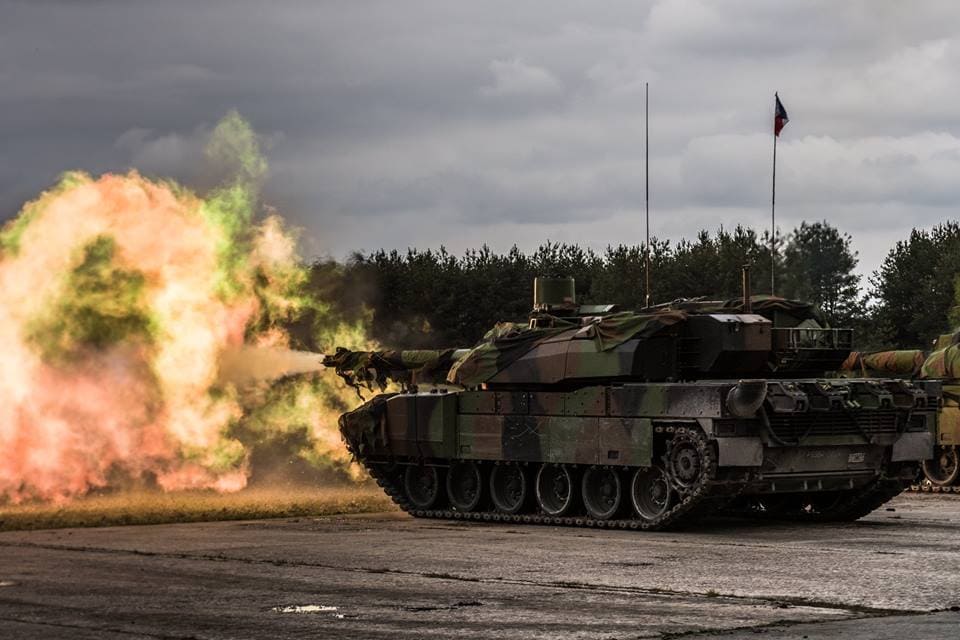
Leclerc Tank. Image: Creative Commons.
The 57-ton MBT is powered by a SACM V8 high-pressure diesel engine, which delivers 1,500 horsepower. It can also be equipped with additional fuel tanks to increase its range. It can reach a top speed of 44 mph on roads and 34 mph cross country.
An improved version to improve its defenses against IEDs and drone attacks began reaching units about a year ago.
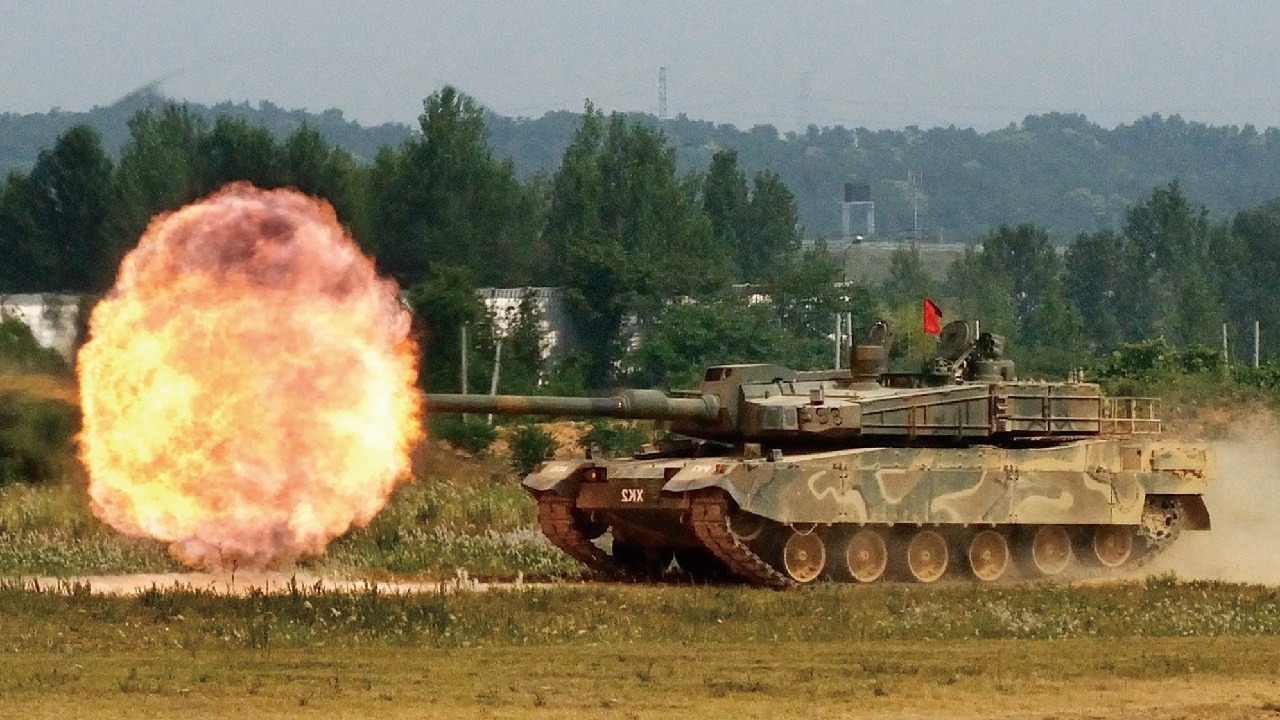
#3 The Polish (South Korean-Built) K2 Black Panther Tank
The South Korean K2 Black Panther main battle tank (MBT) is one of the most advanced armored vehicles in the world, rivaling Western counterparts like the M1 Abrams, Leopard 2, and Challenger 2. Some experts have even called this tank the best in the world.
Poland recently received deliveries of 110 tanks in March of this year. As Poland plans to expand its military, the K2 is envisioned as the new backbone of the Polish tank forces.
The K2 Black Panther was launched in the early 2010s by Hyundai Rotem to integrate a fourth-generation main battle tank into the South Korean Army.
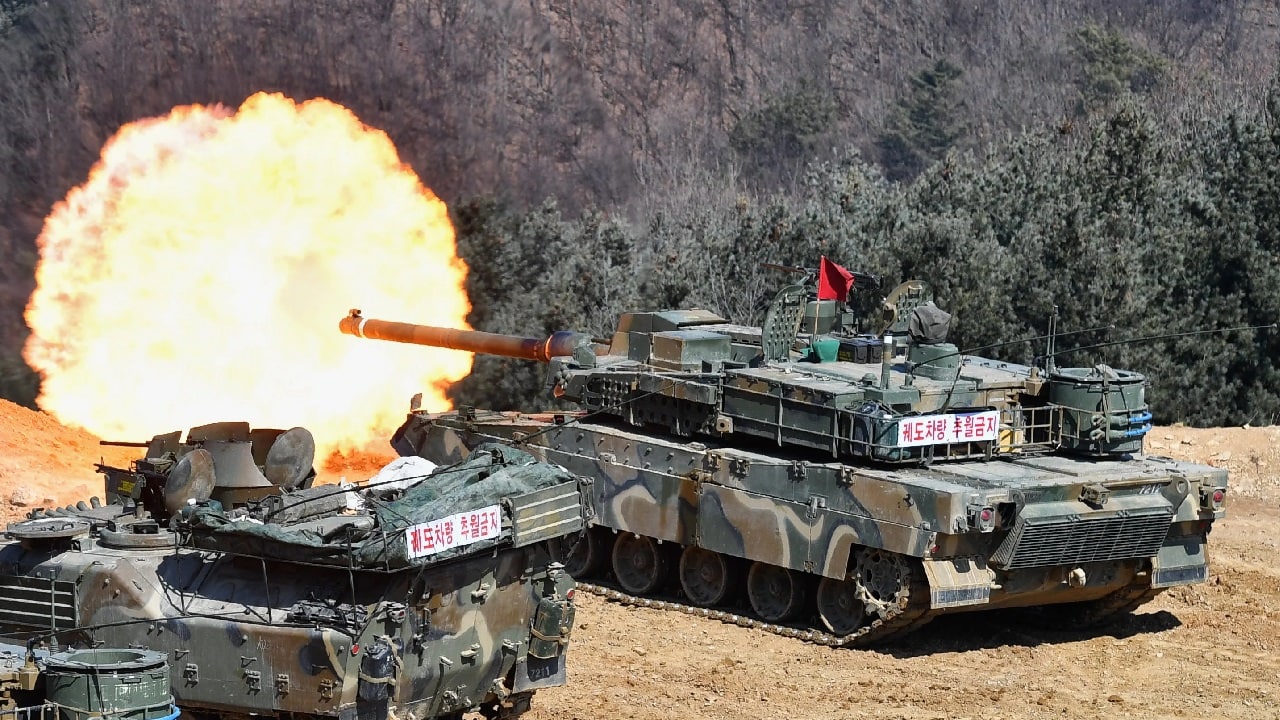
K2 Black Panther. Image Credit: Creative Commons.
The K2 has a 120-millimeter smoothbore cannon, a 12.7-millimeter (.50 caliber) heavy machine gun, and a 7.62-millimeter NATO-standard secondary machine gun.
The main 120mm gun reportedly fires 10-15 rounds per minute and can be used with a wide range of munitions, including all standard NATO tank rounds. As detailed by Military Watch Magazine, this system can instantaneously detect, select, and load the necessary type and amount of ammunition.
The platform’s sensors are also extremely powerful, with its fire control system linked to a high-frequency radar deployed on the frontal arc of its turret, which complements its crosswind sensors and laser rangefinders.
The tanks’ armor consists of steel and silicon carbide ceramic plates. It measures 36 feet in length, weighs 55 tons, and is operated by a three-person crew: a commander, a gunner, and a driver.
The K2 is powered by a 1,500-horsepower engine and a six-speed transmission, capable of reaching 43 miles per hour and a range of 280 miles. While it is one of the most advanced main battle tanks (MBTs) in the world, it is also the most expensive, costing around $8.5 million per unit.
The Korean K2 Black Panther is equipped with an elaborate “snorkel” system that allows it to cross rivers up to 4.1 meters deep. This seems to be an amphibious quality, given that the US Army’s M1 Abrams reportedly can travel in only about 2 meters of water.
The K2 snorkel system is quite elaborate, as it utilizes a “conning tower” to extend above the tank out of the water and funnel air down into a sealed, air- and water-tight crew compartment that operates via an air circulation system.
According to data from the K2’s manufacturer, Hyundai Rotem, the tank’s snorkel system can be prepared in 20 to 30 minutes and is fully combat-ready upon exiting the water.
#2 The German Leopard
The Leopard 2A7V is Germany’s most advanced version of the Leopard 2 main battle tank, featuring enhanced protection through a new modular armor package, improved lethality with a more powerful L/55A1 cannon and advanced ammunition, and better situational awareness with new sensors and electronics.
This version entered service with the German Bundeswehr in September 2021, weighing around 66.5 tons and utilizing an MTU 1500 HP engine for improved mobility, including an adaptive transmission.
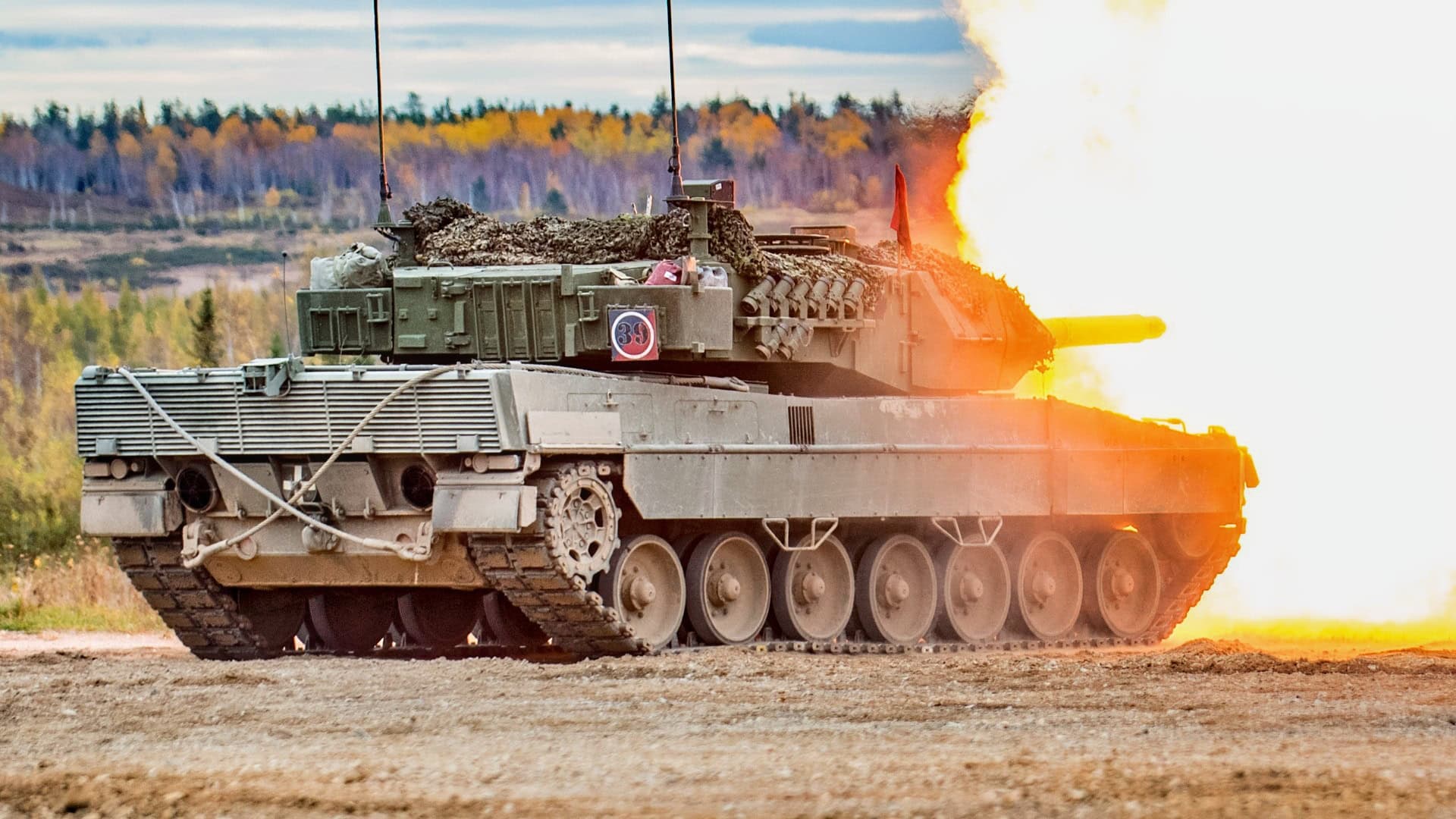
The Royal Canadian Dragoons, C Squadron, conducts a Leopard 2A4 tank shoot during an exercise at 5 Canadian Forces Support Base (5 CDSB) Gagetown, New Brunswick, October 23, 2020.
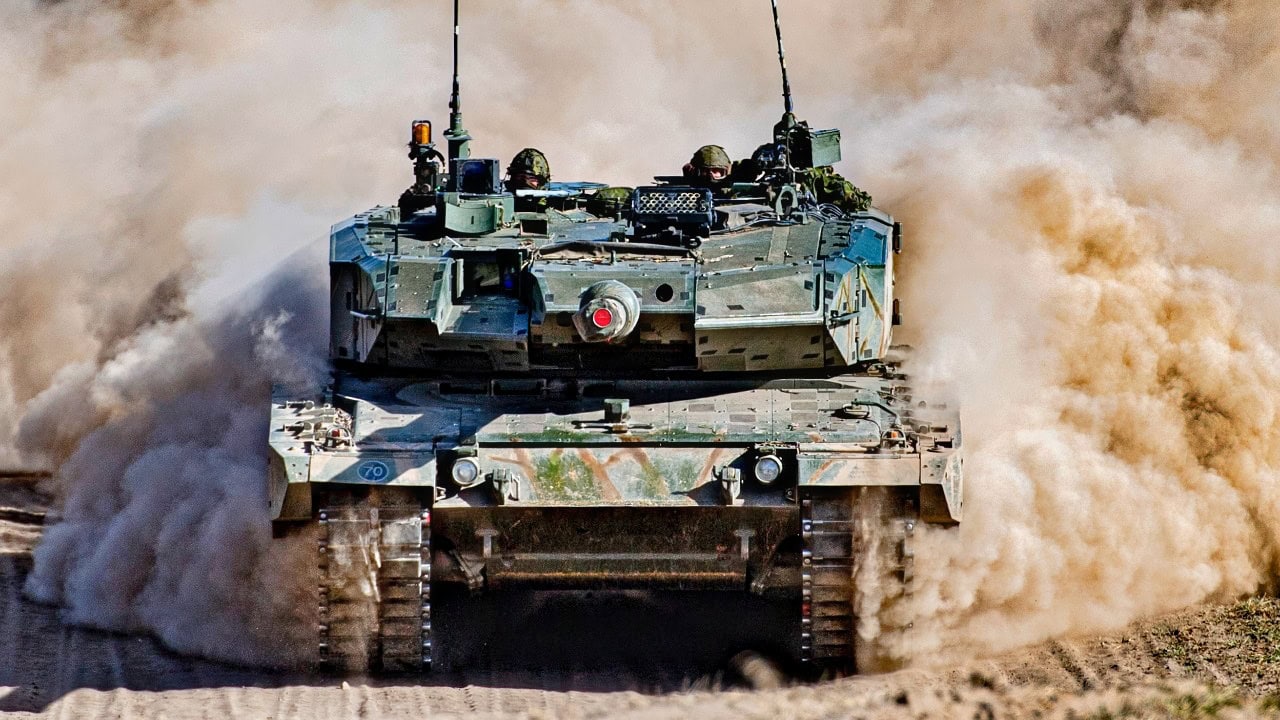
A Leopard 2A4 tank from Lord Strathcona’s Horse (Royal Canadians) drives on the Black Route of the 3rd Canadian Division Support Base Garrison Wainwright Training Area in preparation for Exercise MAPLE RESOLVE 21 on April 28, 2021. Photo By: Sailor First Class Camden Scott, Directorate of Army Public Affairs.
The frontal protection has been improved with a dual kit on the turret and hull front. In contrast, 360° protection against RPGs has been added, and the lower hull has been reinforced for mine protection, increasing the tank’s survivability in urban operations.
Canada first used the modular armor system’s components in Afghanistan. It can fire programmable High Explosive munitions. The turret-mounted MG3 has been replaced with a stabilized FLW 200 remotely controlled weapon station. It is a derivative of the famous WWII MG-42.
The improved Leopard has cameras for situational awareness, an enhanced gun barrel for increased service life and foreseeable ammunition improvements, third-generation FLIR for TC and GNR, BMS (battlefield management system), belly and lower glacis armor, and APS (active protection systems). The external armor package is more conventional than the 7+.
On February 22, 2021, Germany signed a contract with Israel to purchase the Trophy active protection system (APS) for its Leopard 2A7V Main Battle Tanks (MBTs). The Israeli Trophy APS is now in service with three countries, including Israel on the Merkava 4, the United States on the M1A2 SEPV V3, and the Leopard.
The difference between this tank and #1 was very slight, and many armor analysts and enthusiasts believe this version of the Leopard is the best tank in the world. It may just be.
#1 The US M1A2 SEP 3 Abrams
The US and our allies know that tanks aren’t obsolete; only the current ones are. Meanwhile, the US has taken the best tank in the world and made it even better.
General Dynamics Land Systems (GDLS) has significantly upgraded the M1A2 Abrams, which was already an outstanding tank. The SEP stands for the System Enhancement Program.
The newest iteration of the Abrams is already a popular model with our allies, as both Australia and Poland have ordered more tanks to beef up their armored forces. Ukraine is clamoring for more tanks.

A M1A2 SEPV3 Abrams Tank fires at multiple range targets during a range warfighter exercise, April 11, 2021, Fort Hood, Texas. The visit with foreign allies allows the U.S. Army to boost interoperability of staff members and warfighting capabilities with the M1A2 SEPv3 Abrams Tank. (U.S. Army photo by Sgt. Melissa N. Lessard)
The M1A2 SEPv3 has adapted to consider the threat of Anti-tank missiles and drones. The SEPv3 has better explosive reactive armor, and the Israeli-built Trophy Active Protection System protects NATO tanks in a 360-degree perimeter against anti-tank missile threats.
The SEPv3 defends itself against drone attacks through a combination of its existing armor, newly added anti-drone screens, and improved electronic warfare capabilities to jam drone signals, thereby lessening the threat from small, fast-moving drones, particularly when facing drone swarms.
The improved third-generation Forward Looking Infrared targeting system allows the crew to fire from stand-off distances where the enemy can’t see it.
Improved Lethality/Firepower
The SEPv3’s main gun is the M256 120mm smoothbore cannon. It can fire M829A4 advanced kinetic-energy and advanced multi-purpose rounds via an ammunition data link. This round is an Armor-Piercing, Fin Stabilized, Discarding Sabot – Tracer (APFSDS-T), cartridge consisting of a depleted uranium long-rod penetrator with a three-petal composite sabo
These rounds will defeat third-generation explosive reactive armor (ERA) at extended ranges. ERA is designed for maximum penetration against heavily armored targets and has an effective range of 4,000 meters.
The crew compartment remains the same, with the driver in the middle of the hull and the commander, loader, and gunner in the well-armored turret. In addition to the main gun, the SEPv3 has a .50-caliber M2 machine gun and a 7.62mm M240B coaxial machine gun.
Engine and Power Generation
The M1A2 SEPv3 is powered by a Honeywell AGT1500 gas turbine engine, which produces 1,500hp.
The auxiliary power unit, located under the armor, enables the tank to operate its onboard systems with a reduced probability of detection during silent watch operations.
The generator enables the turret to operate without power from the main engine when the vehicle is stationary, improving fuel efficiency and stealth.
The US Army has made superb improvements with the M1A2 SEPv3. This may allow the Abrams to remain in inventory until 2040, giving it a 60-year lifespan. The best tank in the world is now even better.
About the Author: Steve Balestrieri
Steve Balestrieri is a National Security Columnist. He served as a US Army Special Forces NCO and Warrant Officer. In addition to writing on defense, he covers the NFL for PatsFans.com and is a member of the Pro Football Writers of America (PFWA). His work was regularly featured in many military publications.