(Bloomberg) — Respondents to a Federal Reserve survey anticipated that the central bank’s reserve management purchases will total more than $200 billion over 12 months as part of efforts to quell pressures in money markets.
Fed policymakers decided at the Dec. 9-10 meeting to begin Treasury bill purchases after deeming that reserves in the financial system had dropped to levels considered as ample as indicated by rising short-term funding costs. While bank reserve levels vary over time, cash needs tend to increase during month-end and quarter-end periods when tax and other settlement payments are due.
Most Read from Bloomberg
“While the estimated size of expected purchases varied considerably across respondents, on average, respondents anticipated net purchases of about $220 billion over the first 12 months of purchases,” minutes of the Federal Open Market Committee’s Dec. 9-10 meeting published Tuesday said.
The Fed said it would start buying about $40 billion of T-bills a month, before paring its purchases. It has so far purchased about $38 billion of bills this month and will conduct two more operations in January.
Fed policymakers have stressed that these purchases are a tool solely to manage reserves and are distinct from the central bank’s broader monetary policy or efforts to stimulate the economy.
The decision came after some participants at the meeting observed that money market rates were rising faster relative to the Fed’s administered rates than they did during the 2017-2019 balance-sheet unwinding period, the minutes indicated.

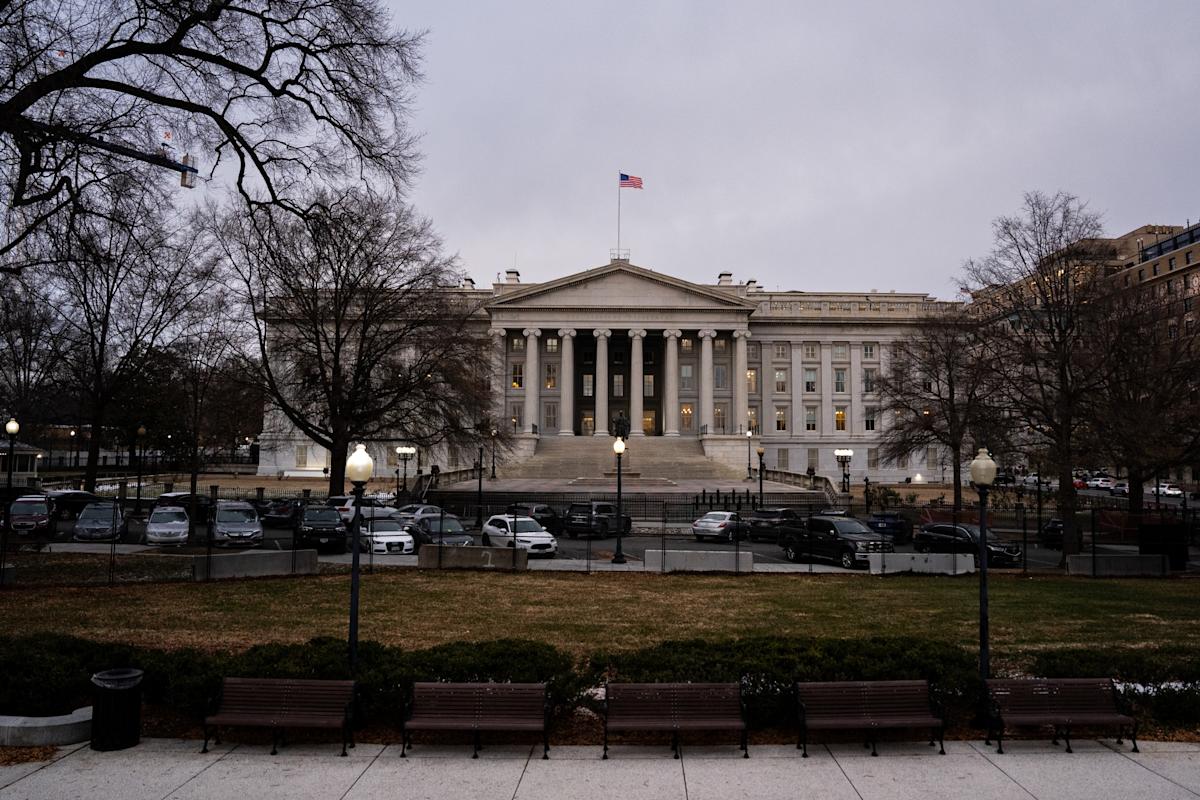
Photographer: Al Drago/Bloomberg
The Fed stopped shrinking its holdings earlier this month, a process known as quantitative tightening, as signs of stress in the $12.6 trillion market for repurchase agreements were building up. A ramp up in Treasury bill issuance since the summer, combined with QT, has been siphoning cash away from money markets, draining the central bank’s main liquidity facility and pushing short-term rates higher.
The concern is that a lack of adequate liquidity would disrupt a vital part of the financial markets’ plumbing, undermining the Fed’s ability to control its rate-setting policy and, at the extreme, force position unwinds that could spill into the broader Treasury market, the global benchmark for borrowing costs.
The December meeting minutes also included a discussion among Fed officials on how best to target an appropriate level of bank reserves in the system. Some participants highlighted the appeal of focusing on the level of money-market rates in relation to the interest paid on reserve balances, rather than a particular level of reserves, given the potential for shifts in demand.