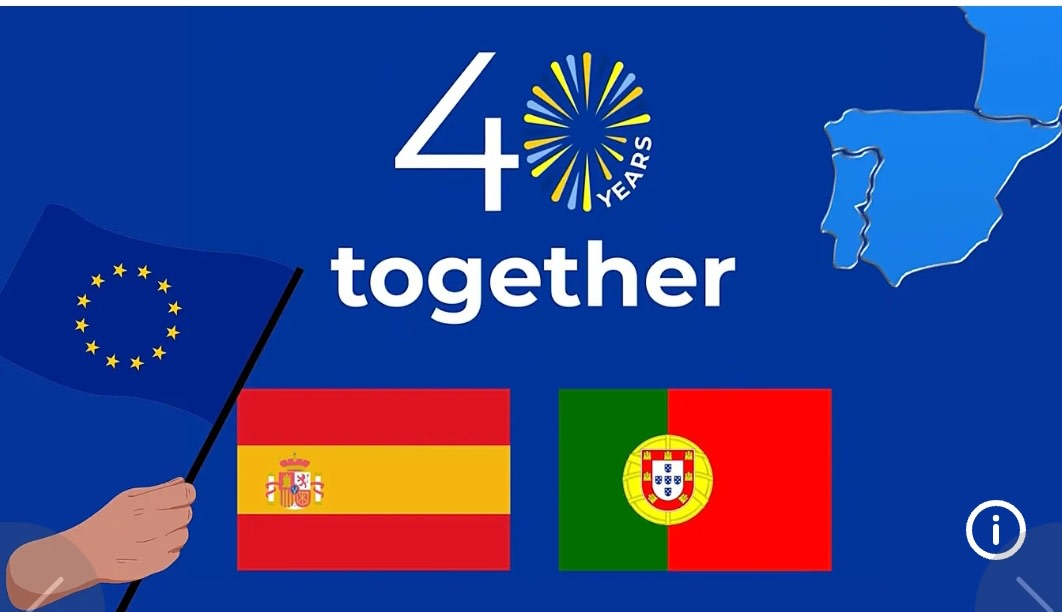
In January 1986, Spain and Portugal officially joined the European Economic Community (EEC)—the forerunner of today’s European Union—marking a historic turning point for both nations. Emerging from decades of authoritarian rule, their accession symbolized not just economic integration, but a definitive return to democratic Europe. Now, nearly four decades later, Spain and Portugal’s journey within the EU offers a compelling story of transformation, resilience, and evolving influence.
A Historic Entry After Dictatorship
For both countries, EU membership came after long periods of isolation. Spain had endured General Francisco Franco’s dictatorship until 1975, while Portugal’s Estado Novo regime collapsed following the Carnation Revolution in 1974. EU accession was seen as a seal of democratic legitimacy and a pathway toward modernization.
Joining the bloc was not automatic. Spain and Portugal had to reform institutions, liberalize economies, and align laws with European standards. When they finally entered in 1986, the move was widely celebrated domestically as a national rebirth and internationally as a success for European integration.
Economic Transformation and Convergence
EU membership reshaped the economies of both nations. Structural and cohesion funds poured into Spain and Portugal, financing infrastructure, education, agriculture, and regional development. Highways, rail networks, and modernized ports transformed connectivity, while investment helped lift millions out of poverty.
Spain became one of Europe’s fastest-growing economies during the 1990s and early 2000s, integrating deeply into global markets. Portugal, though growing more gradually, benefited from improved productivity and expanded exports. EU membership also opened doors for workers, students, and businesses across the continent.
While economic convergence with wealthier EU members has not been perfect, living standards in both countries improved dramatically compared to pre-1986 levels.
Social Change and European Identity
Beyond economics, EU membership accelerated social and cultural change. Freedom of movement allowed generations of Spaniards and Portuguese to study, work, and live abroad, fostering a strong European identity alongside national pride.
EU policies supported gender equality, labor rights, environmental protections, and consumer standards. Cities modernized, rural areas received development support, and access to EU programs expanded opportunities for youth and researchers.
Public support for the EU has generally remained strong in both countries, despite moments of frustration during economic downturns.
Weathering the Eurozone Crisis
The 2008 global financial crisis tested Spain and Portugal’s relationship with the EU more than any event before or since. Both countries were hit hard by rising unemployment, public debt, and austerity measures tied to EU and IMF support programs.
Portugal accepted a financial bailout in 2011, while Spain received EU assistance to stabilize its banking sector. Austerity sparked protests and political upheaval, fueling debates about sovereignty, inequality, and the social cost of economic discipline.
Yet both countries eventually recovered, emerging with restructured economies and renewed growth. The crisis reshaped domestic politics but did not fundamentally weaken commitment to the EU project.
Political Influence Inside the EU
Over time, Spain and Portugal have moved from newcomers to active contributors in EU decision-making. Spain has held the rotating EU Council presidency multiple times and plays a key role in shaping policy on migration, climate action, and relations with Latin America.
Portugal has carved out a reputation as a consensus-builder, hosting major EU summits and promoting dialogue on digital transformation and social cohesion. Both countries are strong advocates for EU enlargement, multilateralism, and stronger ties with the Global South.
Their shared Iberian perspective has also strengthened regional cooperation within the EU framework.
The Green and Digital Transition
In recent years, Spain and Portugal have positioned themselves at the forefront of Europe’s green transition. Abundant renewable resources—particularly solar and wind—have made both countries leaders in clean energy development.
EU recovery funds following the COVID-19 pandemic further accelerated investments in digital infrastructure, sustainability, and innovation. These initiatives aim not only to modernize economies but to address long-standing productivity gaps.
The Iberian countries’ push for energy reform, including efforts to cap electricity prices, has influenced broader EU debates on energy security.
Challenges That Remain
Despite progress, challenges persist. Youth unemployment, regional inequality, aging populations, and housing affordability continue to test policymakers. Critics argue that EU fiscal rules can limit national flexibility, while supporters counter that shared rules ensure stability.
Rising euroscepticism elsewhere in Europe has also prompted renewed discussion about the future direction of the EU—debates in which Spain and Portugal generally align with pro-integration positions.
Looking Ahead: A Shared European Future
As Spain and Portugal mark nearly 40 years in the EU, their journey reflects both the promise and complexity of European integration. Membership helped consolidate democracy, modernize economies, and amplify their voices on the global stage.
Today, the challenge is less about catching up and more about shaping Europe’s future—on climate, technology, migration, and social cohesion. For both nations, the EU remains not just an economic union, but a political and cultural anchor.
Conclusion
Four decades after joining the European Union, Spain and Portugal stand as examples of how integration can transform societies emerging from authoritarian pasts. Their journey since 1986 underscores the EU’s role as a driver of stability, opportunity, and shared identity—while reminding Europeans that progress requires constant adaptation.
As the EU faces a rapidly changing world, the Iberian experience offers valuable lessons in resilience, reform, and the enduring power of cooperation.