

Quick overview
Dogecoin (DOGE) saw a dramatic 12% gain in a single day, breaking above a long-term descending trendline. After weeks of tight consolidation and declining volatility, the cryptocurrency displayed renewed bullish momentum. Price action surged past key short-term technical levels, while momentum indicators such as RSI and MACD confirmed upward pressure.
Despite the breakout, exchange-held supply climbed sharply. Binance data revealed DOGE balances rose from 7.9 billion to 10.9 billion in 2025, highlighting increased liquidity. Typically, higher exchange balances suggest more tokens are ready to trade, potentially increasing sell-side risk. However, rising supply does not automatically indicate imminent selling; in many cases, it reflects preparation for volatility or enhanced market liquidity.
Leverage Skews Strongly Bullish
Derivatives data shows traders are heavily positioned for gains. DOGE futures indicate approximately $850 million in long positions versus $22 million in shorts, reflecting a strong bullish bias.
Aggressive leverage can amplify price movements in either direction.
Long-heavy positioning increases the risk of rapid liquidations if momentum stalls.
Sustained breakout confirmation depends on continued buying absorbing additional supply.
While bullish sentiment remains high, the leverage-heavy setup suggests that any sudden downturn could trigger sharp corrective moves, emphasizing the importance of follow-through price action.
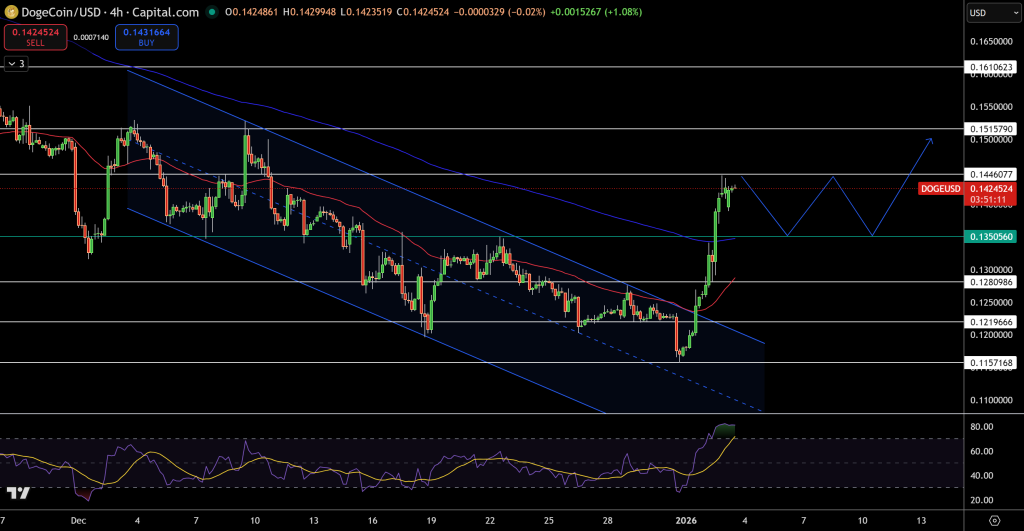 Dogecoin Price Chart – Source: Tradingview
Price Breakout vs. Supply Pressure
DOGE currently trades near $0.132 on the 4-hour chart. Momentum indicators remain positive:
RSI at 72 signals strong short-term momentum but approaching overbought territory.
MACD remains above its signal line, indicating buyers maintain control.
The key question is whether demand can absorb the rising supply. If DOGE sustains its breakout with strong volume, the rally could continue. Conversely, failure to hold these levels may expose traders to forced liquidations and heightened volatility. For now, the market reflects both opportunity and elevated risk.

Maham Arslan
Crypto News Writer | Blockchain & Web3 Reporter
Maham is a crypto news writer and market analyst specializing in breaking down the latest developments across blockchain, digital assets, and decentralized finance (DeFi). With hands-on experience covering high-impact stories—from regulatory shifts and token launches to macro-driven price movements—she delivers timely, accurate, and SEO-optimized content for fast-growing crypto media platforms.
Her expertise lies in producing daily news reports, price predictions, technical summaries, and coverage of market-moving events. Maham tracks real-time updates across global newswires, X (Twitter), and on-chain data to provide actionable insights tailored for retail traders, crypto enthusiasts, and institutional readers.
With a strong grasp of crypto fundamentals and Web3 trends, she delivers content that’s informed, accessible, and always on time.
Related Articles