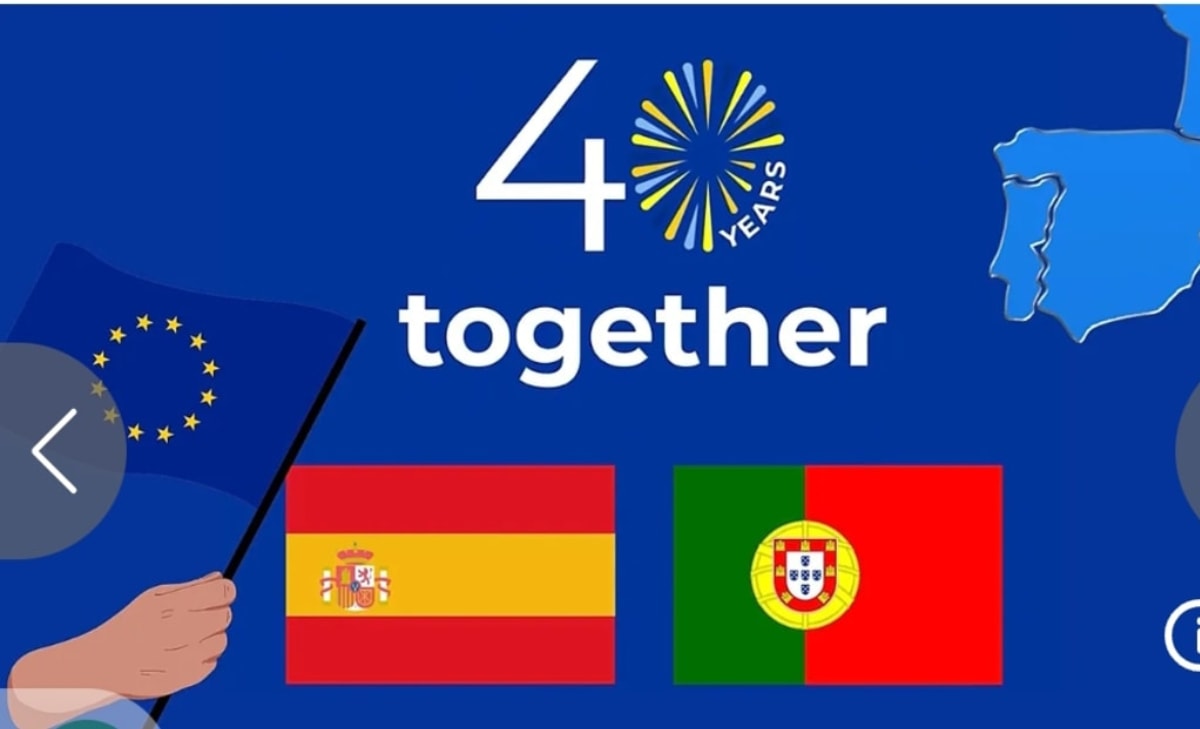
In 1986, two Iberian nations, Spain and Portugal, took a momentous step in their political and economic evolution by joining the European Union (EU). For both countries, membership signified the culmination of years of effort to modernize their economies, democratize their political systems, and integrate with Europe’s growing political and economic bloc. Over the past four decades, Spain and Portugal have undergone profound transformations, and their journey within the EU has not only reshaped their domestic landscapes but also their roles on the world stage.
The Road to EU Membership: A Historical Context
For Spain and Portugal, the path to EU membership was shaped by significant historical milestones. Both countries had spent decades under authoritarian regimes: Spain under the rule of Francisco Franco (1939-1975) and Portugal under António de Oliveira Salazar (1932-1968) and his successor Marcelo Caetano until the 1974 Carnation Revolution. The 1970s marked a period of political awakening in both nations. With the fall of these regimes, both Spain and Portugal embarked on a journey of democratic consolidation and economic modernization.
As both nations sought to establish their place in the post-World War II European order, the EU presented itself as a crucial mechanism for political stability, economic growth, and modernization. In 1986, after a decade of democratic reforms and economic adjustments, Spain and Portugal officially became members of the European Economic Community (EEC), the precursor to the EU, marking a pivotal moment in their modern history.
Economic Growth and Transformation: From Agricultural to Industrial Powerhouses
One of the most significant impacts of EU membership was the economic transformation both Spain and Portugal underwent in the 1990s and 2000s. Before joining the EU, both nations had relatively underdeveloped economies, heavily reliant on agriculture, with limited industrialization.
EU membership brought substantial economic assistance through structural and cohesion funds designed to reduce regional disparities and promote modernization. Spain and Portugal both received billions of euros in aid, which were used to build critical infrastructure, improve education and healthcare systems, and support small and medium-sized enterprises. For Spain, this period also saw the expansion of its industrial base and infrastructure, which allowed it to become one of the leading economies in the Mediterranean region.
Portugal, on the other hand, saw significant modernization of its agricultural sector, improved productivity, and increased foreign investment. While initially heavily dependent on agriculture, Portugal gradually diversified its economy, moving toward service sectors like tourism, technology, and telecommunications. By the 2000s, both countries had experienced rapid GDP growth, lower unemployment, and improved living standards for their citizens.
Political Stabilization: Strengthening Democracy and Rule of Law
Politically, Spain and Portugal’s membership in the EU provided a strong anchor for their newly established democratic systems. Before 1986, both nations faced the difficult task of transitioning from authoritarian rule to democracy. Membership in the European Union provided both countries with a powerful incentive to consolidate democratic practices, respect for human rights, and the rule of law—values enshrined in the EU’s founding principles.
For Spain, the EU helped solidify its democratic transition, which had been achieved through the 1978 Constitution, following the death of Franco. European integration acted as an external guarantee that Spain would not backslide into authoritarianism, and its democratic institutions were strengthened as a result.
Portugal’s democratic transition, initiated by the 1974 Carnation Revolution, was also reinforced by EU membership. Portugal’s commitment to democratic governance and human rights was closely aligned with EU principles, and the country’s efforts to improve governance, reduce corruption, and strengthen political stability were given a significant boost by EU membership.
Challenges Along the Way: Economic Crises and Austerity Measures
Despite the successes, the journey of Spain and Portugal within the EU has not been without its challenges. Both countries faced significant economic crises in the aftermath of the global financial meltdown of 2008. The Spanish economy, which had been growing steadily, was hit hard by the collapse of the housing market, high unemployment, and a banking crisis. Similarly, Portugal, which had already been struggling with high levels of public debt and low economic growth, was forced to seek financial assistance from the EU and the International Monetary Fund (IMF) in 2011.
In exchange for this financial aid, both Spain and Portugal were required to implement strict austerity measures, which included significant cuts in public spending, pension reforms, tax hikes, and labor market reforms. These measures led to widespread protests, social unrest, and a sharp rise in poverty and inequality in both countries.
While austerity policies were successful in reducing deficits and stabilizing economies, they also fueled political discontent. Spain saw the rise of political parties such as Podemos, while in Portugal, the Socialist Party, led by António Costa, gained prominence by promising to roll back austerity policies and focus on growth and social policies.
Despite these difficulties, both nations have gradually recovered from the crisis, with their economies rebounding in the late 2010s. Spain and Portugal also benefited from the EU’s long-term recovery plans, including the NextGenerationEU funds, which aimed to stimulate post-pandemic economic growth through green and digital investments.
Cultural and Social Integration: Embracing European Identity
Culturally, Spain and Portugal’s EU membership has fostered a greater sense of European identity among their citizens. Over the past four decades, travel between EU countries has become easier, particularly with the establishment of the Schengen Area, which removed internal borders between most EU nations. This has allowed Spanish and Portuguese citizens to explore other European countries and experience new cultures, while also increasing tourism to Spain and Portugal from other EU nations.
Moreover, both countries have benefited from the EU’s emphasis on social cohesion, equality, and human rights. EU policies on gender equality, labor rights, and environmental protections have influenced domestic policy in both Spain and Portugal, pushing both countries to improve standards of living, reduce poverty, and promote social justice.
Looking Forward: Spain and Portugal’s Role in the EU
As Spain and Portugal celebrate 40 years of EU membership, they look to the future with optimism and caution. Both countries continue to face challenges related to economic inequality, unemployment, and political polarization. However, their integration into the EU has undeniably transformed them into modern, prosperous democracies.
In the broader EU context, Spain and Portugal’s membership remains a testament to the power of European integration. Both countries have been staunch supporters of the EU’s enlargement, advocating for the inclusion of new member states from Eastern Europe and the Balkans. As members of the EU, Spain and Portugal will continue to play an important role in shaping the union’s future, particularly in areas like climate change, digital transformation, and foreign policy.
Conclusion: A Journey of Transformation
The journey of Spain and Portugal within the European Union over the last 40 years has been one of remarkable change and progress. From the economic growth of the 1990s to the challenges of the 2008 financial crisis, both countries have shown resilience and determination in overcoming obstacles and building prosperous futures. As Spain and Portugal continue to adapt to new challenges and opportunities, their journey within the EU will remain an important chapter in the story of European unity and cooperation.