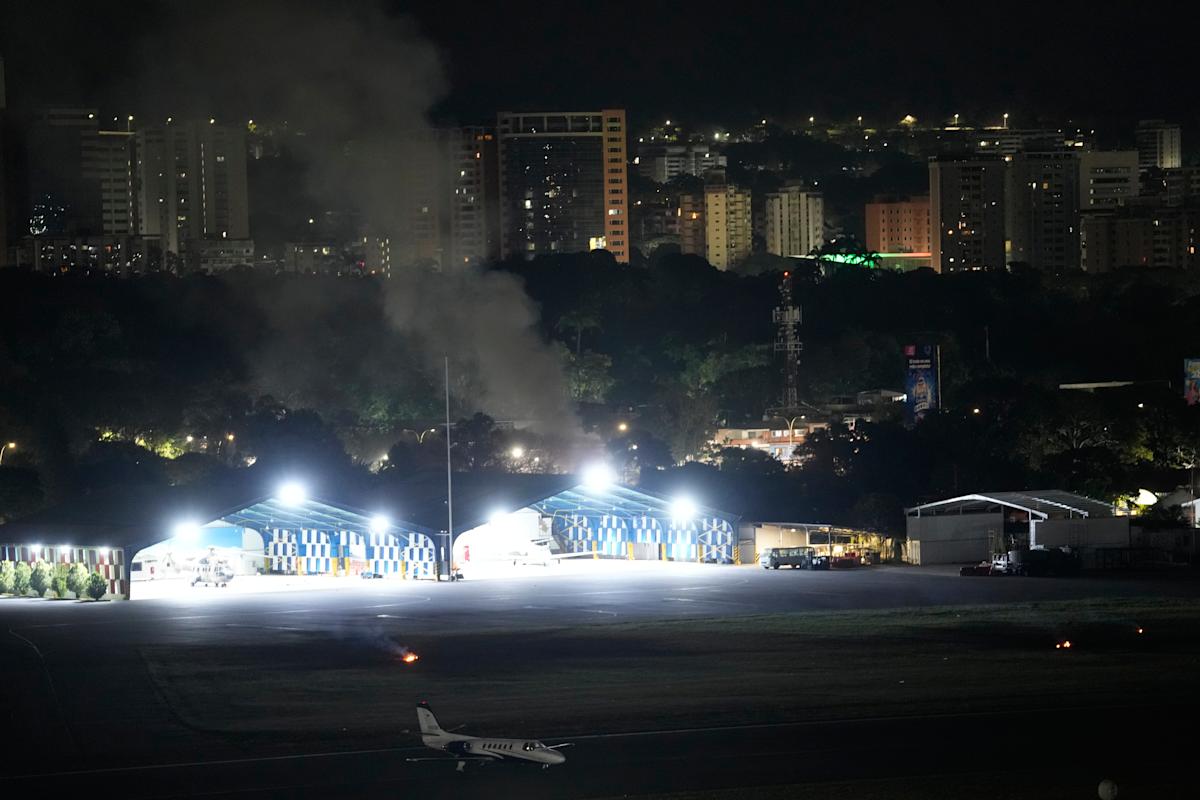
The US military throughout the night of Jan. 2 and early morning of Jan. 3 captured and extracted Venezuelan leader Nicolás Maduro from Caracas, who President Trump called an “outlaw dictator” at a press conference on Saturday.
The move opened up a ream of questions on what will become of Venezuela’s massive oil reserves.
Oil contracts don’t trade on Saturdays, but when the market opens on Sunday at 6 p.m. ET, traders will be watching for any swings as chances for a reopening of the Venezuelan oil market or a more drastic shuttering are priced in.
While there may be an initial spike on Brent crude (BZ=F), the international pricing benchmark, and US benchmark West Texas Intermediate (WTI) crude oil (CL=F), the longer-tail impact will depend on what Venezuela’s post-Maduro landscape looks like, Jorge León, the head of geopolitical analysis for industry intelligence firm Rystad Energy, told Yahoo Finance.
If the country quickly stabilizes around a more democratic leader such as opposition figure María Corina Machado, foreign investment flows in, and US and other international oil companies see a decreased risk profile — such as what happened in Syria after Bashar Al-Assad was removed from power — a more open Venezuela is likely to be bearish for oil prices as more supply is added to the market over the coming years.
If, however, Venezuela looks more like Libya after the toppling of Muammar Gaddafi, where the country remained in disarray and foreign capital was loath to enter, a further constriction of the Venezuelan oil market would almost certainly provide some degree of bullish support to global prices.
At least in the shorter term, León said, he expects Venezuela is likely to look more like post-Gaddafi Libya, owing to remaining support for Maduro’s Chavismo movement inside the county, and multiple opposition leaders in exile who are all likely to vie for power.
“If that is the case, then we are likely to see a slightly bullish increase in geopolitical risk and slightly bullish [impact] on pricing in the short term,” León said.
President Trump during a press conference at Mar-a-Lago on Saturday that the US will “run the country” until the US government can architect a “just” transition to a more democratic leader in Venezuela, opening up questions about what leadership in the country will look like.

President Donald Trump speaks at his Mar-a-Lago club, Saturday, Jan. 3, 2026, in Palm Beach, Fla., as Defense Secretary Pete Hegseth listens. (AP Photo/Alex Brandon) · ASSOCIATED PRESS
Whatever way the situation goes, the impact on global prices is likely not to be extreme.
Despite sitting on the largest proved oil reserves in the world, the South American nation has been relegated to only a minor player on the world exporting stage since its petroleum industry was fully nationalized under Hugo Chavez’s leadership in the early 2000s.