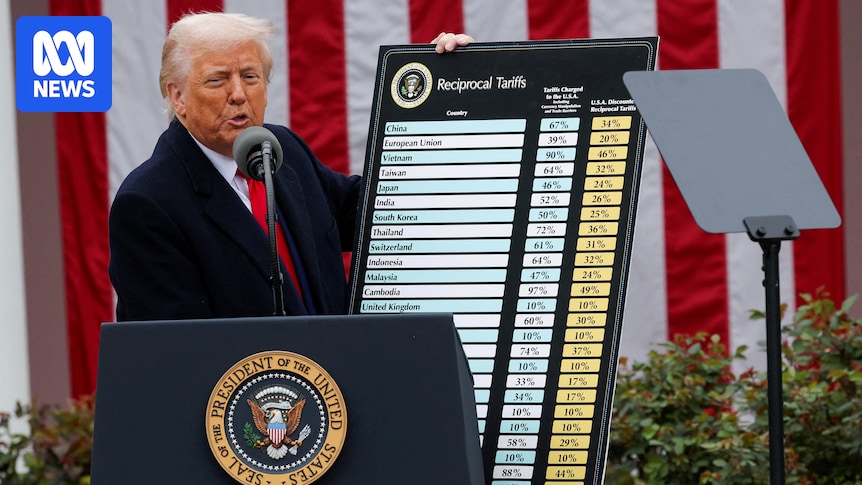
It all really kicked off in April with a comically giant board at the White House.
And eight months after Donald Trump’s so-called liberation day, the impacts of the US president’s sweeping tariff agenda are still reverberating here in Australia.

Felicity Deane says if these tariffs are deemed illegal, there could be financial consequences for the US. (Supplied: Felicity Deane)
Local fashion brands, toy manufacturers and others continue to reassess how they do business in the United States, and some still have not recovered from the economic uncertainty caused by tariffs.
The bumpy ride could continue, with America’s highest court set to rule as soon as this month on whether Mr Trump’s “reciprocal” tariffs on countries globally are actually legitimate.
“It could be really interesting,” trade expert Felicity Deane says.
“(If the US Supreme Court says) these tariffs are illegal, they might have to repay companies who’ve been paying tariffs,” the QUT professor adds.
Impact on business
Sun protection brand The Nashie is one Australian business that has already been paying tariffs — a form of tax — on the garments it sells in America.
Like many Australian companies selling into the US, the brand is paying far higher tariffs than the 10 per cent baseline that Australia received all 2025.
Made in China: Aussie firms caught in trade war
That is because The Nashie makes its goods in China, which spent much of last year embroiled in a tit-for-tat tariff situation with the US that is still playing out.
The Nashie pays its tariff bills directly when it imports them to a distribution warehouse in Utah. Its co-founder, Tom Wilson, is there now, grappling with a changing business climate.

Tom Wilson at his warehouse in Utah. (Supplied: The Nashie)
“We are seeing reduced demand in the US,” he says, and believes American consumers are “spooked” by tariffs.
Core data out of the US also shows that consumer confidence is deteriorating.
Just before Christmas, chief economist at The Conference Board, Dana Peterson, told Reuters that consumers are led by what is happening in the economy.
“References to prices and inflation, tariffs and trade, and politics,” she said.
Beatrice Toh from Australian toy brand HeyDoodle is also grappling with reduced sales.
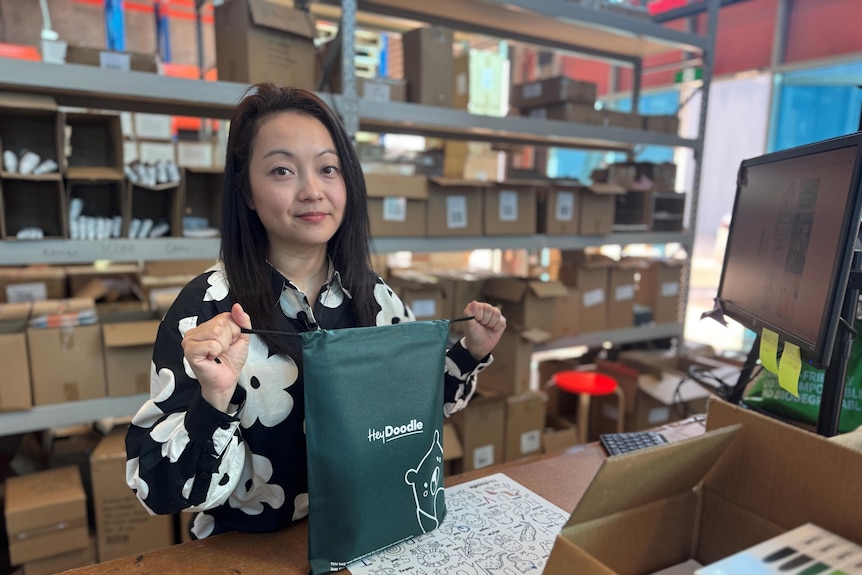
Beatrice Toh founded the silicone reuseable colouring book company, HeyDoodle. (ABC News: Emilia Terzon)
She had only just signed deals to sell her reusable drawing pads into American department stores when Mr Trump’s tariff mandate kicked off.
“The biggest impact we’ve felt this year hasn’t been the direct cost of tariffs, but the effect they’ve had on customer confidence,” she says of her businesses’ fortunes eight months later.
“That caution has also flowed through to retail.
“We’ve unfortunately lost some wholesale stockists as physical stores were forced to close due to reduced foot traffic and tighter margins, which has had a ripple effect across the supply chain.”
Ms Toh plans to keep navigating this changing environment. It is the same deal for The Nashie’s Mr Wilson, despite referring to the current tariff situation as “the wild west”.
“Honestly, a high tariff is manageable as consumers are expecting the cost to be passed on. But when they are so unpredictable, it stifles business,” Mr Wilson says.
“We have raised US prices to absorb the tariff cost, but have not raised Australian prices to absorb USA tariffs.”
The end of ‘de minimis’
One of the most disruptive elements for Australian exporters into the US in 2025 was not so much individual categories being targeted, but the end of an exemption for taxes on smaller-value goods.
Australia Post halts most postage to US
The end of the so-called de minimis exemption not only rocked online retail but also led to postal carriers globally, including Australia Post, making a temporary snap decision to halt most shipping into the US.
Fashion brand Apero is still struggling to integrate orders into the US using Australia Post’s systems and is starting the new year with a different e-commerce provider.
The company’s co-founder, Laz Smith, says they are hoping to grow US sales again in 2026.
“The removal of de minimis has affected our brand, with up to 30 per cent of our revenue previously coming from the US market,” he said.
“We have not seen any meaningful support from Austrade or the Australian government, and brands have been left to navigate this huge period of uncertainty on their own.”
Back on “liberation day “in April, the Australian government pledged $50 million for stressed exporters, with details of what this meant only coming months later in 2025.
This funding under a so-called Accessing New Markets Initiative (ANMI) is described as a scheme that “brings together national peak industry bodies and Austrade”.
It has so far resulted in initiatives for fresh produce growers in Hong Kong, local companies that deal with Peru, and brokered meetings for fine foods brands.
Austrade accused of abandoning Aussie businesses caught in China–US trade war
Yet some Australian companies that ABC News has reached out to are still feeling frustrated about their interactions with Austrade as they go into 2026.
“I think to the government, this is yesterday’s issue and businesses are on their own,” The Nashie’s Mr Wilson says.
In a statement, Trade Minister Don Farrell said ANMI had delivered “five business missions in our first 100 days of being re-elected” in May.
“We will have more to say on the final composition of remaining ANMI programs in the near future,” he said.
The owner of one Australian brand also impacted by tariffs, Bond Eye, told ABC News they had found the work of the fashion industry’s lobby group helpful.
The swimwear brand joined others at an industry event held in Hong Kong by the Australian Fashion Council in September, and the brand is still selling its garments in the US.
“We didn’t make any knee-jerk decisions and we stayed calm,” founder Steve Philpott said.
“We absorbed the costs and stayed loyal to our factories and supply chain partnerships, which was reciprocal.”
Possible olive branch
While QUT’s Professor Deane says she has never seen a year quite like 2025 when it comes to global trade, she believes the situation with US tariffs is “settling down”, as Mr Trump “has other problems to deal with”.

US President Donald Trump created worldwide economic instability in 2025 with global tariffs. (AP: Alex Brandon)
As the festive season wraps up, there has been more news about tariffs out of the US, with the president offering an olive branch for Italian pasta brands and delaying taxes on imported furniture.
“The other thing that may have stopped him a little in his tracks is inflation,” Professor Deane says.
“People have stopped throwing their toys out of the pram.”
Her advice to Australian exporters in 2025 is to wait out the US Supreme Court decision on tariffs — which could deliver another curveball — and just be nimble.
“Don’t limit your options when it comes to other markets,” she says.