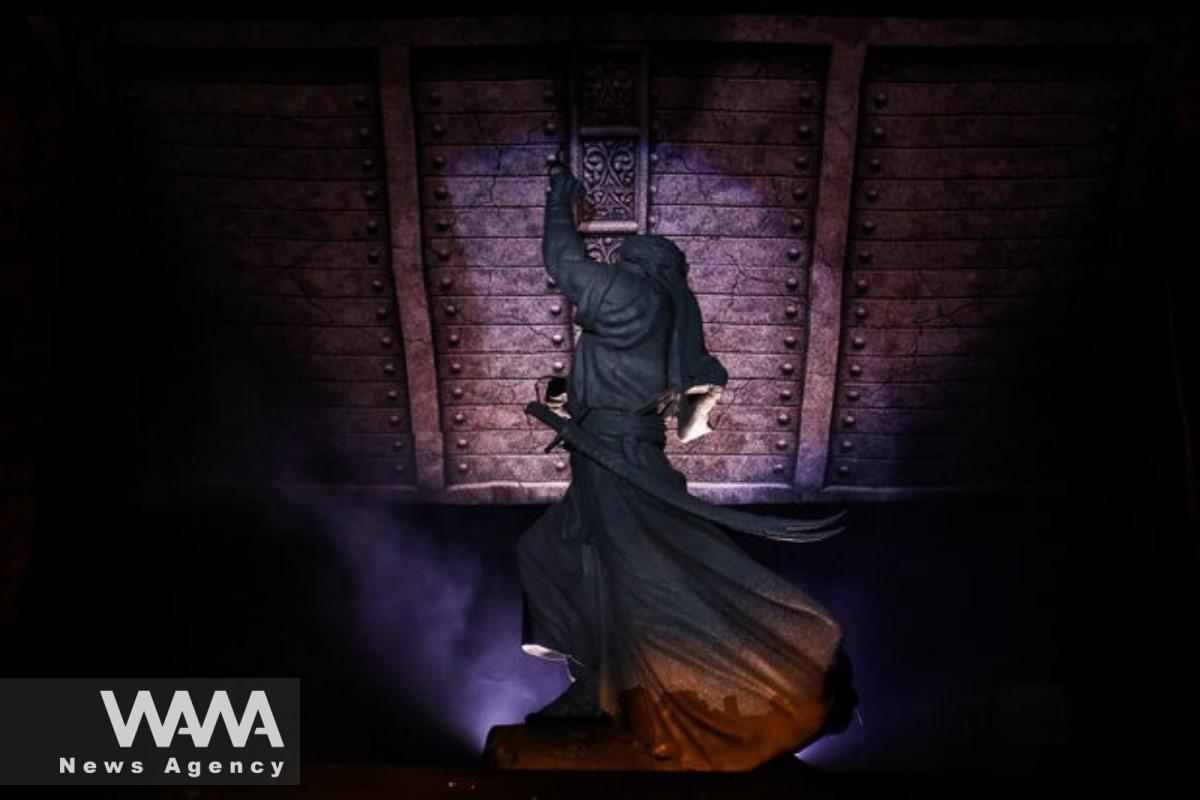
WANA (Jan 03) – Amid domestic protests, external threats, and the erosion of official narratives, Tehran has launched a new initiative: a large-scale street performance titled “It Will Be Repeated.”
Over the past week, threats against Iran have peaked from two main directions.
On one side were remarks by U.S. President Donald Trump, who wrote on his social media platform that if Iran’s government used violence against peaceful protesters, the United States would step in “to save them.” The message was posted as economic and social protests were unfolding in several Iranian cities.
On the other side, Israeli Prime Minister Benjamin Netanyahu reiterated long-standing warnings about Iran’s nuclear and missile programs, keeping regional tensions high.
International media have reported that the two leaders have discussed escalating pressure on Iran. Trump has also said that if Iran takes actions that are “not verifiable,” it would face a harsh U.S. response.
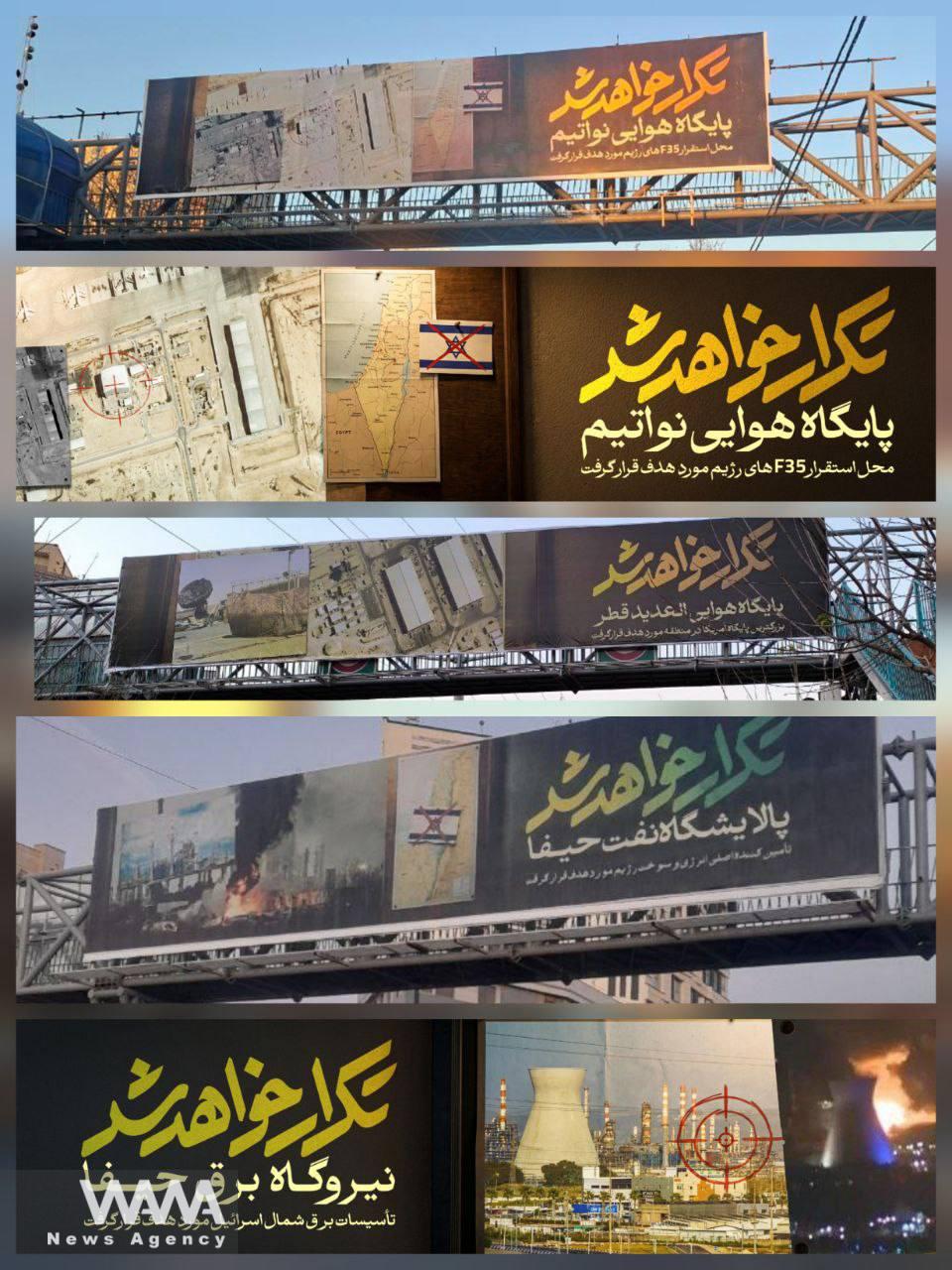
Banners and murals depicting scenes from the destructive 12-day war, “It Will Be Repeated”: Tehran’s Street Performance. Social media / WANA News Agency
The “It Will Be Repeated” campaign began in Tehran with the installation of banners and murals depicting scenes from the destructive 12-day war with Israel—visual representations of damage caused by Iranian missiles inside Israel. That conflict, which shook the region last June, began with an Israeli strike on Iran and was followed by a U.S. military attack on Iranian nuclear facilities.
The campaign reached its peak on Saturday night, 3 January, at Imam Khomeini Square, where a large-scale field performance titled “The Conquest of Khaybar” was staged. At the same time, a symbolic monument called “The Conqueror of Khaybar” was unveiled in a public ceremony organized by Tehran’s Beautification Organization. The unveiling coincided with the birthday of Imam Ali (the first Imam of the Shia) .
The event was inspired by remarks from Iran’s Supreme Leader, and the campaign’s title was drawn directly from those comments. In one speech, Ayatollah Ali Khamenei said:
“Saddam, thinking Iran had grown weak, launched his attack. Reagan, also thinking Iran was weak, provided extensive support to Saddam’s regime. They and dozens of other illusion-ridden figures were sent to their demise, while the Islamic Republic grew stronger day by day. I tell you, by God’s grace, this experience will be repeated.”
Performed in 12 acts, “The Conquest of Khaybar” presented symbolic narratives of historical confrontations with enemies, spanning from early Islamic history to the modern era. The storyline linked the Battle of Khaybar during the time of Imam Ali to contemporary figures such as Qassem Soleimani, the senior Iranian commander assassinated by the United States six years ago on the same date, portraying them as part of a continuous historical memory.
Throughout the performance, large crowds filled Imam Khomeini Square. As scenes from the 12-day war were reenacted, chants of “Death to America” and “Death to Israel” were shouted by attendees—turning the square from a purely theatrical setting into a live political and social event.
The title “The Conquest of Khaybar” was chosen deliberately. It refers to one of the most prominent battles in Islamic history, remembered in collective Muslim memory as the fall of a fortress once thought to be impregnable. The message is clear: what appears unbreakable can, in fact, collapse.
The “It Will Be Repeated” campaign was conveyed not through official statements or diplomatic speeches, but through street art, live performance, and symbolic storytelling. While Washington and Tel Aviv emphasize military threats and political pressure, Tehran has opted to use art and historical memory as its medium—seeking not to declare war, but to reconstruct and project a symbolic identity.