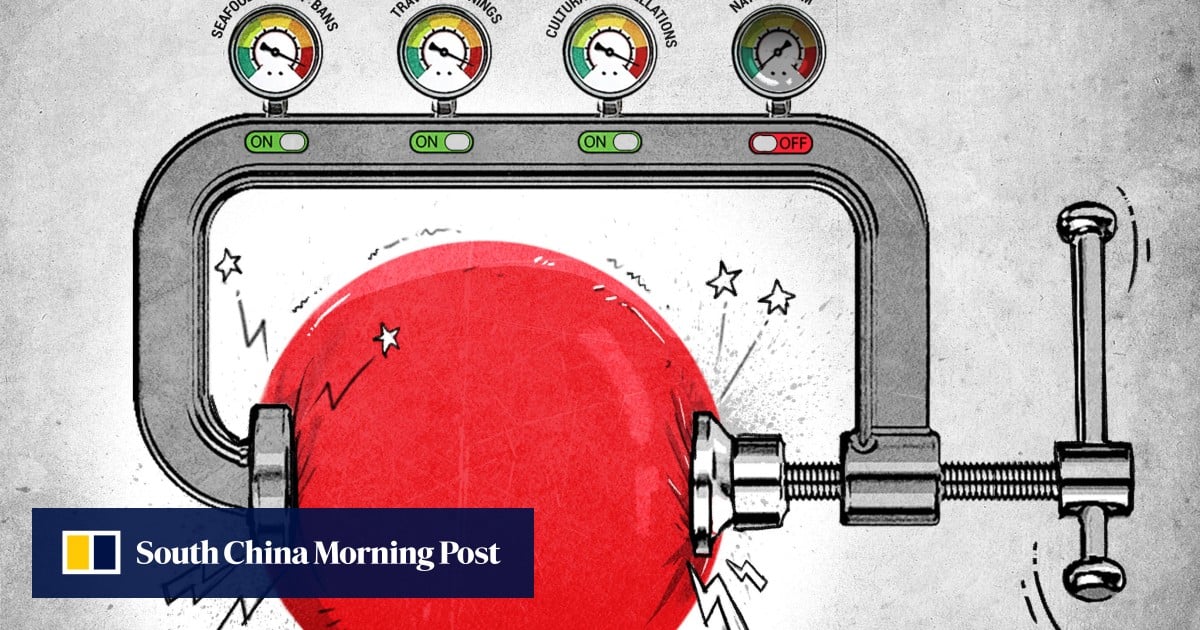
A little over a decade ago, a diplomatic row with Japan would have been enough to bring people out into the streets in China or at least stir a patriotic retail boycott.
China and Japan have a long-running territorial dispute over the islands and authorities appeared to tolerate the anti-Japanese demonstrations that broke out in many Chinese cities that year, including attacks on Japanese cars and stores.
Fast forward to 2026 and Beijing and Tokyo are at odds again – this time over Taiwan, an issue that Beijing regards as the reddest of its red lines.
But this time the nationalist flames have not been fanned and Japanese property remains untouched. The stakes are arguably higher but the response has been targeted diplomatic and economic pressure.

04:47
Why have Takaichi’s Taiwan comments sent China-Japan ties into a tailspin?
Why have Takaichi’s Taiwan comments sent China-Japan ties into a tailspin?
Much of the tactical shift, observers say, comes down to one big thing: economics.