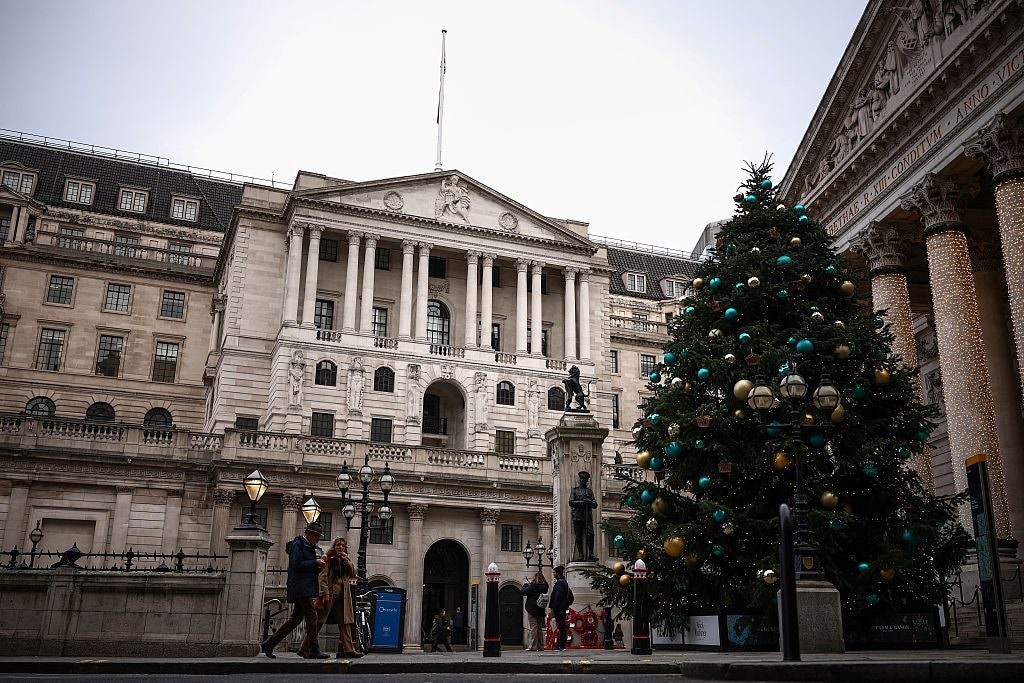
Interest rates could be slashed to 2.75 per cent by the end of summer, driven by rising unemployment, a finance expert has predicted.
Four cuts to interest rates last year brought the Bank of England’s (BoE) base rate down to 3.75 per cent, but Bill Papadakis, of Swiss lender Lombard Odier, believes the Monetary Policy Committee (MPC) will go much further this year.
He is predicting a dramatic slide to 2.75 per cent by the end of summer – effectively squeezing the same amount of reductions as the whole of last year into little more than a seven-month period.
Mr Papadakis suggests that rising joblessness levels and lowering inflation in key areas will lead the MPC to cut at a much faster pace, with pressure on the BoE to “support the economy in an otherwise tough period”.
“Strong wage growth has already slowed meaningfully as the employment picture has weakened,” he said. “Together with falling services inflation, this should translate into lower price pressures, allowing the Bank of England to cut rates to 2.75 per cent by the end of the third quarter – a level close to neutral.”
Neutral interest rates are the point at which they will support the economy without impacting to raise prices. Most experts believe the BoE will not return rates to anywhere near the close to zero interest rates experienced in the decade or so after the global financial crisis.
Business leaders, including the British Chambers of Commerce (BCC), have continually called for deeper interest rate cuts to alleviate pressures on firms experiencing rising costs of employment, business rates and other expenses.
For much of 2025, the BoE governor Andrew Bailey preached the need to take cuts carefully and gradually, so as not to see inflation spike once more following the surges in prices across 2022 and 2023.
Inflation is still at 3.2 per cent, well above the government-set target of 2 per cent, though it has dropped significantly from the July high of 3.8 per cent.
However, Mr Papadakis’ view on the pace of rate cuts – four by the end of the third quarter of the year – is something of an outlier at present.

(Bank of England)
The MPC are set for votes in February, March, April, June, July and September.
Barclays analysts point out that there is only one round of economic data due before the February meet, making it unlikely there will be enough to demand sequential cuts before and after the new year, so four cut votes in five meetings would be needed to meet Mr Papadakis’ prediction – or at least one vote which called for a double cut of 50 basis points (a 0.5 percentage points cut instead of 0.25 at a time).