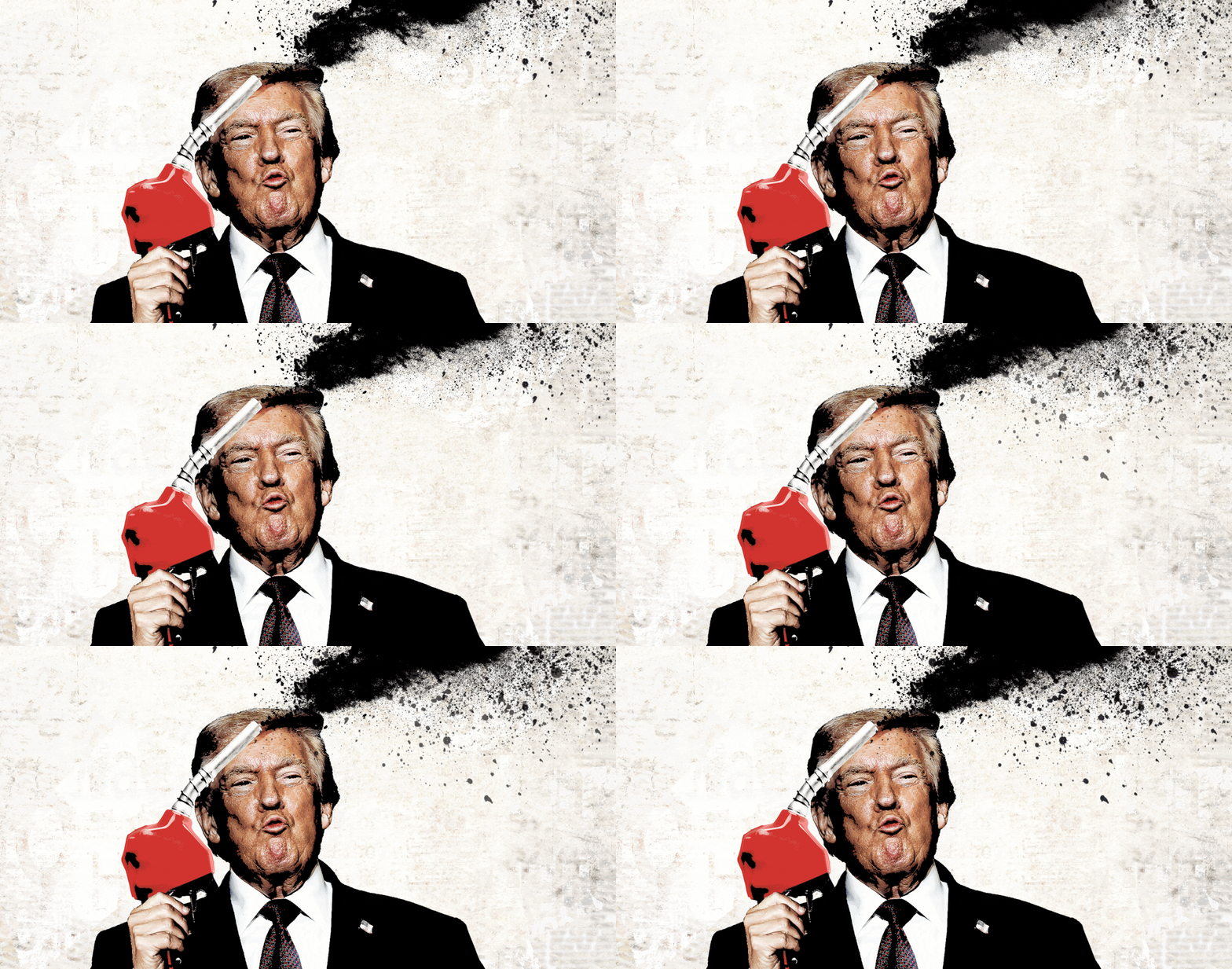
A poet once wrote of small men who measured their lives in “coffee spoons.” But, all of us as Americans living in the modern era, can just as easily measure ours by the number of oil wars we have lived through.
As a young guy just starting out in the world of foreign policy, I remember hosting a conference in Caracas, Venezuela, when a buzz went through the room. “They’ve started bombing!” people said to one another and an evening event broke up so everyone could head to the rooms to watch the bombing of Baghdad on CNN. The images back in January 1991 were strikingly similar to those broadcast on Saturday as the U.S. conducted bombing raids, this time on Caracas of all places.
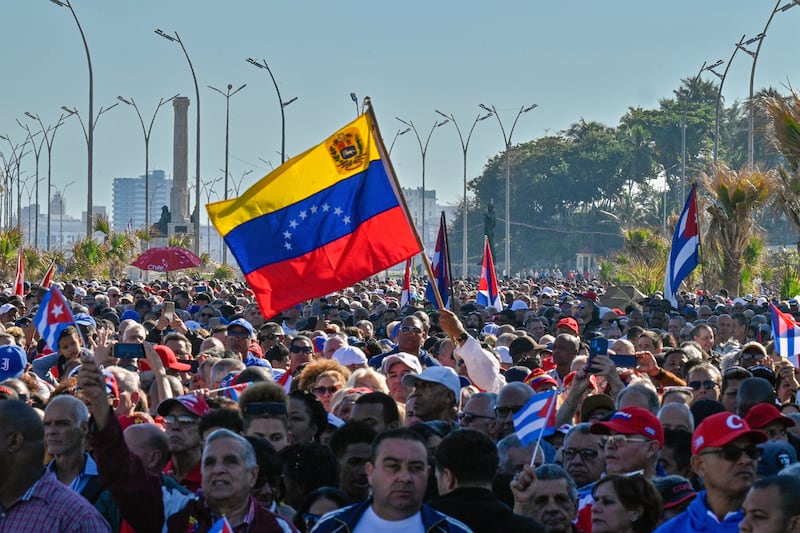 Cubans flooded the streets of Havana on Saturday to protest U.S. intervention in Venezuela. ADALBERTO ROQUE/AFP via Getty Images
There were plenty of similarities. Two Republican administrations took action while answering to higher powers in the fossil fuels industry. Media outlets hyperventilated about the drama, not sure whether to cheer on the military or tell the truth about why they were fighting. Officials offered canned remarks about values and higher purpose while revealing that once again that the only line that really mattered was neither in the sand nor was it red, it was then and now, the bottom line.
Here we are once again “making the world safe” for obscene oil company profits.
There have been oil wars in the interim too. Every few years, in fact. My experience in Caracas was during the first Gulf War. There was, of course, a second such war. While the first one featured a president and a secretary of state from the oil patch, during the second, we had not only the son of the president from that first war, but a U.S. Vice President who was also an oil industry CEO.
(I can’t help but note that during the first Gulf War, the Secretary of Commerce was also a one-time oil industry executive, who seemed to get bombed even as we were watching the bombing on TV—having to be helped to his room, singing too loudly in the hotel hallways, apparently stirred or maybe it was a bit shaken by the drama of the moment.)
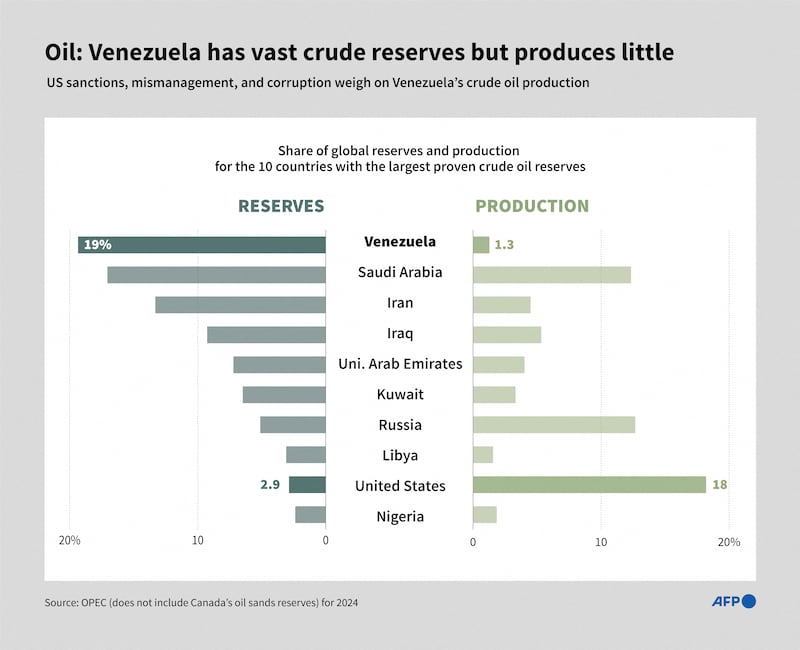 Infographic with a chart showing the share of global reserves and production for the 10 countries with the largest proven crude oil reserves in the world, highlighting Venezuela and the United States Olivia BUGAULT and Valentina BRESCHI / AFP via Getty
Our engagement the second time around in Iraq lasted eight years. But even years after it was allegedly over, there was talk of U.S. troops seizing oil fields in payment for our so-called “War on Terror.” In fact, that was a favorite idea of President Trump during his first term in office. Other U.S. military interventions and security initiatives in the interim regularly took place to ensure U.S. access to oil fields in the Middle East. (Note: We still have troops in Iraq ostensibly due to the ongoing threat of ISIS.)
The intervention that took place early Saturday morning in Venezuela was revealed by President Trump in no uncertain terms to be yet another oil war. The U.S. was not just invading the country to extradite Nicolas Maduro and his wife for alleged drug crimes, we were taking over the country and would send in oil executives to reclaim oil assets Trump asserted were stolen from the U.S.
Trump promised we would rule the country until a “safe transition” could take place. But what he clearly meant was until we could get assurances that the U.S. would effectively control the world’s largest proven oil reserves, claiming some of the wealth for us and determining how much would go to the benefit of Venezuela.
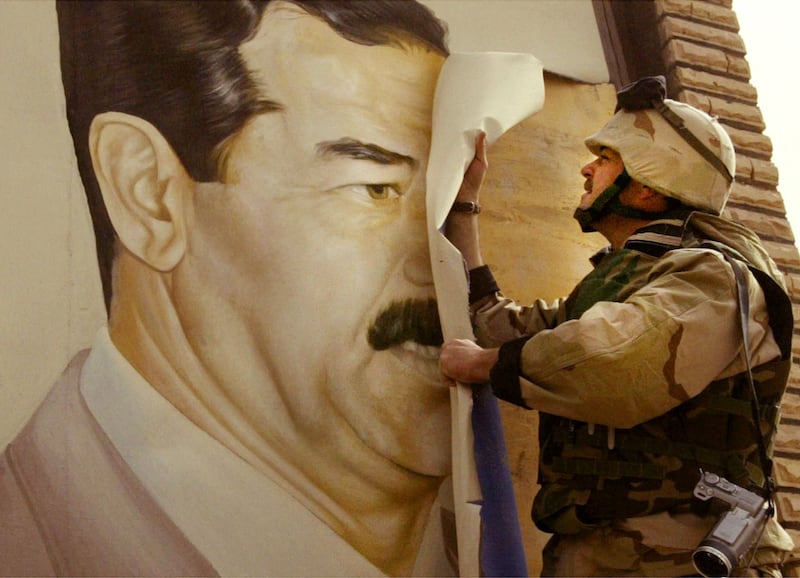 U.S. Marines pull down a poster of Saddam Hussein in Baghdad. Chris Hondros/Getty Images
The current war had some of the hallmarks of the earlier wars. American intervention was in part based on a fabric of lies or exaggerations about the threat our “opponents” posed. Yes, Saddam Hussein had invaded Kuwait during the 1990 Gulf War, but reports of Iraqi atrocities were overstated to help win Congressional support for the intervention. While George W. Bush and his team lied outrageously about WMDs, it was with the purpose of winning Congressional and international support. And here we are lying about why we went in and overstating the damage done by Maduro’s alleged drug trafficking ring, the so-called Cartel de los Soles.
That said, we are getting a little more brazen the more such wars we conduct. Trump’s assertion that Maduro’s drug trafficking was responsible for the deaths of hundreds of thousands of Americans was laughable. Indeed, there really is no Cartel del los Soles. It is a term of art (like Antifa) that doesn’t describe a real organization but rather a set of loosely associated activities and actors. What is more, Trump did not and does not seek the approval of Congress or the support of allies for his actions. Further, of course, neither the Congress nor any coalition of allies no matter how large would have the power to authorize the U.S. to seize the national assets of a sovereign nation even if they wanted to.
The last time Trump wanted to seize oil to pay for a war—in that case actions against ISIS—his team blocked it because such actions would be illegal. But this time, his team of kowtowing sycophants are going along with what could easily become one of the largest acts of theft in modern history. (Again, there is plenty of precedent—Europeans stealing the Americas from its indigenous peoples is certainly one, colonial thefts like those of the British in India or Europeans in Africa being other notable, massive, criminal expropriations.)
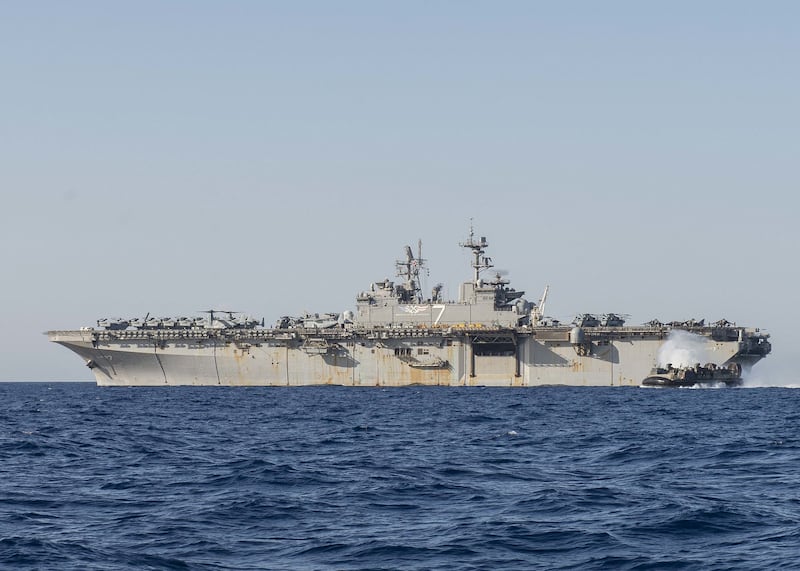 Maduro and his wife were transported to the United States aboard the USS Iwo Jima, photographed above in 2018. Smith Collection/Gado/Getty Images
As before, just like in the case of the Second Iraq War, Team Trump clearly has no idea what to do next. The plan, per Trump’s truly weird, meandering press conference (during which he often slurred his words and seemed to have trouble staying awake), seems to be that we’ll figure things out as we go. Who is in charge of Venezuela now? Trump and his national security team. For how long? Until there’s a transition to a stable future (read: agreed to U.S. control of oil assets). Will the war spread to places like Colombia, Cuba or Mexico? Trump and his team issued threats to all three. (Prior targets Greenland and Panama went unmentioned…for now.) Trump even cringe-flexed that his desire to “dominate” the Western Hemisphere was now being called the “Donroe Doctrine.”
In other words, as bad as America’s past crimes on behalf of the Oil Lords have been and as badly as they have turned out, we’re at it again.
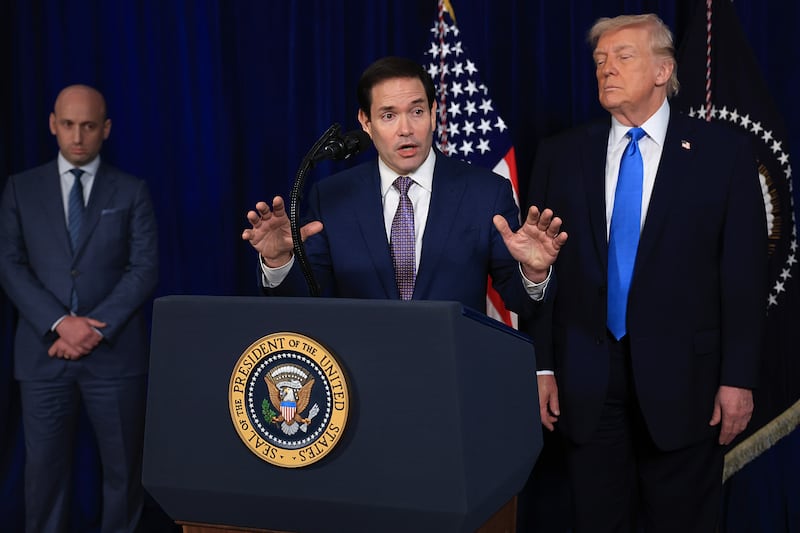 Secretary of State Marco Rubio speaks during a press conference as President Donald Trump stood to his side with his eyes briefly closed at Mar-a-Lago club on January 03, 2026, in Palm Beach, Florida. Joe Raedle/Getty Images
We’re doing it all in a much Trumpier, f–k-the-world, manifestly dumber kind of a way, to be sure. But, don’t be distracted by the ageing fat dude with the long red tie who these days delivers every speech as though he has a mouthful of oatmeal. He will screw some things up to be sure. (You can rest assured that nothing the U.S. military can muster has frightened Venezuelans more than the news that Trump and the likes of Hegseth, Rubio, and Stephen Miller will be running their country.)
But in the end, as has been the case in war after war for generation after generation now, if you want to know who really is calling the shots in America’s “wars of choice” look to the men and women behind the curtain: to the oil-igarchs and the rest of the super-empowered leaders of corporate America who are the ones for whom our ageing political leaders are always all too ready to risk the lives of the brave young men and women in our military.