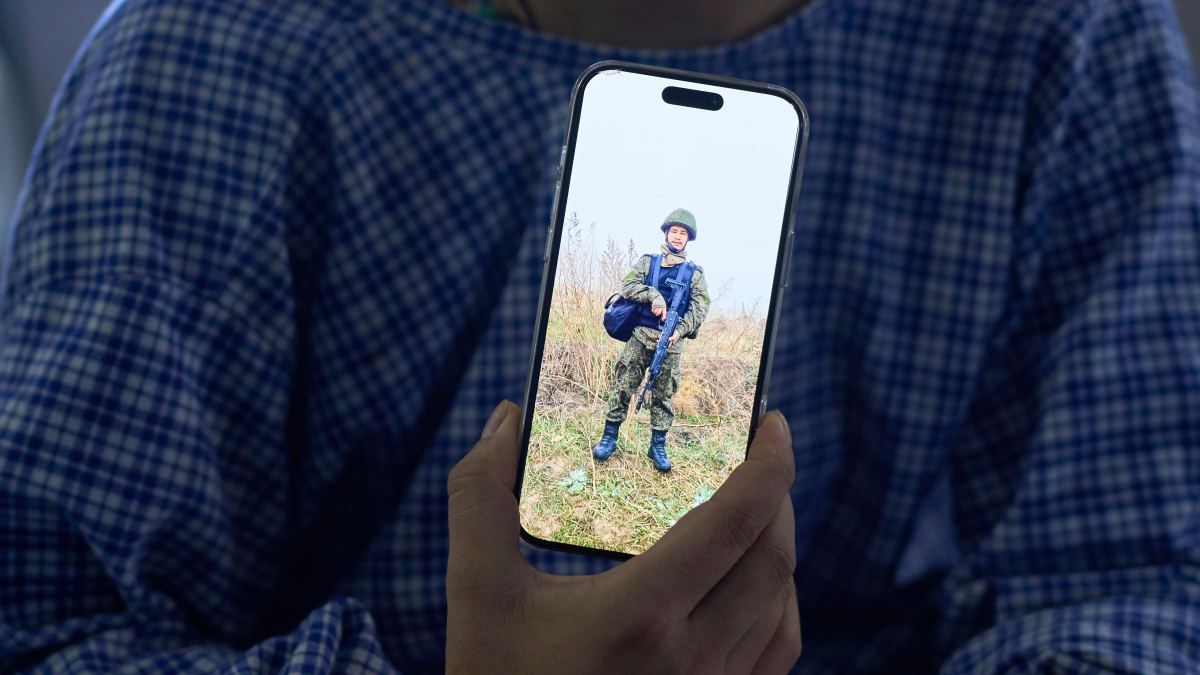
Dhanraj and Laxmi Rai’s son left home in Nepal in his early twenties to study science at university in Russia. When they opened their WhatsApp last April, expecting to see an update about his studies, the Rais were surprised to see a photo of Dwon, then 26, in khaki army uniform and slick black boots.
“We were completely unaware he’d joined the Russian army,” Dhanraj said. Concerned, he and his wife began to question Dwon. He said he and some friends had been convinced by a recruiter to drop out of university and join the Russian army. “He told us it wasn’t as risky as rumoured. Dwon had been told he wouldn’t even be taken to war … he sounded really optimistic that nothing bad would happen. He said if he didn’t go, he’d let his friends down.”
Then, in mid-September, the couple heard a rumour that Dwon was dead.
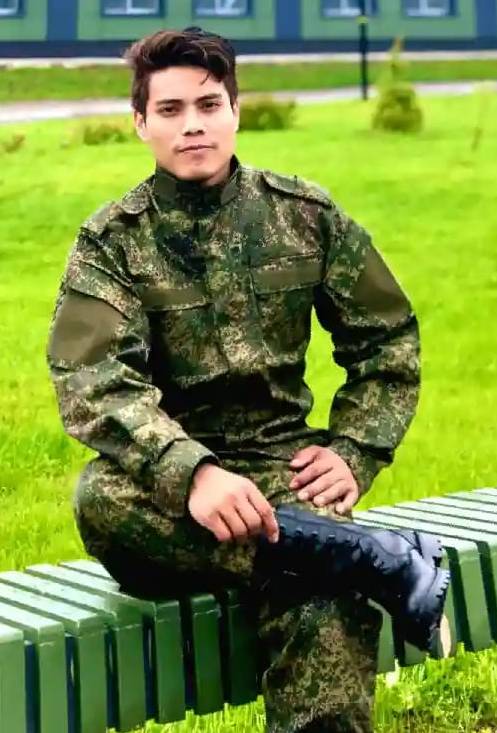
When the news arrived, it was not the government that called. It was an Indian boy they had never met who claimed to be their son’s friend. “We did not believe him,” Dhanraj said, speaking by phone from his home in northern Nepal. “Why was he the one to bring us the news? We thought if it was the case [that Dwon was dead] we’d receive the news from an official channel.”
It was not until mid-November that Nepal’s foreign ministry sent an official notice.
The Rais are among thousands of family members in Nepal whose loved ones have been lured into the Russian army — sold a romanticised narrative of a lucrative career abroad and the promise of Russian citizenship after one year of service.
‘If a foreigner dies, there’s no payouts’
Nepalese soldiers, known as Gurkhas, are renowned for their military skills, and have served in the British army for more than 200 years, as well as the Indian army, under formal international agreements. However, since the war between Russia and Ukraine began, Nepal’s anti-human trafficking bureau (AHTB) estimates that between 6,000 and 10,000 citizens have been recruited illegally, mostly from Nepal, and trafficked to fight for Russia. Some estimates are higher: CNN reported the number was closer to 15,000.
Nepal’s government told local media in October that 101 Nepalese had been killed and 125 were missing, although others estimate the real figure is substantially higher. The foreign ministry said that higher figures “appear exaggerated”, and that it had received applications from family members for 349 missing Nepalese.
The Nepalese interim government, appointed after the prime minister was removed in a violent revolution in September, claims to have shut down the pipeline of young men going to Russia after raising the problem with the Russians and detaining recruiters in Nepal. Two years ago, it stopped issuing permits to Nepalese to work in Russia and Ukraine after a number of deaths of its citizens on the frontlines.
Yet even in the middle of recent ceasefire talks, and despite the government’s claims that Russia has stopped recruitment, The Sunday Times spoke to human trafficking experts who said that it continued.
The Russians have reportedly recruited tens of thousands of men to fight from countries in Latin America, the Middle East, Africa, central Asia and south Asia. The Ukrainians estimate the figure is at least 18,000 men in total, while some experts believe it could be far more — up to 50,000. Nepal is one of the largest sources of foreign fighters.
For the Kremlin, the recruitment of foreign soldiers makes financial and political sense. “If a foreigner dies, there are no social payouts and no responsibility,” Andriy Yusov of Ukrainian military intelligence told US officials in September. “There are no relatives inside Russia who are unhappy with the war, and of course there are fewer dead Russians.”
For many recruits, the decision to go to Russia is voluntary, although few have any idea of the situation they will be in.
Prakash Bohara, 28, went to Russia in January 2024. At school he dreamt of joining the civil service but bureaucratic obstacles and the Covid pandemic prevented him from sitting the exams. After a few years in minimum-wage jobs, he found his wife was pregnant.
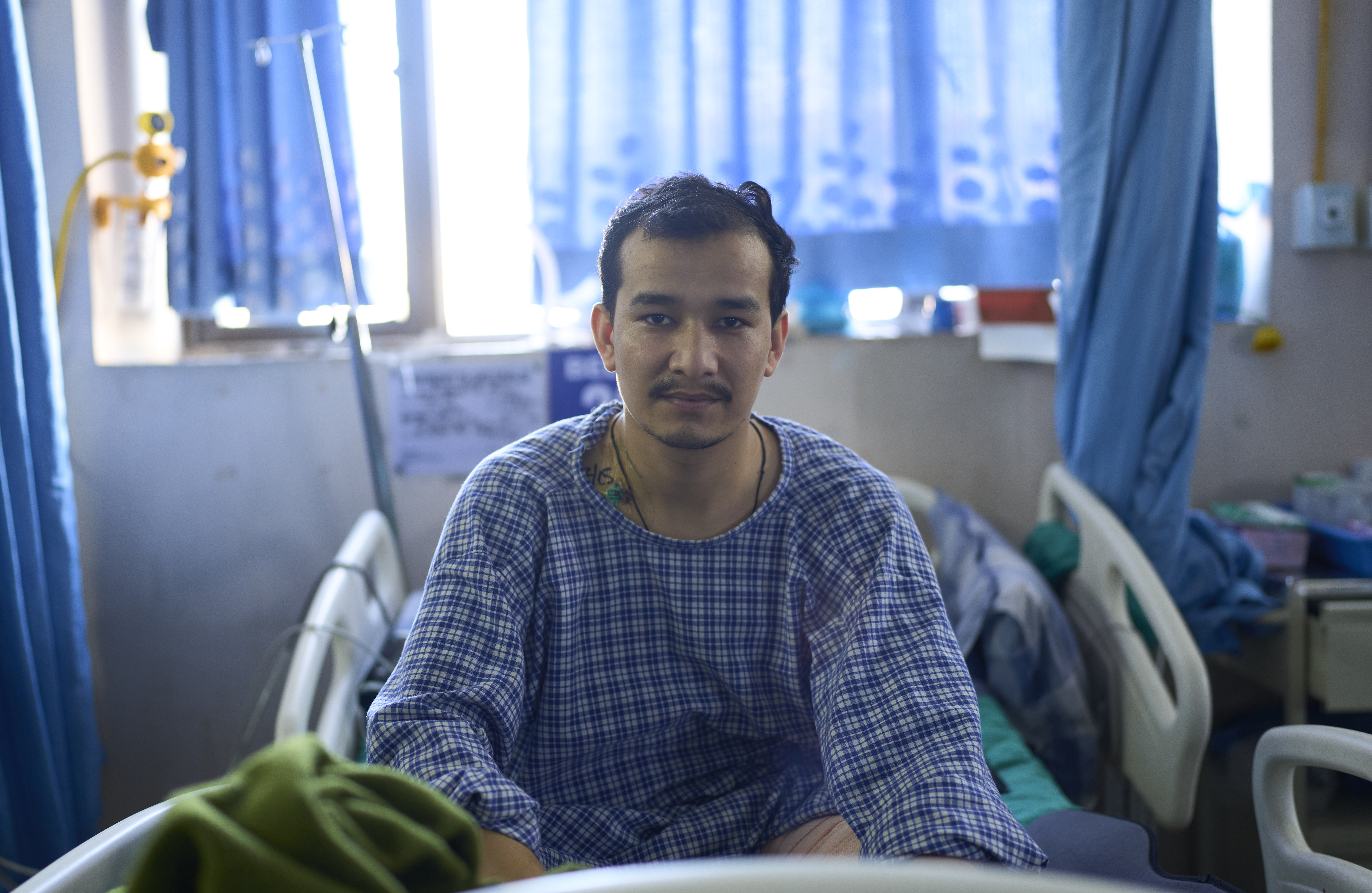
Prakash Bohora
NIRANJAN SHRESTHA FOR THE SUNDAY TIMES
He had been told by friends the job in Russia was lucrative; he had seen videos of the battlefield on TikTok, posted by Nepalese soldiers. But it was only after arriving on the front line in Donetsk that he realised that was not the reality. “A friend you’d have been having lunch with a moment earlier dies, and when someone asks where he is, you have to reply, ‘He died’,” Bohara told The Sunday Times. “That used to astonish us.”
He survived by luck. He had served a year and a half, six months longer than the required term. Then, in May, some Nepalese who had completed their terms were sent back, Bohara among them. He said there were rumours among the Russian troops that a ceasefire was near, and believes that is why he was sent home. “What horrors had to be seen there cannot be explained,” he said. “You don’t have to go anywhere else to see hell.”
Nepalese such as Bohara usually end up in Russia via a well-established but shadowy pipeline of human traffickers, many of whom operate behind the façade of a consultancy. Many consultancies are legitimate operators, arranging visas and flights for travellers and workers. However, Krishna Pangeni, a senior policeman and chief of the AHTB, said some also turned to illegal activities to make more money, including document forging, money laundering and human trafficking. One third of Nepal’s education consultancies — ostensibly set up to help students wishing to study abroad — are running illegally, according to local media.
Few soldiers emerge from Russia as easily as Bohara. As with Nepalese trafficked to other industries, typically agriculture, construction or sex work, those in Russia often realise they have become forced labourers. Although Russia promises a month of training, recruits often report that this lasts only a couple of weeks. On the front lines, many said they found themselves fighting alongside convicts fresh out of Russian jails.
Soldiers have reported paying traffickers in Russia thousands of dollars to facilitate their escape. Ishwor Lamichane, 39, who went to Russia in 2023, had visited a consultancy in Tinkune, Kathmandu, with friends and paid $4,000 to secure transit and a tourist visa. He was told he would be in a medical post, a low-risk military role.
‘Russia promised $2,000 a month’

Jeena Lamichane with a photograph of her missing husband, Ishwor
NIRANJAN SHRESTHA FOR THE SUNDAY TIMES
Ishwor had served 19 years in the Nepalese army and had a small pension. As a hospital cleaner, his wife, Jeena, earns only 16,000 Nepalese rupees (£85) a month. The family needed the extra money to get their daughter through high school, and he was told he would get $2,000 a month in the Russian army.
It was only after Ishwor vanished, taken as a prisoner of war on October 9, barely two months after he landed in Moscow, that Jeena remembered the consultancy office in Tinkune. She had already reported her husband missing to the foreign ministry, the consular office and Russian embassy and got nowhere.
She reported the consultancy to the police. “After that there was a stir, but I don’t know what happened,” she said. “They told me they would catch them and return the money. But they haven’t. There has been no action from the government either.” She has not paid her daughter’s school fees since last year. “I don’t know if they will let her sit her exams.”
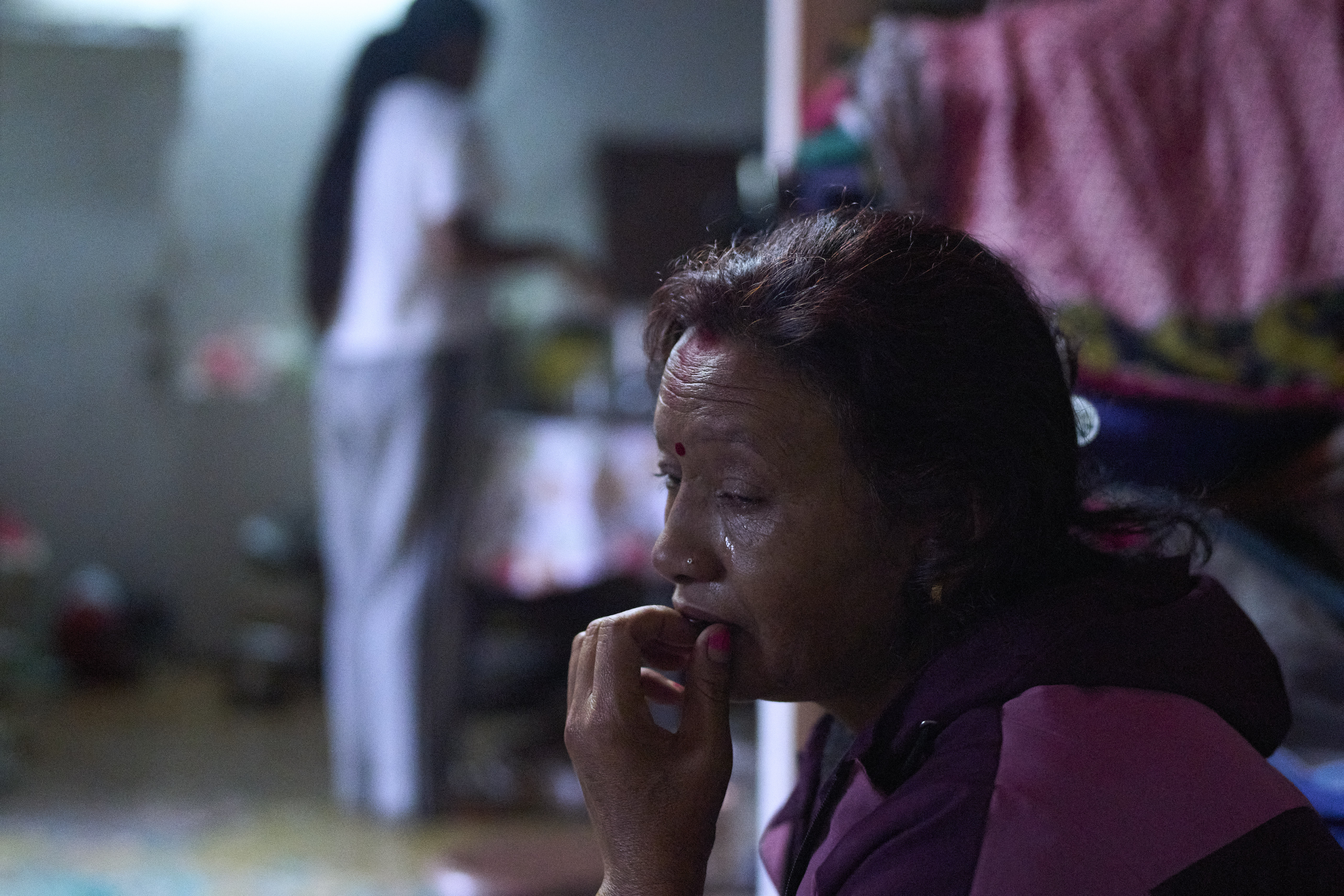
Jeena Lamichane
NIRANJAN SHRESTHA FOR THE SUNDAY TIMES
Traffickers also operate via social media. TikTok in Nepal is rife with videos, posted by traffickers, that give aspiring mercenaries instructions on each step of the recruitment process, boasting of perks and a high salary.
Nepal’s foreign ministry says no complaints or reports regarding Nepalese trafficked to Russia have been received in the past seven months. But recruitment is still taking place, according to Pangeni, albeit at a slower rate than earlier in the war. “There used to be a time when we had bodies arriving almost daily but now it’s less frequent,” he said.
The Nepalese government have asked the Russians to repatriate the bodies of soldiers. Some families such as Dwon’s have been told they have to pay $6,000 to fly the bodies of their children home. “We didn’t have that kind of money,” Dhanraj said. “We had to remake all the documents in order to initiate the cremation process there. Only then did they cremate the body.” Dhanraj’s religion, Hinduism, requires that his son’s body be cremated before the soul can ascend to heaven.
In October The Sunday Times spoke to a trafficker who reported that recruitment had been halted but that joining the army was still possible and it would cost 100,000 rupees (about £500) upfront. The trafficker said he had fought in Russia. “This is not a children’s playground,” he said. “It’s a war zone.”
There are also reports of recruits going back to Russia voluntarily after returning to Nepal, driven by a need for money. Nepal’s youth unemployment rate, at more than 20 per cent, is among the highest outside Africa.
The choice to go to Russia is rooted in “extreme poverty”, Pangeni said. “Rather than lingering around in a state of unemployment, people prefer to risk their lives. They seem convinced of the security of their family — as, even if they die, they believe their families will receive compensation.”
Last year the Russian government agreed to pay compensation to families of dead soldiers, but it has been reported that only a handful of families have received initial instalments of compensation. The exact sums are unclear — Nepalese news reports indicate figures that range from $20,000 to $100,000.
Dhanraj is still seeking compensation from Moscow but a year after Dwon’s death, there is no progress. The foreign ministry recommended he go directly to Russia but he was turned away at the border and forced on to a flight back to Kathmandu. “I am losing hope in the government,” he said. “We have no grounds to be hopeful with [the new interim government]. They have not initiated anything.”
Nepal’s foreign ministry said it was in “close communication” with families, and in “close contact” with the Russians. “The government is making every effort to help families receive compensation in an expeditious manner,” officials said.
Two years on from Ishwor’s capture, Jeena has not heard from her husband except for a single voice message. Nor has she seen a penny of compensation since one $400 instalment, sent in 2023.
With news that a ceasefire is possible, Jeena hoped Ishwor could come home. But she says that in the past few weeks, those hopes have faded.
Additional reporting by Ankit Tiwari and Saksham Pandey